Science and technology reshape farming practices
In response to Resolution No. 57-NQ/TW on the development of science, technology, innovation, and national digital transformation, ministries, localities, organisations, and individuals have proactively selected key products based on the specific strengths of each sector and region. Rather than focusing solely on research, many models now aim to deliver scientific results directly to consumers.
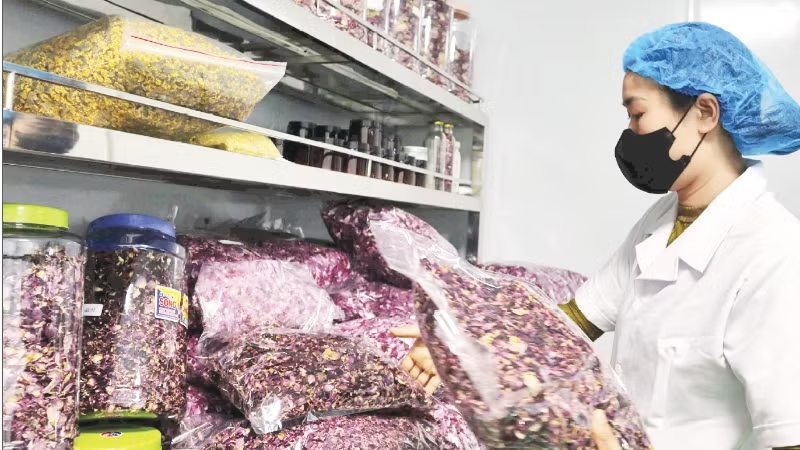
At An Lac Farm of Ha Noi Xanh Cooperative in Lien Minh commune, Ha Noi, fields of roses, magnolias, jasmine, chrysanthemums, and other flowers are cultivated not only for raw materials but also as inputs for essential oils, herbal teas, and natural cosmetics. Investment in drying, extraction, and packaging technology through a closed-loop process has helped the cooperative’s agricultural products climb the value chain.
Ba Thi Nguyet Thu, Director of Ha Noi Xanh Cooperative, explained that the cooperative had reorganised its entire production process — from seeds, cultivation, and harvesting to processing and consumption — on a platform applying science and technology. This has extended shelf life and ensured products meet OCOP, organic, ISO, Halal, and other standards, opening opportunities to access demanding markets.
According to Nguyen Tien Toan, Secretary of the Party Committee and Chairman of the People’s Council of Lien Minh Commune, the locality is developing towards a green, civilised, and happy urban model.
In response to Resolution No. 57-NQ/TW on the development of science, technology, innovation, and national digital transformation, ministries, localities, organisations, and individuals have proactively selected key products based on the specific strengths of each sector and region.
Beyond production investment, the commune is encouraging digital technology adoption through online promotion of agricultural products, shifting farmers’ mindset towards science-based production and proactive market access.
Many localities have chosen distinctive products to build digital ecosystems. Thai Nguyen Province, with 22,200 hectares of tea (21,500 hectares producing output), has leveraged this strength by deploying the “Tea Trace Thai Nguyen” platform.
This covers all four components of the supply chain: a QR-code-based traceability system, an IoT-enabled digital map of raw material areas, digital quality profiles, and an e-commerce subsystem linked to the “Thai Nguyen Tea” brand.
This chain operates under a “three-party” model, involving Thai Nguyen University and the Tan Cuong and La Bang cooperatives. By 2025, the value of Thai Nguyen’s tea products had reached more than 13.8 trillion VND.
Meanwhile, Lai Chau Province has prioritised the development of Lai Chau ginseng through science, technology, innovation, and digital transformation, turning local resources into a new growth driver. The province has identified six key scientific research tasks on Lai Chau ginseng, gradually applying high technology in managing growing areas, traceability, product promotion, and market connection.
Currently, Lai Chau has 24.9 hectares of ginseng cultivation and seedling propagation in net houses and greenhouses, of which 4.28 hectares use water-saving irrigation technology; 13.9 hectares are GACP-WHO certified; and more than 120 facilities have been granted ginseng cultivation codes.
Building sustainable value chains for global markets
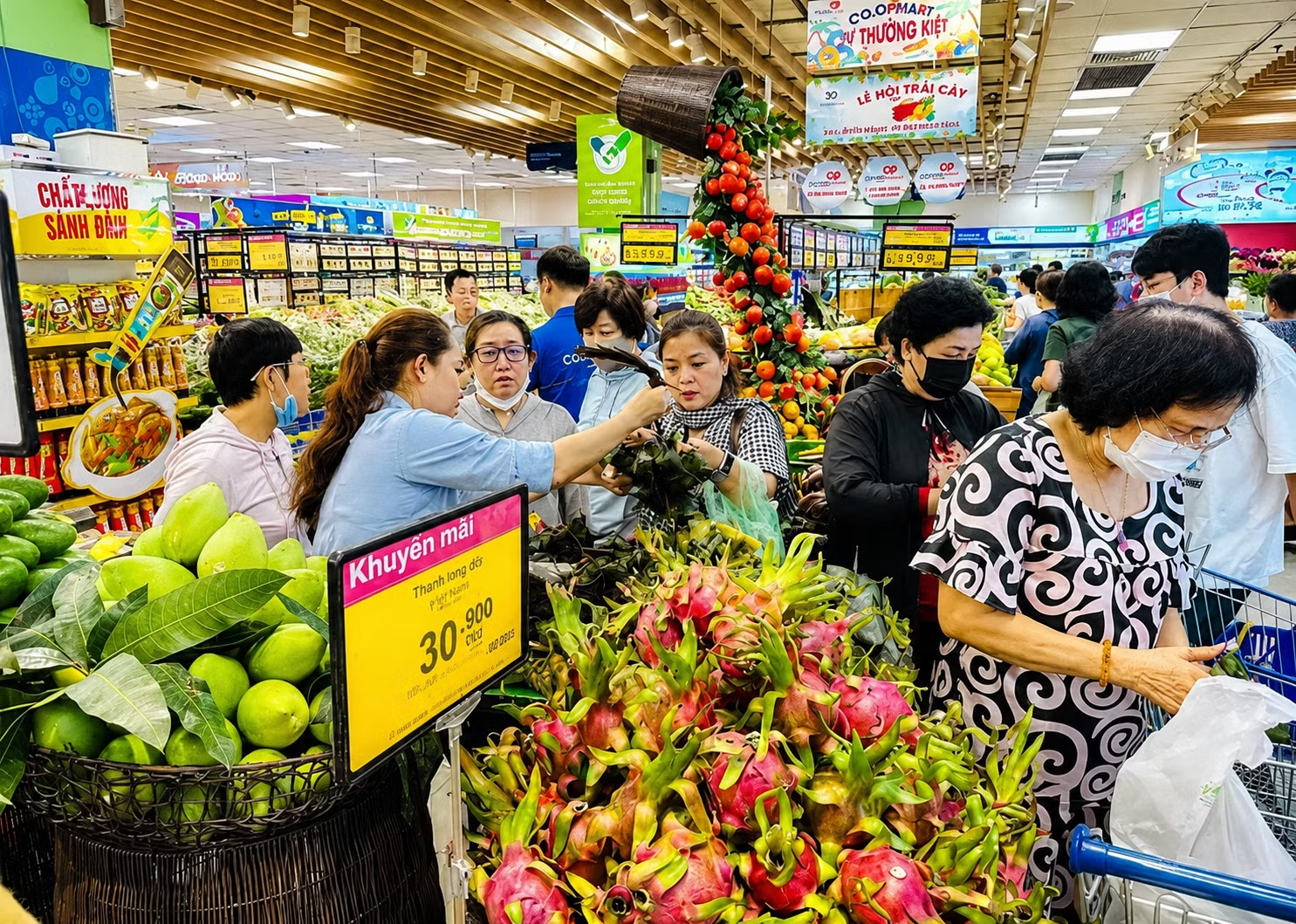
Although science, technology, and digital transformation are generating positive changes, practical implementation still reveals limitations. Many research and innovation results, once completed, have not been effectively exploited because farmers and enterprises lack the skills to value, invest in, or list them on technology exchanges to create economic benefit.
Moreover, linkages between the state, researchers, enterprises, and farmers remain loose. Enterprise participation in the agricultural production value chain from the earliest stages is still limited.
At the same time, market requirements for origin transparency, food safety, and quality standards are rising. Industry data — from raw material areas to cultivation processes, harvesting, preliminary processing, deep processing, and distribution — has not yet been fully digitised or standardised, making it difficult to manage raw material areas, control quality, forecast markets, and protect brands.
Dr Dang Van Cuong, Deputy Director of the OCOP Consulting and Development Centre, emphasised that digital transformation in agriculture is not simply about QR codes, but about proving origin, managing quality, and accessing markets. He argued for reorganising production into standardised product ecosystems with proven quality, aligned with market demand, and linked to brand management, traceability, multi-channel sales, and digital data.
Digital transformation in agriculture is not simply about QR codes, but about proving origin, managing quality, and accessing markets.
Dr Dang Van Cuong, Deputy Director of the OCOP Consulting and Development Centre
Experts also stress that ministries and sectors must coordinate closely with localities to correctly identify regional advantages while avoiding scattered investment or imposing unsuitable technology models.
According to the Ministry of Agriculture and Environment, the sector is building an overall development strategy, concretising objectives, tasks and solutions on precision, and circular agriculture in association with digital transformation. Policies are being improved to promote AI development and application in agriculture and the environment.
The ministry has signed cooperation programmes with pioneering enterprises in plant and animal varieties, veterinary vaccines, digital technology, and smart agriculture.
These aim to gradually form digital ecosystems by commodity chain, create models of key production areas with comprehensive digitalisation for nationwide replication, and establish a foundation for digital transformation as a driver to improve productivity, quality, and competitiveness of Vietnamese agricultural products in global markets.