Prime projects come back to life
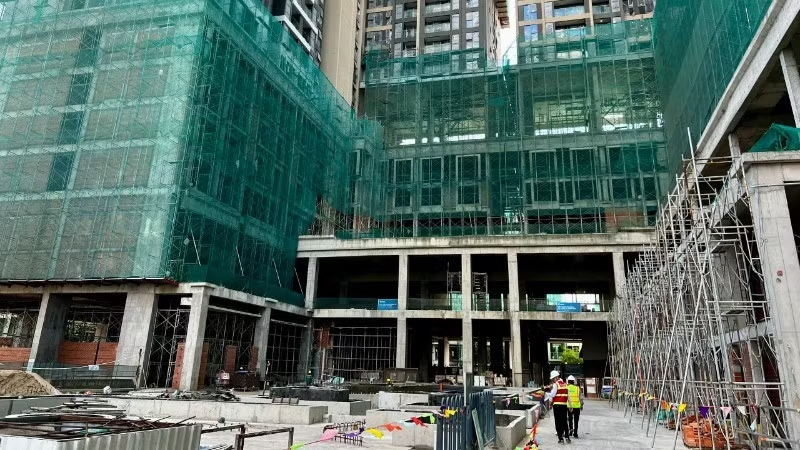
After nearly a decade of waiting, construction has officially begun on the Saigon LightHouse project at 448 Nguyen Tat Thanh Street in Xom Chieu Ward. Bringing the project back to life required 10 years of efforts to resolve legal obstacles.
The project originated from a build-transfer (BT) contract launched in 2016. Although the infrastructure works were completed and handed over in early 2018, payment through a land allocation was delayed for years because of disputes over the timing used to calculate land-use fees.
Only after the project was placed on the city's priority list for resolving key stalled developments were all legal procedures completed, allowing construction to resume.
Speaking at the groundbreaking ceremony, Hoang Nguyen Dinh, Vice Chairman of the Ho Chi Minh City People's Committee, said resolving difficulties facing businesses remains one of the city's top priorities. He noted that the rapid settlement of legal issues for hundreds of businesses and projects demonstrates the determination of the entire political system to shoulder responsibility and work alongside investors to promote the city's sustainable development.

Similarly, Novaland's The Grand Manhattan project has become another example of a successful revival after legal barriers were removed. Following more than three years of restructuring and completing legal procedures, the project has entered its final construction phase and is expected to be handed over to buyers from the third quarter of 2026.
Developers say resolving legal bottlenecks has not only enabled projects to resume but has also generated positive spillover effects across the wider economy. More efficient use of land resources and renewed capital flows have allowed numerous construction projects to restart, creating jobs, increasing budget revenues and stimulating sectors such as construction, building materials, finance, trade and services. The recovery also provides businesses with a foundation for moving beyond crisis management towards sustainable growth.
These encouraging developments indicate that Ho Chi Minh City's property market is gradually improving as longstanding legal obstacles are addressed, helping ease the severe shortage of new housing supply that has persisted for years.
Unlocking resources for growth
While these individual projects demonstrate the effectiveness of legal reforms, the city's broader review of stalled projects shows that Ho Chi Minh City is implementing a large-scale campaign to unlock dormant resources by resolving difficulties facing hundreds of projects.
According to the Ho Chi Minh City People's Committee, 838 stalled projects and land plots currently require settlement, including 54 under the authority of the central government and 784 under local jurisdiction.
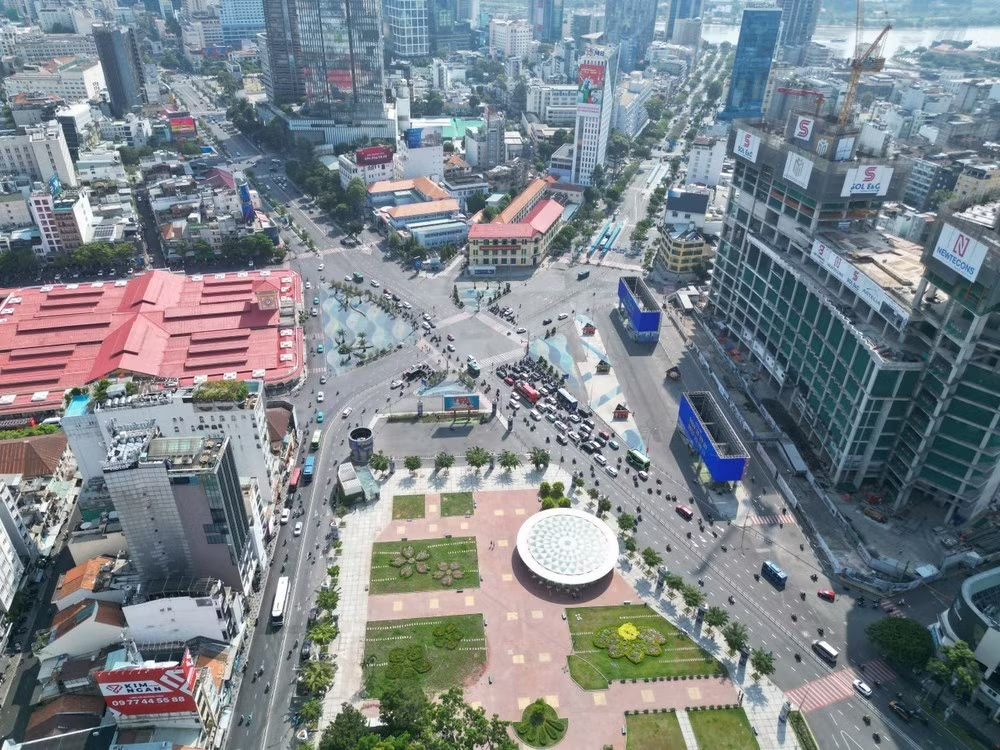
So far, 417 projects have completed legal procedures or resumed implementation, while 393 projects have largely resolved their principal legal issues and are completing the remaining administrative procedures. Only 28 projects remain under review because they involve particularly complicated legal issues spanning different periods of Viet Nam's legal framework.
These efforts reflect a shift in governance. Instead of allowing projects to remain idle indefinitely, the city has proactively reviewed each case, categorised projects according to the nature of their legal obstacles, clarified the responsibilities of different authorities and accelerated the resolution process under the direct supervision of city leaders and a special task force.
The campaign has helped unlock more than 206 trillion VND (7.8 billion USD) in investment capital and brought nearly 17,000 hectares of land back into productive use. This represents a substantial resource as the city strives to achieve double-digit GRDP growth and budget revenue of 1 quadrillion VND (38 billion USD) in 2026. The resumption of stalled projects is also benefiting a wide range of related industries, including construction, building materials, design, finance, banking, logistics and commerce.
Challenges remain
Despite the progress, many obstacles still need to be overcome. In reality, most stalled projects involve highly complex legal issues accumulated over many years under different legislative frameworks. Determining land values, calculating financial obligations and processing applications with histories stretching back decades remain among the most difficult challenges.
Many valuation consultants are reluctant to participate in land pricing because of concerns over legal risks, while historical market transaction data is often incomplete and unsuitable for comparison. For specialised projects such as seaports, hospitals and golf courses, determining land values is even more complicated due to the lack of comparable assets.
To address these issues more fundamentally, Ho Chi Minh City has proposed that the central government amend regulations governing land valuation, grant greater authority to local administrations and improve mechanisms for deducting compensation and site-clearance costs. At the same time, city departments have established specialised task forces to monitor individual projects and resolve outstanding issues comprehensively, rather than handling each case separately as in the past.

Chairman of the Ho Chi Minh City People's Committee Nguyen Van Duoc said that over the past year the city has concentrated on removing bottlenecks affecting stalled projects and land plots, thereby unlocking significant resources for socio-economic development.
He stressed that the city government will continue to strengthen the role of its special task forces in resolving investment procedures, compensation and land clearance issues, as well as addressing the remaining stalled developments. The ultimate objective, he said, is to transform unfinished projects into modern urban areas, public facilities, and new engines of economic growth for Ho Chi Minh City.