The plan aims to ensure the progress of urban railway projects in Ho Chi Minh City in line with the directives of the Government and the Prime Minister, as well as the target of completing around 200 km of urban railway lines by 2030 under the Politburo’s Resolution No. 09-NQ/TW.
Accordingly, Ho Chi Minh City has set a target of completing six railway lines with a total length of around 187 km by 2030, with total investment capital of approximately 17 billion USD. The projects include Metro Line No. 2 (Ben Thanh–Tham Luong section); Metro Line No. 2 (Ben Thanh–Thu Thiem section); the Thu Thiem–Long Thanh railway line; the New Binh Duong City–Suoi Tien urban railway line; Phase 1 of Metro Line No. 6 (Tan Son Nhat International Airport–Phu Huu section); and the Ben Thanh–Can Gio railway line.
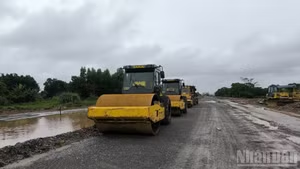
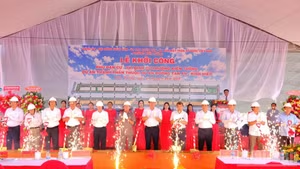
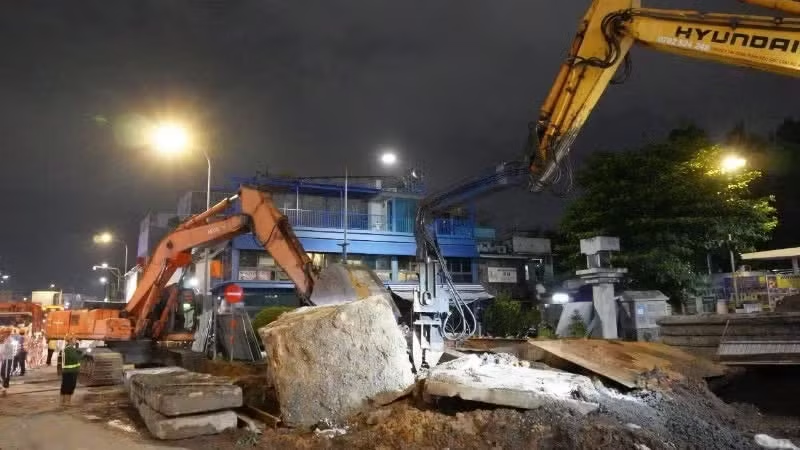
Among these projects, Metro Line No. 2 (Ben Thanh–Tham Luong section) has completed site clearance, signed the EPC contract, and officially commenced construction on January 15, 2026, in accordance with the approved schedule directed by competent authorities. The line is expected to be completed by 2030.
The remaining five lines are currently in the feasibility study stage, while several projects have already held groundbreaking ceremonies or started construction, with completion targeted by 2030.
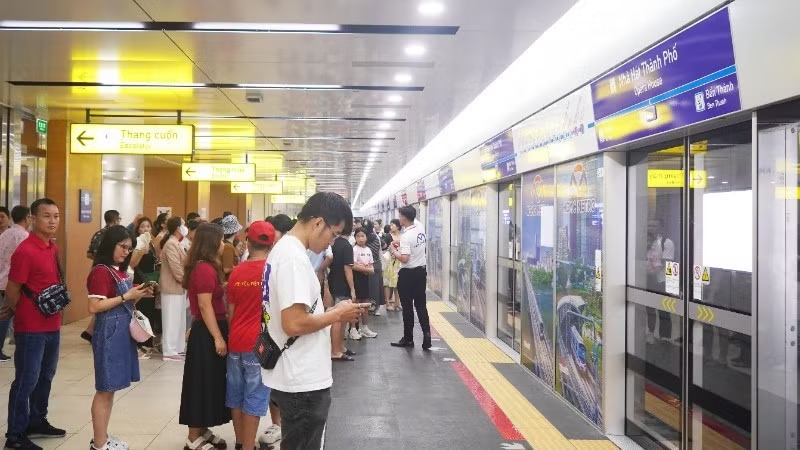
To ensure the timely implementation of urban railway projects in Ho Chi Minh City in accordance with the directives of the Government and the Prime Minister, as well as the goal of completing around 200 km of urban railway by 2030 under the Politburo’s Resolution No. 09-NQ/TW, the Chairman of the Ho Chi Minh City People’s Committee proposed that the Ministry of Construction coordinate with the Ministry of Finance and other central ministries and agencies to report to the Government and the Prime Minister for consideration and prioritised allocation of central budget funding in the 2026–2030 medium-term public investment plan for the implementation of the city’s key urban railway projects.
This is expected to maximise investment efficiency and create momentum for socio-economic development in the Southeast region and across the country. At the same time, the Ministry of Construction is requested to support and guide the city during project implementation, particularly in areas related to standards, technical regulations, technology selection, ensuring synchronisation and connectivity among railway lines, and maintaining safety during the operation and management of the urban railway system.