Key milestones in Viet Nam–Switzerland relations
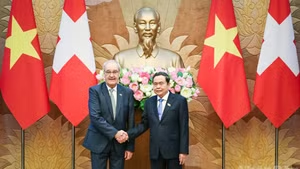
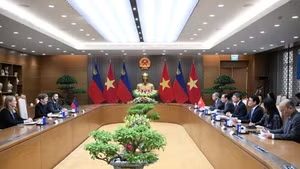
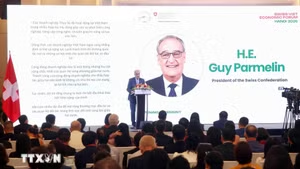
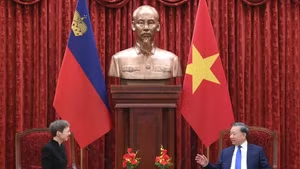
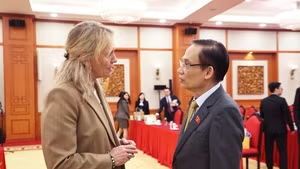
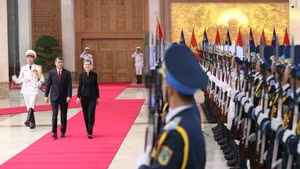
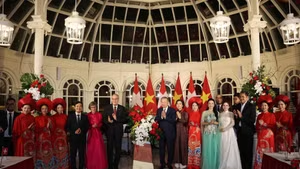
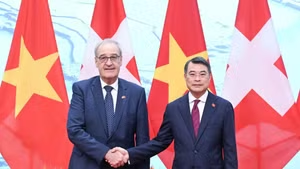
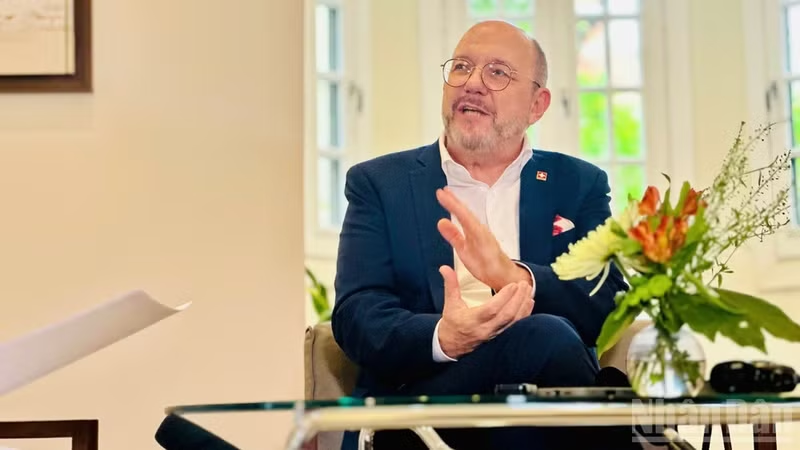
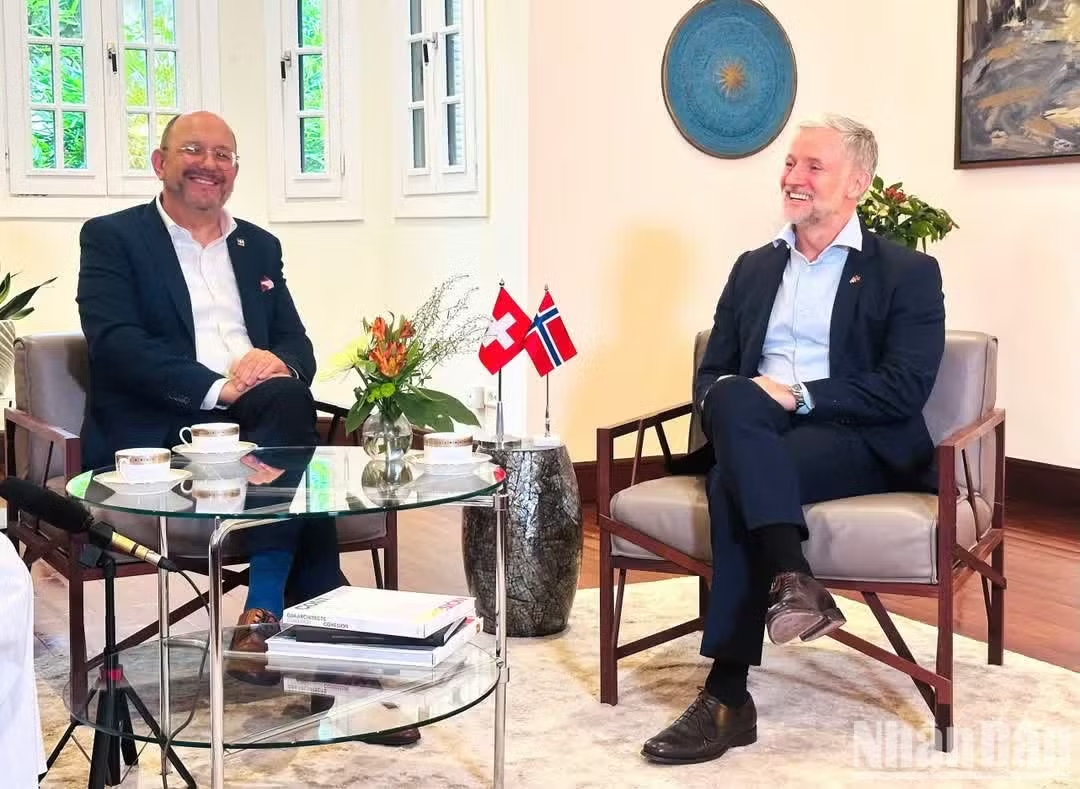
On the occasion of the official visit to Viet Nam by Swiss President Guy Parmelin and his wife from October 17 to 18, and with the signing of the FTA between Viet Nam and EFTA on October 18, Nhan Dan Newspaper spoke with Thomas Gass, Ambassador of Switzerland to Viet Nam, about major milestones in bilateral relations, the significance of the trade agreement, and prospects for cooperation in finance, science, education, and high technology.
Q: What is your assessment of the significance of this high-level visit and the course of cooperation between the two countries since diplomatic relations were established in 1971?
A: Since 1971, Switzerland has been one of the first Western countries to establish diplomatic relations with Viet Nam, demonstrating its confidence in the country’s positive development prospects.
From initial humanitarian assistance cooperation, bilateral relations have shifted significantly towards economic cooperation over the past 15 years. This process has helped Switzerland integrate more deeply into the globalised economy while strengthening Viet Nam’s role on the international stage.
Affirming a commitment to trade based on international standards
Q: Amid considerable volatility in the global economy, what message is conveyed by the signing of the FTA between Viet Nam and EFTA, of which Switzerland is a key member, and what impact will it have on bilateral trade?
A: We have high expectations for the positive impact this agreement will bring.
The world is currently witnessing considerable disruption, making the signing of the FTA by Viet Nam, Switzerland and their EFTA partners particularly significant. It sends a strong message affirming the path we have chosen: to uphold transparency, predictability, bilateral commitments, and trust built on the basis of international standards.
Q: FTA negotiations have lasted more than 14 years. Could you share the key factors that enabled both sides to overcome difficulties and achieve the outcome reached today?
A: The negotiations have indeed lasted more than 14 years. After Viet Nam joined the World Trade Organisation (WTO), Switzerland was among the first countries to initiate discussions on the agreement.
During this process, there were periods when both sides had to prioritise other negotiating agendas. Viet Nam focused on negotiating the Viet Nam–European Union Free Trade Agreement (EVFTA), while EFTA pursued negotiations with India and the Southern Common Market (Mercosur).
However, over the past three to four years, the negotiating teams have gained fresh momentum. Both sides have flexibly built on the results of previous free trade agreements while adjusting the content to reflect the realities of modern global trade. These factors have played an important role in bringing the negotiations to their current outcome.
Q: Could you outline the agreement’s key commitments on tariff reductions?
A: Switzerland already maintains very low import tariffs on most industrial goods. Meanwhile, agricultural products from the two countries are complementary rather than direct competitors.
Conversely, Viet Nam’s commitments to reduce tariffs on Swiss high-tech machinery and technical equipment will facilitate improvements in Viet Nam’s production capacity and enable the country to participate more deeply in global value chains.
Thomas Gass — Ambassador of Switzerland to Viet Nam
During his more than three years as Ambassador of Switzerland to Viet Nam, Thomas Gass has actively promoted bilateral partnerships across a range of fields.
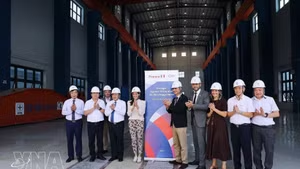
Key achievements include supporting the negotiation process towards the signing of the Viet Nam–EFTA Free Trade Agreement; strengthening cooperation to improve the capacity of the financial and banking system; expanding joint scientific research projects between the Swiss National Science Foundation (SNSF) and the National Foundation for Science and Technology Development (NAFOSTED); encouraging Swiss businesses to invest in high-quality technical training; and serving as a bridge for cultural exchanges and multilateral cooperation within the framework of the International Organisation of La Francophonie (OIF).
Expanding cooperation in high technology, finance, and healthcare
Q: As one of the leading economies within EFTA, which of Switzerland’s areas of strength will be promoted in the Vietnamese market once the agreement takes effect?
A: Swiss companies in mechanical engineering and high technology have high expectations for expanding their presence in Viet Nam.
Viet Nam is currently implementing numerous large-scale infrastructure projects in transport, railways and energy. These are also areas in which Switzerland has strengths in technology, quality, and precision engineering.
In addition, Viet Nam’s development is creating opportunities for advanced Swiss healthcare solutions and pharmaceutical products to reach a wider segment of the Vietnamese market, helping meet the healthcare needs of the population.
Q: Viet Nam has officially inaugurated international financial centres in Ho Chi Minh City and Da Nang. Given Switzerland’s world-leading strengths in finance and banking, what are its key cooperation priorities with Viet Nam in the coming period?
A: Switzerland highly appreciates the ambition and determination Viet Nam has demonstrated in developing its banking system. The two countries have a long-standing tradition of cooperation with the State Bank of Viet Nam and commercial banks in training personnel and improving industry standards.
Drawing on Switzerland’s experience, we believe that an international financial centre can develop on a solid footing and achieve a wider reach only when it rests on a stable, strong national banking system that ensures access to financial services for the entire population.
Therefore, rather than focusing solely on the new international financial centres, Switzerland will prioritise cooperation with and support for Viet Nam in strengthening and improving the capacity of its entire domestic banking system. We believe this is an important foundation for ensuring the sustainable development of the financial sector.
Science, education and innovation as key areas of cooperation
Q: How do you assess the potential and scope for cooperation between the two countries in education, scientific research, and innovation?
A: These are key areas in which the two countries aim to strengthen close cooperation.
SNSF and NAFOSTED have established effective cooperation through two calls for proposals, funding around 20 joint research projects involving leading universities in both countries. A third call for proposals is expected to be launched next year.
Beyond cooperation between research funding bodies, Swiss businesses operating in Viet Nam are also making substantial investments in technical training and strengthening the capabilities of local management teams. These companies are also actively involved in training personnel in key sectors such as banking and tourism.
These activities help broaden cooperation opportunities, improve workforce quality, and lay the foundations for deeper bilateral relations in the years ahead.
Promoting the role of the Francophone community as a bridge
Q: As both countries are members of the International Organisation of La Francophonie (OIF), how can they make use of this multilateral framework to strengthen mutual understanding?
A: French is an excellent linguistic bridge that helps foster mutual understanding and exchanges between the peoples of our two countries.
Cooperation within the OIF framework goes beyond promoting the French language and also opens practical opportunities for collaboration in education, scientific research, and tourism development.
Viet Nam’s active participation in Francophonie Summits demonstrates its proactive commitment to promoting multilateral cooperation and developing flexible and effective cooperation mechanisms.
Reporter: Thank you very much!
VEFTA – A new milestone in international economic integration
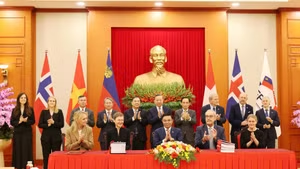
After 14 years of sustained negotiations involving 21 formal rounds, Viet Nam and the EFTA — comprising Switzerland, Norway, Iceland, and Liechtenstein — announced the conclusion of negotiations on the Viet Nam–EFTA Free Trade Agreement (VEFTA) on July 2. The official signing ceremony took place in Ha Noi October 18, making VEFTA the 18th free trade agreement in Viet Nam’s FTA network.
VEFTA opens opportunities to promote trade, investment, and sustainable development. The agreement aims to remove tariff barriers on most industrial goods and high-tech machinery, creating a transparent and predictable bilateral trading environment.
At the same time, linking EFTA countries’ strengths in technology, finance, clean energy, and advanced pharmaceuticals with Viet Nam’s production capacity and rapidly growing market is expected to make more effective use of both sides’ resources. With high standards on investment, intellectual property, public procurement, and commitments to sustainable development, VEFTA provides an additional foundation for Viet Nam to participate more deeply in global value chains.