
Protecting consumer data in cyberspace
In the digital economy, the convergence of social media, data-driven advertising and e-commerce has created a continuous chain of data processing.
#cyberspace
In the digital economy, the convergence of social media, data-driven advertising and e-commerce has created a continuous chain of data processing.

Cyberspace is facing the risk of a serious crisis as successive waves of large-scale attacks have occurred in numerous countries, bringing severe consequences

Resolution No. 25-NQ/TW, issued by the Political Bureau on August 22, 2026, regarding the strategy for ideological work in the new context, establishes a vital theoretical and practical foundation for approaching the task of safeguarding the achievements of the revolution within the digital environment. It introduces a new perspective: shifting the primary focus from the mere management of information to the proactive shaping of social perception.

Deputies to the 16th National Assembly will discuss a number of bills, including the draft Law on Data Security on October 26 as part of their second sitting.

In the digital age, students no longer rely solely on textbooks, curricula, documents, or classroom lectures to acquire knowledge about history, culture, and national sovereignty; they also access such information, data, and knowledge daily via social media platforms like Facebook, TikTok, and YouTube. Cyberspace has emerged as a new learning environment where the younger generation actively seeks, absorbs, and exchanges knowledge every day.

The documents of the 14th National Congress set forth the requirement: Resolutely and persistently fight to firmly protect the independence, sovereignty, unity, and territorial integrity of the nation; protect the Fatherland from early on and from afar.

Artificial intelligence (AI) is opening major advances in operational optimisation and increasing labour productivity. However, the technology is also being exploited by cybercriminals with an unprecedented level of sophistication.

First launched by the Central Committee of the Viet Nam Youth Federation in 2020 ahead of celebrations marking the 75th anniversary of the August Revolution and National Day (September 2), the “I Love My Fatherland” communications campaign has become a flagship initiative of the movement of the same name, aimed at spreading patriotism and national spirit across the Internet in general and social media platforms in particular.

Equipping pupils and students with “digital culture” and appropriate behavioural skills in cyberspace needs to become an integral part of building school culture and educating morality and lifestyle in the current context. This not only helps protect young people but also contributes to developing a safe, healthy and humane online environment.

Cyberspace is becoming the nation’s new frontline, where financial, health, education data, and civil records, along with business operations, run continuously by the minute. We rely on this infrastructure every day — and the more we rely on it, the greater the risks become.
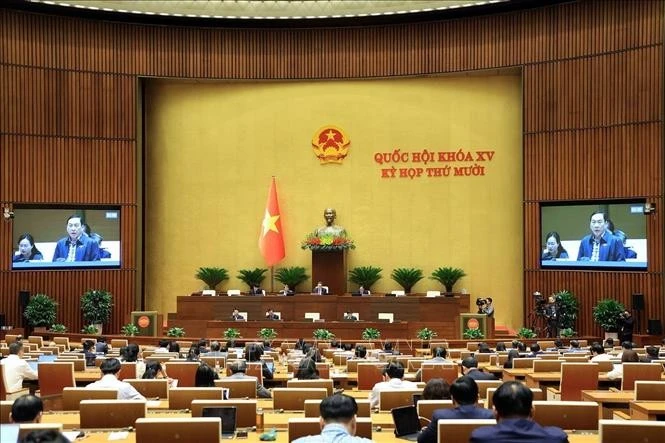
The draft revised Law on the Press sets out new rules for press agencies' operations in cyberspace, requiring all online activities to comply with press legislation, cybersecurity standards, each outlet’s editorial mandate, and relevant international commitments.

State President Luong Cuong hosted a banquet in Ha Noi on the evening of October 25 for delegates attending the signing ceremony and high-level conference of the United Nations Convention against Cybercrime, known as the Ha Noi Convention.

Prime Minister Pham Minh Chinh on October 25 called for global concerted efforts to turn the Ha Noi Convention into a true source of inspiration for international cooperation, trust, and shared responsibility in safeguarding the digital future.

The Opening for the Signature of the United Nations Convention against Cybercrime, also known as the Ha Noi Convention, will take place in Viet Nam on October 25–26. The event is a clear reflection to the international community’s shared aspiration and responsibility to build a peaceful, secure, and healthy cyberspace.