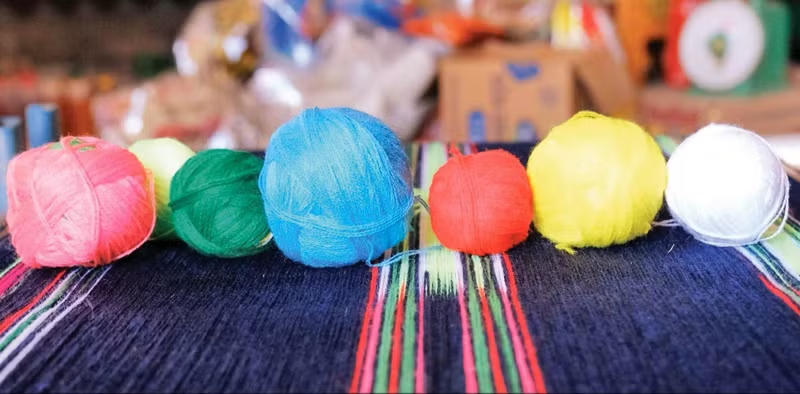
From clusters of white cotton harvested in the fields and on the hillsides, the skilful hands of highland women draw out and spin threads, dye them in the colours of the mountains and forests, and weave them on traditional looms. With every gentle clatter of the loom, a piece of brocade takes shape, interwoven with memories of the mountains, forests and villages, and the cultural heritage that has sustained generations of Ma, Co Ho and M'Nong ethnic minority people in this land of lush forests and red earth. Today, from these simple wooden looms, brocade is embarking on a new journey, moving beyond village boundaries into contemporary life, onto fashion runways and into new markets in glamorous cities across the globe.
The looms that never sleep
The mighty Da Dang River flows like a ribbon of golden silk, carrying fertile alluvium to Dam Pao Village in Phu Son Lam Ha Commune, Lam Dong Province. Inside a traditional house, Long Dinh K'Nier, who has lived through nearly a hundred farming seasons and is regarded as the founding figure of brocade weaving in the village, calls out: "Have you come down to buy more brocade for your fashion designs?"
"That's right!" replies designer K'Jona.
She breaks into a smile. "Our ancestors' threads have travelled beyond the village. The looms will never sleep again." Her gaze then drifts towards the garden, where clusters of pure white cotton await the hands of artisans who will pick them and spin them into thread.
According to the village patriarch Kra Jan Nhang, K'Jona often buys brocade from our village. Thanks to designers like him, the traditional textiles have the opportunity to reach distant places.
Dam Pao was recognised as a traditional craft village by Lam Dong Province many years ago. The origins of its brocade weaving tradition, however, are difficult to trace. According to K'Nier, once girls in the village were old enough to fetch water from the stream and sow rice in the fields, their mothers and grandmothers began teaching them to weave. Those with particularly skilful hands produced beautiful textiles, while others learnt enough to make fabrics for their families. In this way, the threads inherited from their ancestors continued to connect successive generations.
The name Dam Pao originates from Da Mpau, meaning Suoi Mo (Dream Stream), where a stretch of the Da Dang River passes through the traditional weaving village, bringing life and prosperity to its 880 households and more than 4,000 residents. Among them are over 300 ethnic minority households, predominantly Co Ho Cil ethnic minority people. "All the ethnic minority households here practise brocade weaving, but not to become wealthy. Brocade is an indispensable part of our people's lives and is also traditionally regarded as a measure of a woman's skills," elder Nhang translated K'Nier's words.
With her eyesight fading and her hands no longer as nimble as before, K'Nier now spends her days watching her three daughters and granddaughters, including K'Thim and K'Ben, weave intricate brocade patterns. For more than 60 years, the characteristic colours of this basalt-rich region — red, dark blue-black, yellow, brown and blue — have left their marks on her hands.
K'Thin said that each colour comes from a particular "remedy" provided by the mountains and forests. The legendary deep blue-black, symbolising the earth and the colour of festival nights, is obtained by the Co Ho ethnic minority people from t'rung leaves. Blue comes from soaking threads with cham be indigo leaves; red is extracted from plants of the amaranth family, lot plants and curry seeds; while yellow comes from wild turmeric roots.
"Everyone has their own secret methods, but those are the basics. A piece of ui [brocade] woven from natural fibres and dyed with plants gathered from the forest can fetch between 3 million and 5 million VND. Some well-off customers place orders, but such pieces are extremely rare. The process is painstaking and involves numerous traditional restrictions, so few people are still willing to undertake it," K'Thin confided.
“Just as the Co Ho, Ma and M'Nong people observe rituals when fermenting traditional rice wine in their ceremonial jars, or the Chu Ru people when making sacred Sri rings, the threads must not come into contact with strangers, otherwise the weaving may be spoiled or the colours may not turn out properly. The person doing the dyeing must also observe certain rules of personal cleanliness. Many people still question these customs today, but we follow what our mothers and grandmothers taught us so that our brocade fabrics will be beautiful and their colours will last," she explained.
“A piece of brocade fabric carrying the colours of the mountains and forests embodies layers of cultural history. "When light falls on it, the fabric reveals a depth reminiscent of a sacred forest. That is why the outfits I design for important ceremonies, major events or commissions from affluent clients must be made from traditional brocade," he said.
Rare rays of sunshine broke through the rainy-season clouds over the picturesque land beside Dream Stream. Concrete lanes criss-crossed the settlement like the geometric patterns commonly found on the brocade of ethnic communities along the Truong Son Range and across the Central Highlands.
In Dung K'Noh Village, beside the Da Loi River, whose name evokes a "river of dreams", Meritorious Artisan Bon Nieng K'Glong, sitting beside her loom, said: “The Co Ho, Ma and M'Nong ethnic minority people do not use fixed weaving looms. Instead, we use a detachable frame made from 12 wooden or bamboo rods of different sizes. Each rod has its own name and function. This method has remained unchanged from ancient times until today."
The weaver sits directly on the floor with her legs stretched out, using her body to maintain tension in the threads attached to a wooden bar. Perhaps this is among the oldest surviving forms of backstrap weaving in the southern Central Highlands.
As the sun rose higher, Ka Gut, K'Glong's daughter, began preparing to dye threads with indigo. She described it as the colour of the mountains and forests, of memory and of a heritage passed down through generations. Today, many brocade weavers have switched to industrial yarn to save time. However, Ka Gut continues to preserve the traditional dyeing techniques inherited from her mother.
Grandmothers taught mothers, and mothers passed their knowledge to daughters. In this way, the threads of heritage have continued to stretch naturally across generations. Today, from the Lang Biang Plateau to the ancient landscapes of Cat Tien along the Dong Nai River, and onwards to the M'Nong Plateau, traditional craft villages and highland women remain devoted to their looms. As K'Nier so evocatively put it: "The looms never sleep."
From the looms to the market
In the Central Highlands region, there are many women quietly working at their looms. Their hands skilfully guide the shuttles and adjust each thread, while their eyes follow the intricate patterns taking shape. Meritorious Artisan H'Nir from Ka La Dong Village, Quang Khe Commune emphasised that: "Brocade weaving connects an entire cultural world." In Da Nghich Village in the B'Lao region, Ka Ra has lived through more than 70 farming seasons and devoted 60 years to the craft. Meanwhile, at the foot of Dai Binh Mountain, Ka Nhuy continues patiently weaving traditional threads into intricate patterns.
The heritage threads of the southern Central Highlands have, at times, faced the risk of losing their vitality. Once brocade leaves the loom, finding buyers has often proved a challenge. "Traditionally, brocade has been part of village life. It is worn during festivals, presented as wedding gifts or other offerings, and exchanged between communities.
Its market has therefore remained limited. Yet the looms must never be left hanging above the kitchen hearth for too long. The threads must continue, for they are a symbol of an ethnic community's enduring presence," said Ha My, a young man of Co Ho and M'Nong descent who works at the Culture Division of Phu Son Lam Ha Commune.
In other words, brocade has long had its own natural "traditional market" within villages, supplemented by orders from other communities both inside and outside Lam Dong Province.
"Ethnic communities without a strong weaving tradition, or villages without their own weavers, have to place orders based on specific designs. Even Cham people from coastal areas come here to order textiles," explained Ka Nhuy, who helps find buyers for brocade produced in Da Sang, Da Co and T'ro La villages in Bao Lam 3 Commune.
Today, more than 40% of K'Jona's products are exported to the US and several European countries, mainly through online orders and custom designs commissioned by Vietnamese customers. Some are also consigned to fashion boutiques in Singapore and Malaysia, while the remainder are sold in the Central Highlands and South Central Coast regions.
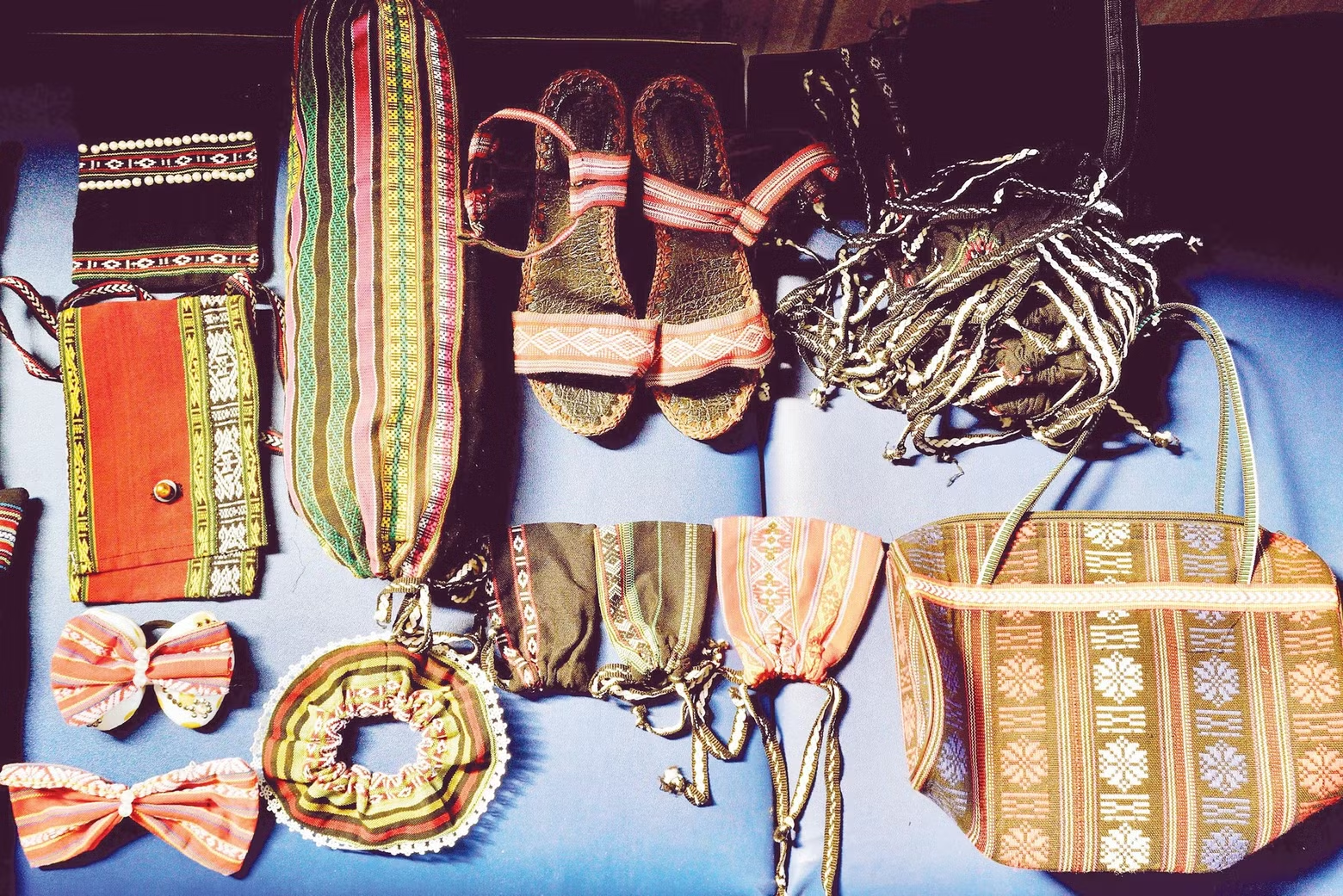
Alongside this traditional market, highland weavers and weaving villages have developed a wide range of brocade products to meet changing consumer tastes, including handbags, wallets, scarves, mobile phone pouches, headbands, ties and decorative items. These products are now available at tourist destinations, souvenir shops and on social media platforms, helping increase the value of brocade and generate additional income for many families.
K'Vang, who specialises in guiding tourists on village experiences, said brocade makes a distinctive souvenir because it captures the identity of a destination and the stories of its people. Although such items may not have a high monetary value, they embody cultural beauty and stand apart from mass-produced souvenirs that can be found almost anywhere.
"At the foot of Lang Biang Mountain, I have often seen young villagers with good English skills acting as bridges between traditional brocade and international visitors. When the stories behind the textiles are shared, their value increases many times over," K'Vang said.
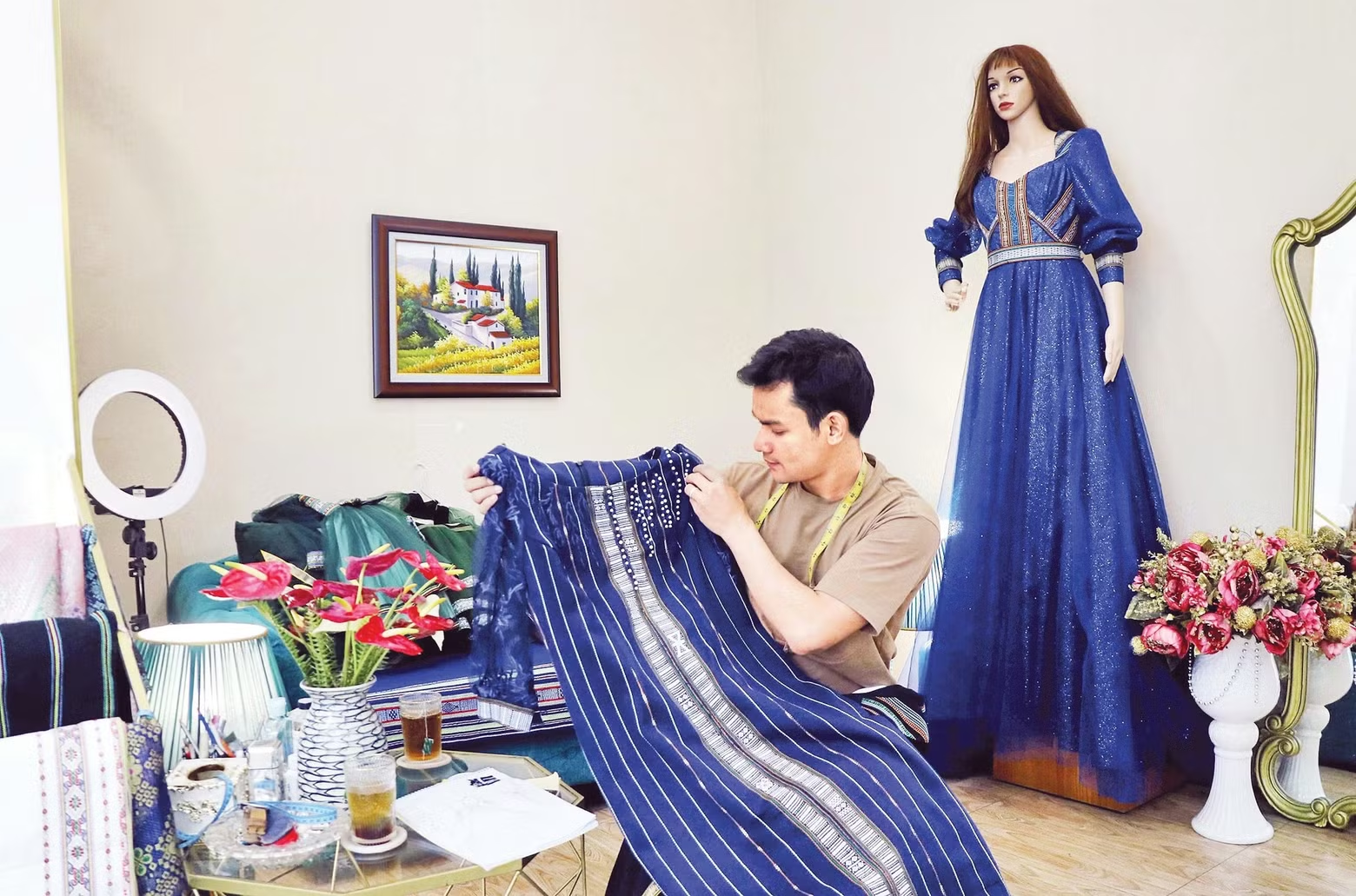
Today, brocade is finding new approaches and renewed vitality, thanks to fashion designers who are incorporating traditional materials into contemporary creations. After studying fashion design and working in Malaysia, K'Jona returned to Viet Nam in 2019 and opened “Jona Bridal” studio in Da Lat, beginning his journey of bringing traditional brocade patterns into modern fashion.
He travelled extensively through villages across the Central Highlands to study traditional motifs and colours, enriching the diversity of his designs.
"I combine traditional fabrics and patterns with contemporary fashion materials to create practical designs for casual wear, office attire, evening gowns, ao dai (Vietnamese traditional long dress), wedding outfits and children's clothing," K'Jona said. Recently, he has also been invited to design uniforms incorporating brocade patterns for schools and workplaces in areas with large ethnic minority populations.
Today, brocade is finding new approaches and renewed vitality, thanks to fashion designers who are incorporating traditional materials into contemporary creations.
Today, more than 40% of K'Jona's products are sold to the US and several European countries, mainly through online orders and custom designs commissioned by Vietnamese customers. Some are also consigned to fashion boutiques in Singapore and Malaysia, while the remainder are sold in the Central Highlands and South Central Coast regions. He describes his work with a sense of pride: "Every outfit I send to a customer means more pieces of brocade being brought from the villages. That is the joy of being a designer working with materials rooted in cultural heritage."
K'Jona is far from alone in the southern Central Highlands today. H'Yon, a young M'Nong woman in Pi Nao Village, Nhan Co Commune, carefully selects brocade colours for a contemporary wedding outfit ordered by a couple from a neighbouring village. In Nui Village, Cu Jut Commune, H'Wun, a young E De woman, was engrossed in creating an elegant patterned trim for a dress. On the Di Linh Plateau, Ka Hoan, a young Co Ho designer, was developing ideas for an evening gown commissioned by a customer in distant Europe. Browsing the Facebook and Zalo pages of designer Ka Pou Diem, I found myself captivated by her striking brocade fashion creations.
At Ka Thuan Minz's tailoring shop on the outskirts of the village, the hum of sewing machines mingled with lively conversations and laughter. "For a long time, brocade was largely confined to village life. After giving it considerable thought, I began developing design ideas and creating new products to make brocade more appealing to a wider audience," she said.
Alongside souvenirs designed to reflect contemporary tastes, her most valuable creations are the brocade fashion collections under the “Ka Thuan Minz” brand. These include women's outfits featuring carefully tailored cuts and contours that flatter the figure, as well as elegant suits for men. "I regularly post my designs on social media and receive a steady stream of orders. Only when we have a reliable market can the threads of our traditional craft continue," Ka Thuan said with a warm smile.
The colours of the mountains and forests on the catwalk
Looking back to 2018, brocade woven by the Ma and Co Ho ethnic communities made its debut on a professional fashion runway beside Xuan Huong Lake in Da Lat. Featured in a collection by designer Minh Hanh, the traditional textiles made a strong impression on fashion enthusiasts, marking the beginning of a new journey for this cultural heritage.
In the Central Highlands, I have encountered many precious cultural treasures. Brocade is among them, and fashion designers have a responsibility to develop it into a traditional material that reflects the spirit of our times.
Designer Minh Hanh
“In the Central Highlands, I have encountered many precious cultural treasures. Brocade is among them, and fashion designers have a responsibility to develop it into a traditional material that reflects the spirit of our times,” Minh Hanh said. A year later, her designs combining silk and brocade appeared in Moscow, Russia, as part of the Mystery of the Phoenix collection, winning acclaim from international fashion audiences.
Building on these achievements, Minh Hanh continued collaborating on a series of fashion events, including “Silk and Brocade of the Central Highlands”, “Brocade Fashion and Music of the Central Highlands”, “Meeting in the Heart of the Central Highlands”, “Meeting in the Green Paradise of Mang Den” and “Oh, Ban Me”, opening up new horizons for Central Highlands brocade.
Speaking briefly on the sidelines of a fashion event in Da Lat, Minh Hanh explained that her determination to combine brocade with silk was sparked by seeing a dress from a major international fashion brand priced at more than 2,000 EUR.
"That branded product looked almost identical to our traditional brocade dresses, except that silk had been used instead. If we adapt the skills of traditional brocade weavers and harmoniously combine different materials, we can create high-value products. And that is not particularly difficult," she said.
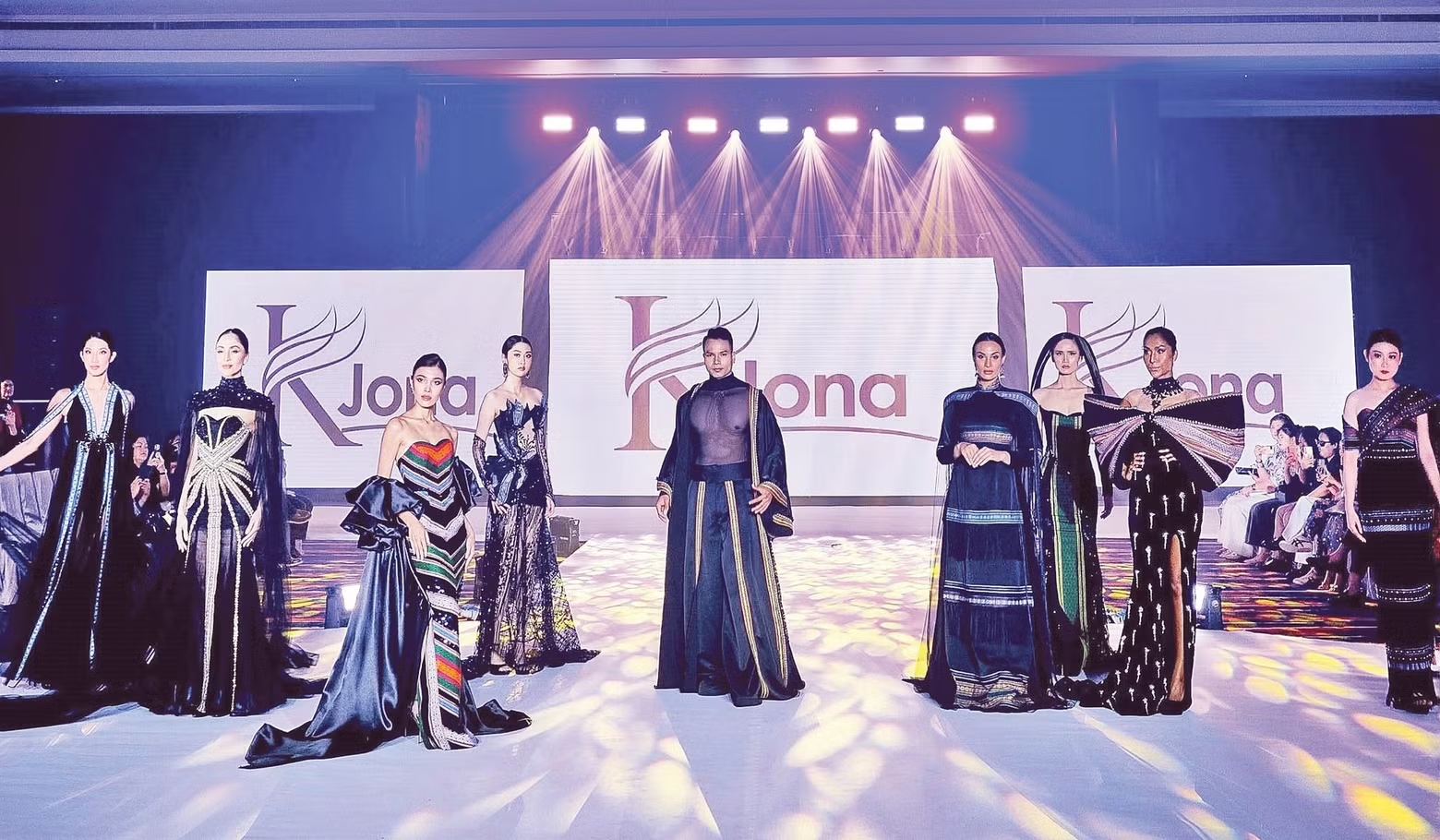
Having returned from Malaysia after participating in Kuala Lumpur Fashion Week 2026, K'Jona shared his experiences over a cup of hot tea on a fresh Da Lat morning. For him, creating fashion from the cultural heritage of the Central Highlands, particularly its traditional brocade, and attracting the attention of international fashion circles is a source of immense pride.
It demonstrates how Vietnamese cultural values in general, and those of the Central Highlands in particular, are gradually reaching wider audiences around the world. "After showcasing my collections at numerous fashion events, I believe Central Highlands brocade has the potential to become a source of inspiration for modern fashion design. And the threads of heritage will continue to stretch further," K'Jona said.
Since 2022, K'Jona has organised more than ten fashion shows to tell the story of Central Highlands cultural identity through brocade. His first collection, “Central Highlands Paradise”, astonished both fashion enthusiasts and local residents, who witnessed a traditional heritage being brought to life in an entirely new way. This was followed by “Bokau Lang Biang”, skilfully blending traditional styles with contemporary fashion tastes, and other collections such as “Echoes of the Great Forest” and “Ao Dai and Brocade”.
In 2025, K'Jona once again brought Central Highlands brocade to the international runway with his Mystical Lang Biang collection at Borneo Asia Fashion Week 2025 in Malaysia, making a strong impression on regional and international fashion audiences.
The goal is not merely to bring brocade closer to consumers, but to gradually establish a value chain through which culture becomes a resource for development, local people are the primary beneficiaries, and communities gain greater motivation to preserve their traditional crafts.
Rooted in tradition, brocade from the southern Central Highlands has travelled far beyond its origins, thanks to creative designs that combine the distinctive colours of the mountains and forests with contemporary fashion.
However, ensuring that these heritage threads remain strong and enduring requires more than creativity alone. Over a weekend coffee at the foot of the majestic Lang Biang Mountain, Bon Yo Soan, Vice Chairman of the Viet Nam Fatherland Front Committee of Lam Dong Province, outlined several priorities.
He stressed the need to strengthen connections between artisans, traditional craft villages, businesses, designers and markets, while paying greater attention to training younger generations, supporting promotion and branding, and developing products that meet modern consumer demand without losing their cultural identity.
“The goal is not merely to bring brocade closer to consumers, but to gradually establish a value chain through which culture becomes a resource for development, local people are the primary beneficiaries, and communities gain greater motivation to preserve their traditional crafts,” Bon Yo Soan said.
The journey of heritage threads is one of knowledge and traditions passed naturally from generation to generation — from a grandmother's hands, through a mother's watchful eyes, to a daughter's dreams.
Today, from the villages of the Central Highlands, those threads continue to travel further, carrying with them the colours of the mountains and forests and the enduring image of women sitting at their looms through countless farming seasons. That is the true value of Central Highlands brocade.