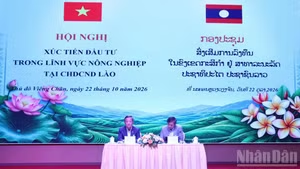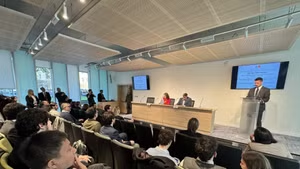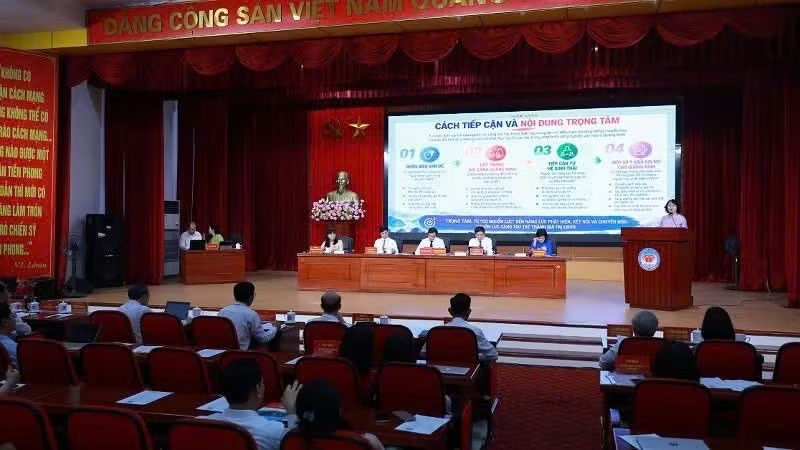
In his opening remarks, Vu Quyet Tien, Deputy Secretary of the City Party Committee and Chairman of the Vietnam Fatherland Front Committee of Quang Ninh, emphasised that the 14th National Party Congress and Political Bureau’s Resolution No. 80-NQ/TW (dated January 7, 2026) further concretise major directives regarding cultural development — including the growth of cultural industries — within the new era of national construction and development.
These documents call for strongly leveraging cultural values and human potential so that culture truly becomes an endogenous resource and a driving force for rapid and sustainable development, while linking the growth of cultural industries and the heritage economy with the establishment of a new growth model.
Consequently, the seminar held practical and theoretical significance, contributing to a deeper understanding of cultural industry development in line with the spirit of the 14th Congress documents, while also proposing suitable approaches based on Quang Ninh’s practical experience.
Alongside its rapidly growing economy and tourism market, Quang Ninh possesses a rich and diverse array of cultural resources that embody the unique identity of the region and its people. This serves as the foundation for the locality to leverage culture as a driver of development in the new era. However, the deputy secretary of the city’s Party Committee noted that significant cultural potential and a thriving tourism market do not automatically equate to a robust cultural industry.
The challenge for Quang Ninh lies in transforming cultural values into creative capacity, competitive products, strong brands, and new development resources. The province must identify sectors and products that offer genuine advantages and the potential to create a distinctive mark, while simultaneously preserving and enriching the values that define the identity of the land and its people. Culture generates resources for development, and the fruits of that development must, in turn, continue to nurture and enrich culture.
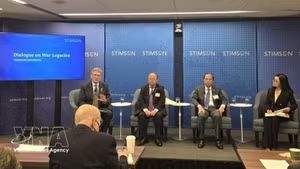
The delegates focused their remarks and inquiries on various aspects of cultural industry development, such as development orientations for Quang Ninh’s cultural industries through 2030 with a vision to 2045; strategies for attracting and leveraging young creative talent; harnessing the value of handicrafts and traditional craft villages; and digital transformation within the sector.
In his closing remarks, Assoc Prof, Dr Nguyen Manh Hung, Deputy Director of the Ho Chi Minh National Academy of Politics, highlighted that the seminar received 40 papers from scholars, administrators, and practitioners. He also acknowledged the insightful and dedicated contributions made by administrators, researchers, and business representatives during the discussion session.
The seminar also served as a meaningful forum for experts, scholars, and delegates to exchange views and clarify theoretical and practical issues regarding cultural industry development, while suggesting approaches suited to the specific conditions, potential, and development requirements of Quang Ninh.