The statement is more than a call for balanced development. It outlines a long-term vision for nation-building at a time when Viet Nam is pursuing double-digit economic growth, accelerating science and technology, digital transformation and the knowledge economy.
The message reinforces a development philosophy in which economic progress is not an end in itself, but a means to improve people's quality of life and build a humane society where every individual is cared and has the opportunity to thrive.
Economic growth must go hand in hand with cultural values
History shows that many countries have achieved remarkable economic success but later faced crises of public trust, declining moral standards and weakening social cohesion. Gross domestic product (GDP) may rise, skylines may expand and infrastructure may improve, but development cannot be sustainable if society becomes increasingly fragmented, indifferent or unequal.
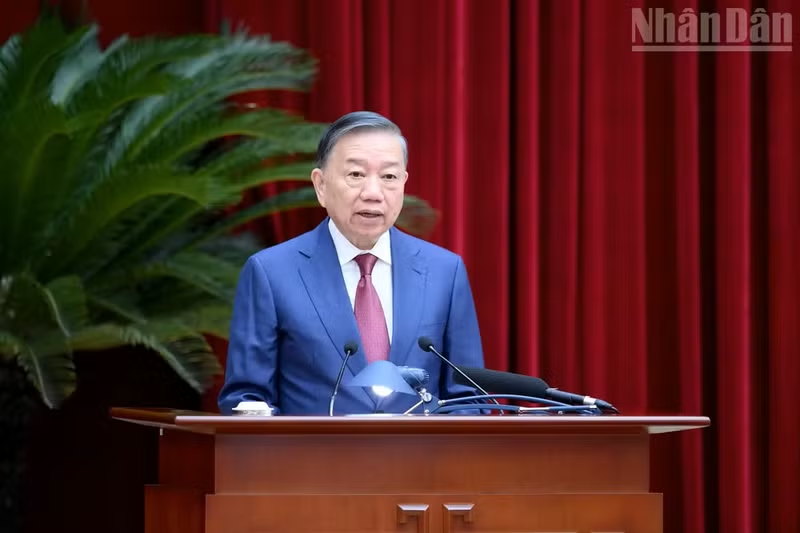
Against this backdrop, General Secretary and State President Lam's remarks stand out not only for emphasising economic growth but also for placing culture alongside development goals. His vision of "putting people at the centre, culture as the foundation, and the rule of law and discipline as the pillars" reflects a people-centred approach that prioritises quality of life, public well-being and comprehensive human development.
Trieu Thi Thanh Binh, Standing Vice Chairwoman of the Phu Tho Journalists' Association, said the leader’s address provides practical guidance that responds directly to the country's development needs.
According to her, the principle of "not allowing society to become materially wealthier while growing poorer in culture, morality and human compassion" is especially meaningful at a time of rapid economic development.
"Economic growth improves material living standards, but if development is driven solely by profit while neglecting culture, ethics and humanity, it cannot be sustainable," she said.
In her view, a truly civilised society is measured not only by its high-rise buildings, growth rates or per capita income, but also by how people treat one another, their sense of responsibility to the community and their ability to preserve enduring cultural values.
People-centred development as measure of sustainability
Alongside economic growth, Viet Nam continues to expand social welfare policies that reflect its commitment to putting people first.
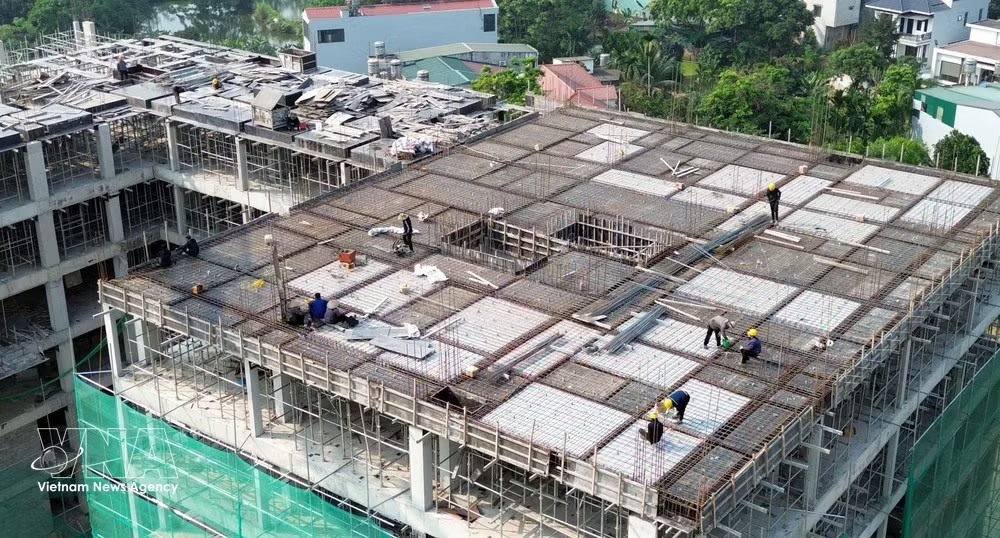
One of the country's flagship programmes aims to eliminate temporary and dilapidated houses nationwide, helping poor and near-poor households, as well as families with meritorious service, secure safe and stable homes. Supported by the State, businesses, organisations and local communities, the initiative is building or renovating tens of thousands of houses across the country.
For many families in remote or disaster-prone areas, a permanent home represents more than shelter. It provides the foundation for children to continue their education, enables adults to stabilise their livelihoods and offers a pathway out of poverty.
The expansion of social housing for low-income households and industrial workers is another key pillar of Viet Nam's social development agenda. During a working session with the Government Party Committee on May 19, 2026, General Secretary and State President Lam stressed that ensuring decent housing reflects the fundamental values of the political system and described social housing as a long-term strategy for promoting social equity.
"Homes are for living in, not for speculation or investment," he said.
According to the Viet Nam General Confederation of Labour, the trade union system plans to develop around 15 social housing projects comprising nearly 10,000 apartments by 2030. The Government is also implementing its programme to build one million social housing units for low-income earners and industrial workers between 2021 and 2030, expanding access to affordable housing nationwide.
")
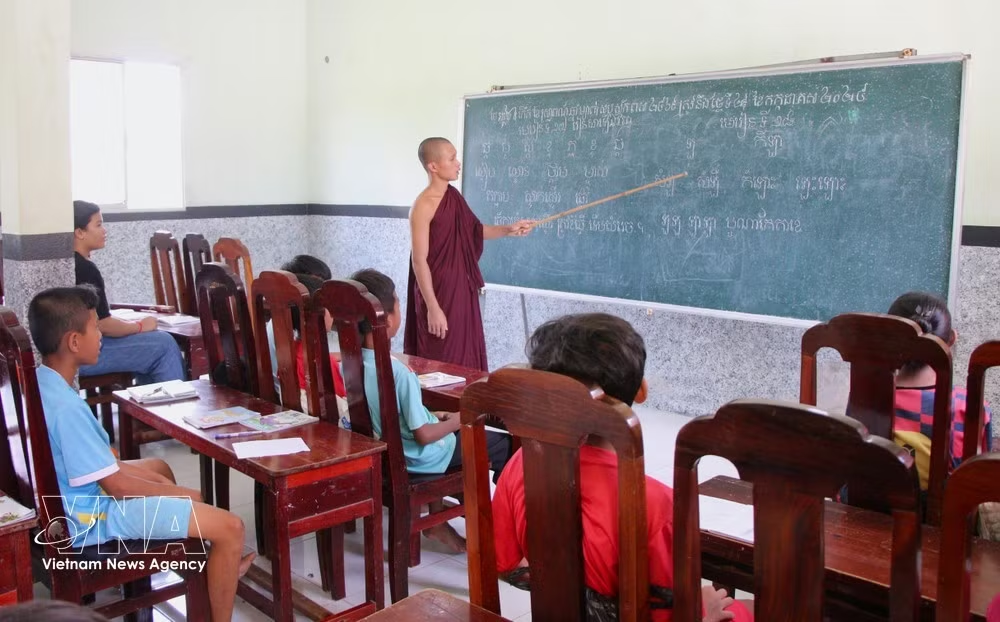
Education is another area where the people-centred approach is evident. The policy of waiving tuition fees for public school students aims to ensure equal educational opportunities, narrow regional disparities and build a highly skilled workforce. A nation's development, many argue, should be measured not only by economic indicators but also by its investment in education, knowledge and equal access to opportunity.
Thoi, a retired secondary school teacher in Bac Lung commune of Bac Ninh province, welcomed the policy.
"Many recent policies have directly benefited ordinary people. I particularly support free tuition for public school students. It has received broad public support, reflects the strengths of our education policy and has brought great relief to many families," she said.
Viet Nam's cultural heritage, shaped over thousands of years, encompasses patriotism, a strong commitment to learning, compassion, resilience and solidarity. These values have long served as an important source of national strength.
During the COVID-19 pandemic, they were reflected in community initiatives such as free rice dispensers, zero-cost supermarkets, volunteer medical teams and countless acts of mutual support that helped vulnerable communities weather the crisis.
If society becomes indifferent to the suffering of others, if kindness loses its place or if money becomes the sole measure of success, material prosperity alone cannot compensate for the resulting moral and spiritual losses.
The top leader's message, therefore, is directed not only at policymakers but at society as a whole. Development decisions should always place people at the centre. Families should preserve strong values, schools should nurture character and public officials should uphold integrity as their guiding principle.
A nation's greatest wealth, the message suggests, lies not only in economic achievements but also in the character of its people, the strength of its compassion and the vitality of its cultural identity. These enduring human values have sustained Viet Nam throughout its long history and will continue to underpin its future development.