A vivid testament to the depth of cooperation
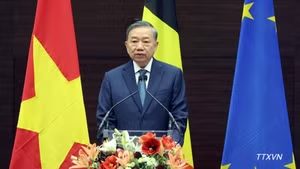
Brussels, the heart of Europe, has witnessed a new chapter in Viet Nam–Belgium friendship in recent days. General Secretary and President To Lam emphasised that relations between Viet Nam and Belgium are the clearest testament to the depth of Viet Nam–EU cooperation.
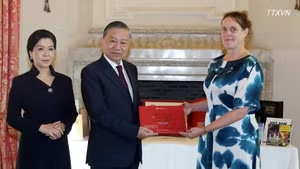
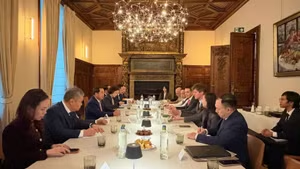
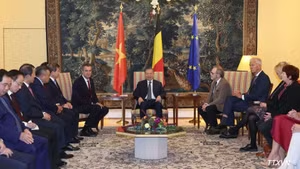
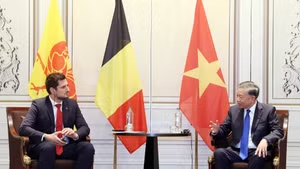
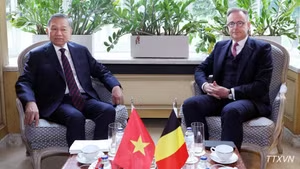
In a cordial atmosphere during a meeting between General Secretary and President To Lam and the Presidents of the Belgian Federal Senate and House of Representatives, the two parliamentary leaders announced that the lower chamber had officially voted to ratify the EU–Viet Nam Investment Protection Agreement (EVIPA) on the night of October 22, shortly beforehand. They affirmed that this was compelling evidence of the potential and determination to advance economic, trade, and investment cooperation between the two countries.
The development marked a new milestone in bilateral cooperation and reflected highly positive progress towards the ratification of EVIPA, paving the way for its full entry into force and opening greater opportunities to attract high-quality foreign direct investment (FDI) from Europe to Viet Nam.
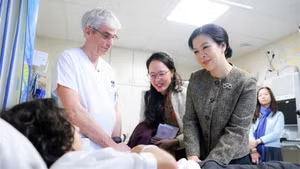
Previously, in October 2023, the Belgian House of Representatives adopted a resolution supporting Vietnamese victims of Agent Orange/dioxin. The move helped raise awareness of their plight within the international community. It was the first — and remains the only — time a foreign parliament has passed such a resolution, demonstrating Belgium’s friendship, humanitarian spirit, and commitment to assisting Viet Nam in overcoming the consequences of war.
The resolution provided fresh impetus for various Belgian stakeholders, including philanthropists, royal foundations, environmental remediation experts, investors, and businesses, to contribute their support. The two sides are currently implementing a range of technical cooperation programmes under their Strategic Partnership on Agriculture, covering desalination technology, the circular agricultural economy, smart agriculture, smart cold-chain logistics, the cocoa industry, and food safety.
General Secretary and President To Lam and the high-level Vietnamese delegation visited the Port of Antwerp-Bruges in Flanders. This is the second-largest port in Europe, serving as a key hub for international trade and industry. It contributes approximately 4.5% of Belgium’s gross domestic product (GDP). Viet Nam and Flanders have cooperated in maritime transport and waterways for decades, building on the Agreement on Friendship and Cooperation in 1995.
Agencies, experts, and businesses from both sides regularly conduct training programmes, professional exchanges, and experience-sharing activities. During the visit, General Secretary and President To Lam stressed that the achievements of cooperation were a valuable asset in Viet Nam–Flanders relations and should be further promoted in the new phase.
With the determination to become a strong maritime nation and prosper from the sea, Viet Nam is accelerating the development of an integrated, modern infrastructure system. This includes plans to build advanced, green, and smart seaports, strengthen connections between ports and inland waterways, railways, and other modes of transport, and gradually improve connectivity with global supply chains and trade networks. These efforts will make it easier for Vietnamese exports to reach the Belgian and wider European markets, while facilitating access to Viet Nam for European goods, technologies, services, and investment opportunities.
Viet Nam is therefore keen to learn from Belgium and exchange experience in seaport development, multimodal transport connectivity, and logistics, among other areas. It hopes to deepen cooperation through specific programmes and projects. Given its existing strengths, Belgium is well placed to become an important partner of Viet Nam in transport infrastructure, green logistics, innovation, sustainable agriculture, and climate change response.
The two countries can elevate bilateral economic, trade, and investment cooperation to a new level, serving as a practical bridge to promote ties between Viet Nam and the EU, as well as between Europe and ASEAN.
Driving breakthroughs in new areas
Against the backdrop of Viet Nam and the EU having upgraded their bilateral relations to a Comprehensive Strategic Partnership in January 2026, the official visit to the EU reaffirmed Viet Nam’s role as a gateway for ASEAN cooperation with the EU. The EU is not only a leading centre of economic activity, science, and technology, but also a pioneer in shaping international standards and global governance frameworks.
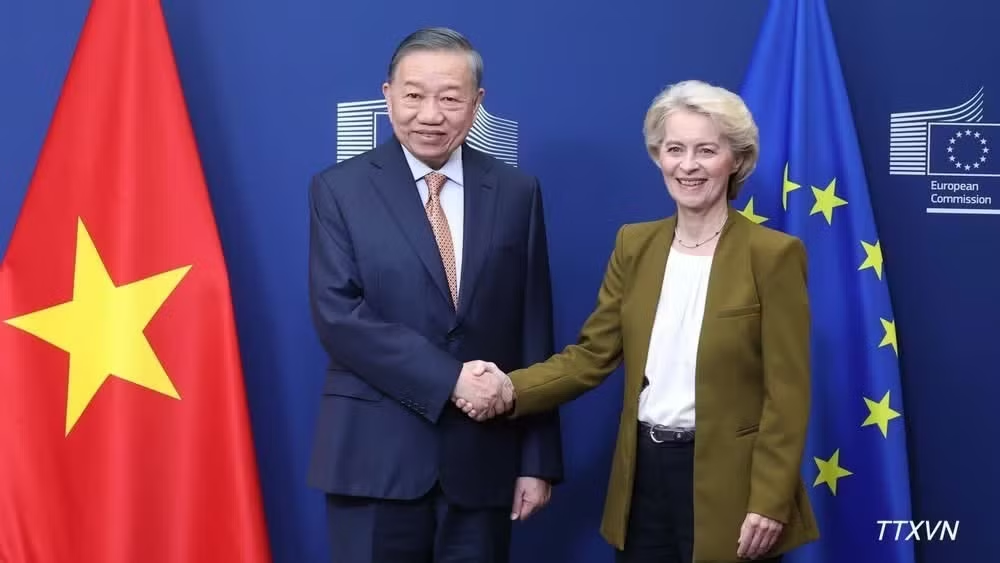
Viet Nam is the only Southeast Asian country to have established such a comprehensive network of cooperation mechanisms with the EU, comprising eight frameworks, and has forged strategic or comprehensive partnerships with 11 EU member states. According to General Secretary and President To Lam, cooperation with the EU is not merely a conventional foreign relationsip, but a pillar of strategic significance directly linked to Viet Nam’s approach to multilateralisation and diversification, as well as its path towards autonomous development.
During talks, European Council President António Costa affirmed to General Secretary and President To Lam that Viet Nam was an important EU partner in the Indo-Pacific region. He expressed confidence that the two sides would continue to build on their foundation of political trust and the positive outcomes achieved over more than 36 years of diplomatic relations, deepening their Comprehensive Strategic Partnership and delivering tangible benefits to both peoples.
General Secretary and President To Lam affirmed that Viet Nam regarded the EU as one of its top priority partners, with substantial shared interests and long-term cooperation potential. He expressed the desire for deeper economic, trade, and investment ties, with commitments translated into concrete results and practical cooperation projects, while continuing to make effective use of the opportunities and advantages offered by the EU–Viet Nam Free Trade Agreement (EVFTA).
The General Secretary and President proposed making Viet Nam–EU cooperation a core element of the EU’s Indo-Pacific strategy. Both sides agreed that they should strengthen dialogue, contacts, and exchanges at all levels, particularly at the senior level, to consolidate political trust, enhance mutual understanding, boost cooperation effectiveness, and drive breakthroughs by expanding collaboration into new areas, including green transition, innovation, strategic infrastructure, and the circular economy.
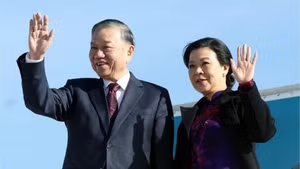
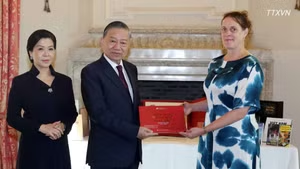
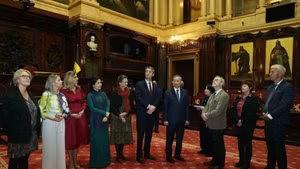
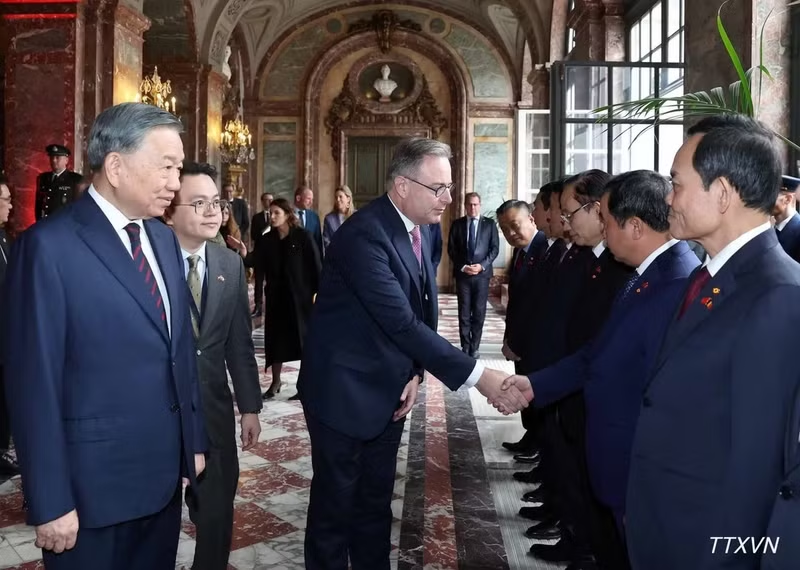
The official visit to the EU and the Kingdom of Belgium by General Secretary and President To Lam, his spouse, and the high-level Vietnamese delegation left a strong impression, highlighting areas of shared interest, common commitments, and cooperative achievements.
Building on their shared vision for a green maritime economy, ocean protection, and maritime security, the two sides agreed to research and promote maritime economic cooperation as a new pillar in bilateral relations. General Secretary and President To Lam attended a high-level roundtable with leading European business leaders. Participants discussed partnership opportunities, investment and business strategies, while proposing solutions and collaborative models in infrastructure, logistics, high technology, digital transformation, the green economy, healthcare, pharmaceuticals, high-tech agriculture, and food processing.
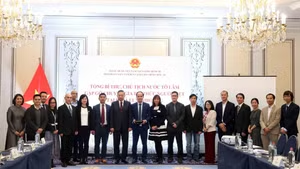
The opinions and proposals put forward demonstrated the European business community’s interest and confidence in, and growing expectations of Viet Nam as it enters a new phase of development. Welcoming these contributions, the General Secretary and President said that future efforts should go beyond expanding trade and investment to improving the quality of cooperation, increasing technological content and development standards, strengthening competitiveness, and enhancing the standing of businesses from both sides in global value chains. At the roundtable, General Secretary and President To Lam and other delegates witnessed the signing of cooperation agreements, marking the beginning of efforts to turn the vision and objectives for the new phase of partnership into reality.
The official visit to the EU and the Kingdom of Belgium by General Secretary and President To Lam, his spouse, and the high-level Vietnamese delegation left a strong impression, highlighting areas of shared interest, common commitments, and cooperative achievements. The outcomes of the trip will further deepen bilateral relations and ensure that cooperation becomes increasingly substantive, effective, and far-reaching.