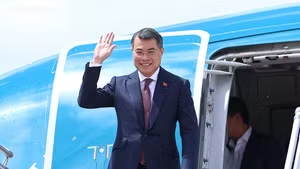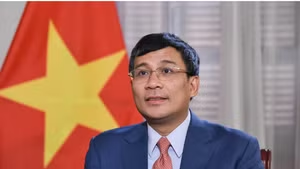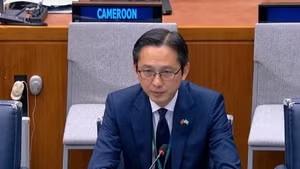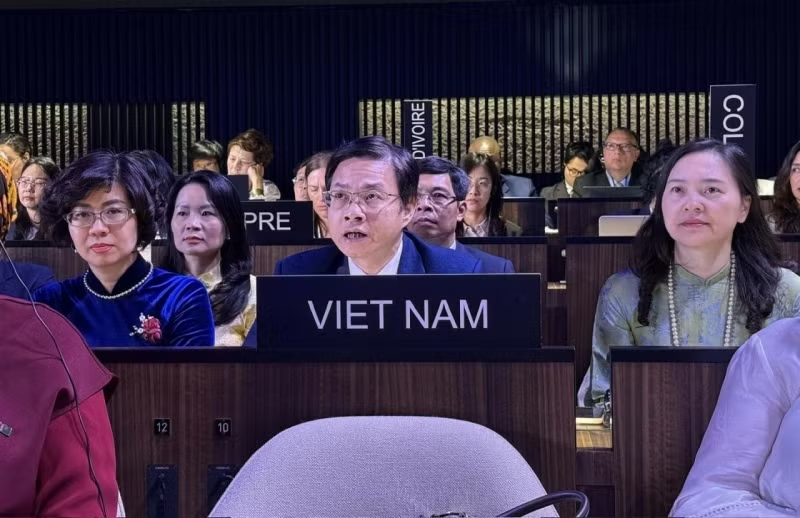
Addressing the session, which brought together more than 650 delegates from 185 member states and over 100 observers, Van welcomed efforts to position the 2003 convention as a key framework for safeguarding cultural heritage, promoting cultural diversity, fostering dialogue among communities, and advancing sustainable development.
He noted that after more than two decades of implementation, the convention is entering a new stage of development, in which safeguarding intangible cultural heritage is not only about preserving traditional values but also about enhancing community resilience, promoting education, supporting sustainable livelihoods and strengthening adaptation capacity.
The official proposed UNESCO and member states further mobilise new and creative resources, make effective use of emerging technologies, and strengthen synergies between the convention and other UNESCO cultural conventions, particularly the 1972 Convention concerning the Protection of the World Cultural and Natural Heritage.
As one of the earliest countries to join the 2003 convention and currently having 17 intangible cultural heritage elements inscribed by UNESCO, Viet Nam consistently regards culture as the spiritual foundation of society, both a goal and a driving force for sustainable development, Van said, adding that the country has been working to improve its legal framework, place communities at the centre, and integrate heritage conservation with education, sustainable tourism and digital transformation.
On the occasion of Viet Nam’s successful completion of its term as a member of the Intergovernmental Committee for the Safeguarding of Intangible Cultural Heritage for the 2022–2026 period, the deputy minister affirmed that Viet Nam will continue to play a proactive, responsible and constructive role, working alongside UNESCO and member states to ensure the convention remains a humane and effective cooperation framework which contributes to a more diverse, inclusive and peaceful world.
During the visit, the Vietnamese official held meetings with UNESCO Director-General Khaled El-Enany, President of the 43rd Session of the UNESCO General Conference Khondker M. Talha, Assistant Director-General for Culture Nayef H. Al-Fayez, Director of the World Heritage Centre Lazare Assomo, and Director-General of the International Council on Monuments and Sites (ICOMOS) Céline Noguès-Weber, as well as cultural ministers from Cambodia, Bulgaria and Mauritania, and heads of delegations from many member states.
At these meetings, he reaffirmed Viet Nam’s commitment to its partnership with UNESCO and support for ongoing reform efforts aimed at enhancing organisational efficiency, particularly the UNESCO80 reform initiative.
As the year 2026 marks the 50th anniversary of Viet Nam–UNESCO relations, both sides discussed major orientations to elevate cooperation, including the signing of a bilateral cooperation framework for the 2026–2030 period and commemorative activities in Paris and Hanoi. Van also conveyed Viet Nam’s invitation to the UNESCO Director-General to pay an official visit to Viet Nam later this year.
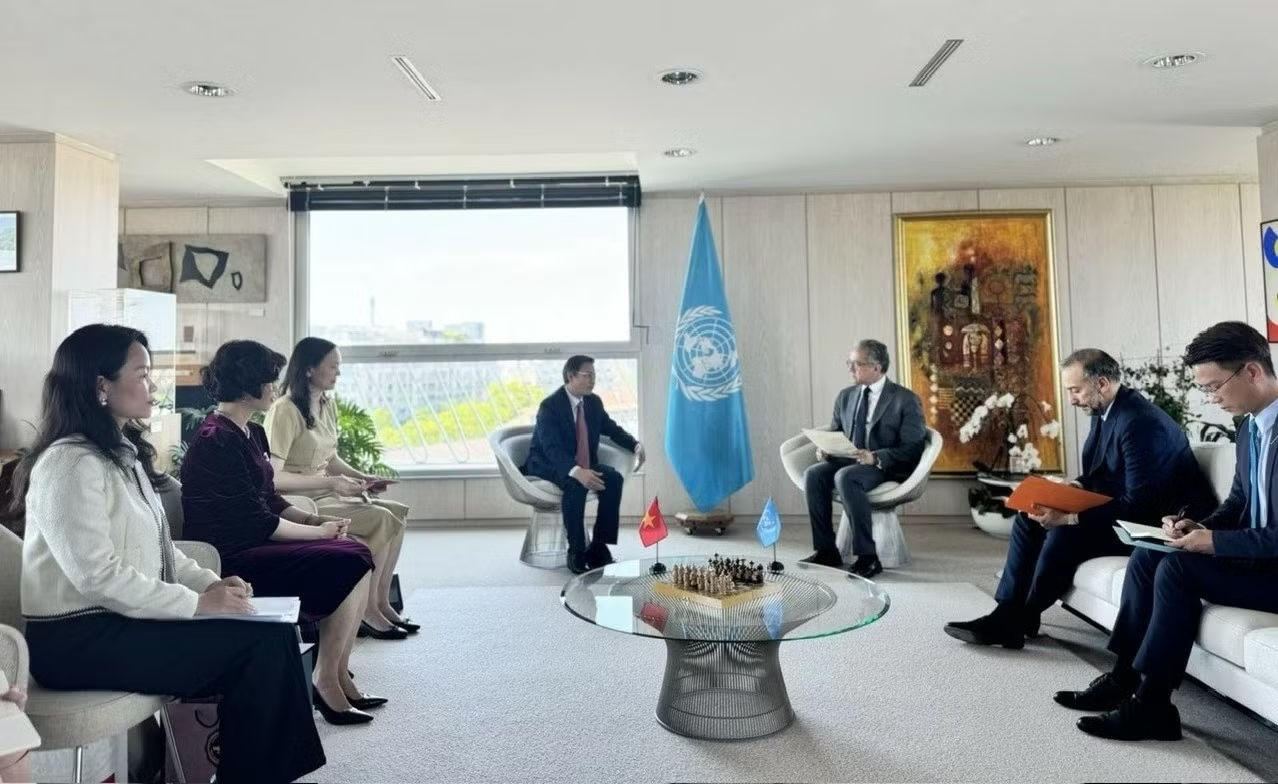
El-Enany, in turn, reaffirmed that Viet Nam is an active and responsible member making significant and effective contributions to the organisation, and expressed his readiness to visit Viet Nam as well as welcome a high-level Vietnamese delegation to the UNESCO headquarters on the occasion of the 50th anniversary of bilateral relations.
Both sides also discussed joint initiatives such as the International Decade on Culture for Sustainable Development, the Asia-Pacific Dialogue on Heritage and Authenticity to be held in Hanoi in September, and the Festival for Peace in central Quang Tri province in July.
Van also expressed a desire to continue receiving technical support and professional advice from UNESCO and ICOMOS in preserving and promoting world heritage sites, as well as in preparing nomination dossiers such as Mo Muong and Oc Eo–Ba The archaeological site complex.
UNESCO leaders and heads of participating delegations expressed their strong impressions of Viet Nam’s dynamic development, strategic vision, and balanced approach to linking heritage conservation with sustainable development, tourism development and community well-being.