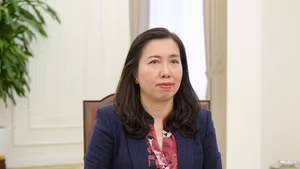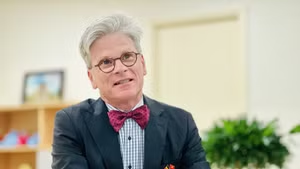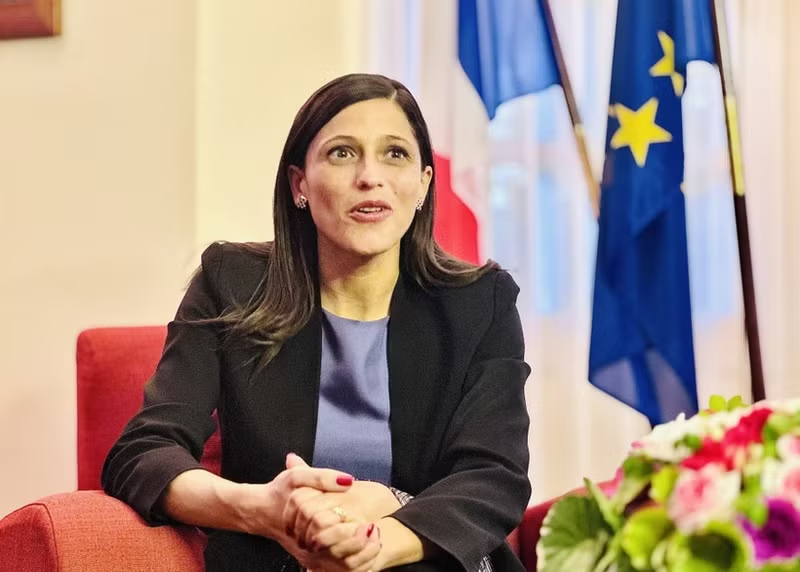
Talking to Vietnamese reporters on October 19 in Ha Noi, Caroit expressed her pleasure at making the official trip just weeks after General Secretary of the Communist Party of Viet Nam Central Committee and President To Lam visited France in September 2026.
She said the two sides were actively coordinating in priority areas, including rail transport, healthcare, energy transition, high technology and environmental protection.
Caroit highlighted Ha Noi’s Metro Line 3 as a model of effective bilateral cooperation, saying that the pilot project is helping address public transport challenges, improve living conditions for millions of capital residents, contribute to reducing greenhouse gas emissions by promoting green mobility.
Alongside technology transfer and advanced equipment provision, the French side is prioritising in-depth training to enable Viet Nam to fully master operational processes and ensure sustainable exploitation.
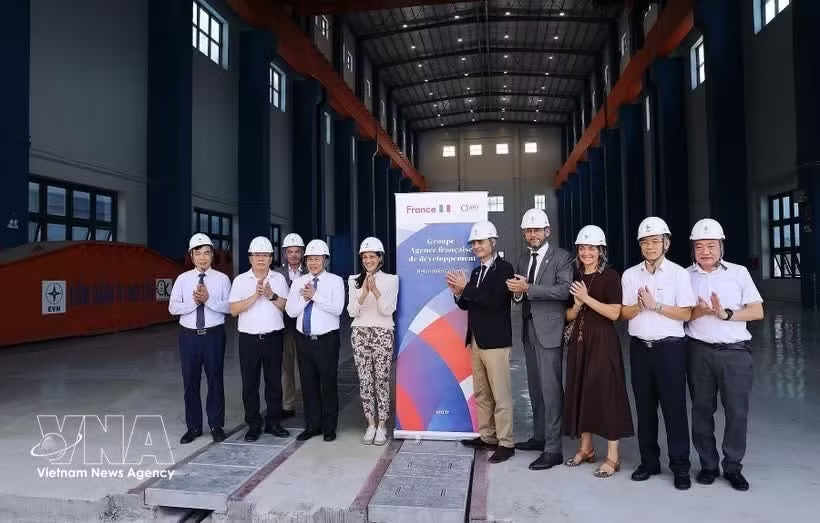
Following a field trip to energy projects in Phu Tho province on October 18, she said French funding and technical assistance would continue to support clean electricity generation, contributing to Viet Nam’s goal of achieving net-zero emissions by 2050.
The minister underscored the importance of strategic autonomy for both countries, saying that her visit also aims to promote the implementation of the Letter of Intent on cooperation in critical minerals between the Vietnamese Ministry of Agriculture and Environment and Ministry of Industry and Trade, and the French Ministry of Economy, Finance, Industrial, Energy and Digital Sovereignty.
Under the initiative, the French Geological Survey (BRGM) and the French Development Agency (AFD) will work closely with the Viet Nam Department of Geology and Minerals under the Ministry of Industry and Trade (MOIT) to assess mineral reserves and support sustainable extraction and processing. The partnership is expected to strengthen Viet Nam’s domestic industrial capacity and diversify raw material supply chains serving the global energy transition.
Caroit also highlighted the active presence of French businesses in Viet Nam, expressing confidence that the EU-Viet Nam Free Trade Agreement (EVFTA) and the EU-Viet Nam Investment Protection Agreement (EVIPA) would provide fresh impetus for more leading French technology, energy and industrial corporations to expand their investments in the Vietnamese market.
People-to-people ties provide a firm foundation for broader cooperation, she said, noting that more than 3,000 Vietnamese doctors had received training through over three decades of bilateral healthcare cooperation.
France hopes to expand educational links into emerging fields, including artificial intelligence, quantum technology and aerospace, through scholarships, double-degree programmes and the Hubert Curien Partnership (PHC) research programme, she said.
She also highly valued the International Corporate Volunteering (VIE) programme for facilitating exchanges and internships for young professionals and students in the two countries.
Regarding cultural and heritage cooperation, Caroit expressed her admiration after experiencing heritage tourism routes in Hanoi, affirming that they reflected close coordination between experts and scientists from both countries to preserve and promote cultural values for future generations.
The landmark cooperation project between the Dien Bien Phu Victory Museum and the Caen Memorial Museum, together with France’s hand-over of a Dong Son bronze drum to Viet Nam, serves as vivid evidence of a shared commitment to respecting history and combating the illicit trade in cultural property, she stressed.
Ahead of the 20th Francophonie Summit, scheduled to take place in Cambodia this November, marking the event’s return to Southeast Asia 29 years after the 1997 summit in Ha Noi, Caroit highlighted Viet Nam’s active role as a bridge within the International Organisation of La Francophonie (OIF).
She said the OIF remained a flexible multilateral forum for promoting peace, dialogue and economic cooperation amid complex geopolitical developments, citing FrancoTech, a technology innovation forum for businesses. She affirmed that France would continue working with Viet Nam to expand French-language teaching in public schools and research institutes, helping make French a “language of opportunity” that opens international career and entrepreneurship prospects for young Vietnamese people.