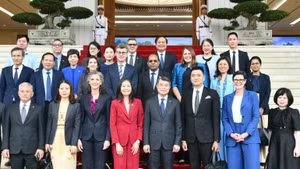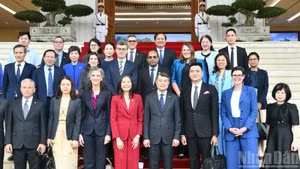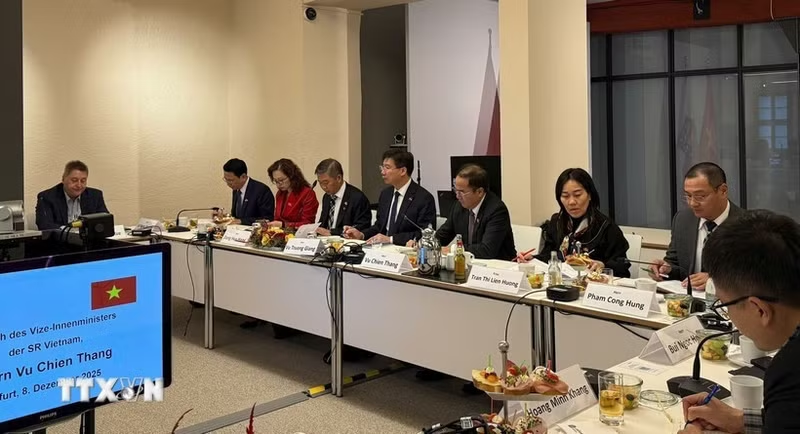
Thang made the remarks at the Viet Nam–Germany Labour Cooperation Forum held in Leipzig on December 9 by the Viet Nam Ministry of Home Affairs, in collaboration with Federal Ministry of Labour and Social Affairs of Germany (BMAS) and Leipzig authorities. The event was part of activities marking the 50th anniversary of diplomatic relations between the two countries.
The Deputy Minister noted that Viet Nam is currently in a “golden population” period with 101.8 million people as of November, 68% of whom are of working age. The Vietnamese workforce, known for diligence, adaptability and strong vocational skills, provides a strong foundation for cooperation in skilled labour mobility.
He stressed that Viet Nam enters a new development phase built on digital transformation, institutional reform and deeper global integration. In 2025, Viet Nam will implement major administrative reforms, streamlining government at all levels towards a model that “serves the people and facilitates development”.
Thang reiterated Viet Nam’s consistent stance of prioritising quality over quantity in overseas labour cooperation. Viet Nam is committed to sending highly skilled workers who meet Germany’s strict requirements, especially in professional skills, workplace discipline, cultural readiness and German-language proficiency.
He introduced the concept of a “human resources circulation cycle”, emphasising that Vietnamese workers in Germany not only contribute to the German economy but also acquire modern industrial know-how. When they return, these workers act as a valuable resource for Viet Nam’s development and as long-term bridges of bilateral friendship.
Also at the forum, representatives from both sides discussed key issues affecting cooperation, including licensing for vocational-study consultancy firms, B1–B2 German-language training, cultural orientation, accelerated recognition of Vietnamese qualifications, cost-sharing models between German authorities and receiving companies, and ensuring fair integration and protection for workers.
Reducing intermediaries and developing transparent recruitment channels were highlighted as essential for “fair recruitment”.
BMAS State Secretary Leonie Gebers and Leipzig Deputy Mayor Clemens Schülke commended the quality of Vietnamese workers and pledged close coordination to take full advantage of Germany’s new Skilled Immigration Act, creating favourable conditions for Vietnamese workers to work and integrate in Germany.
Concluding the forum, both sides agreed to strengthen links between training institutions and enterprises, affirming labour cooperation as an increasingly important pillar of the Viet Nam–Germany Strategic Partnership.