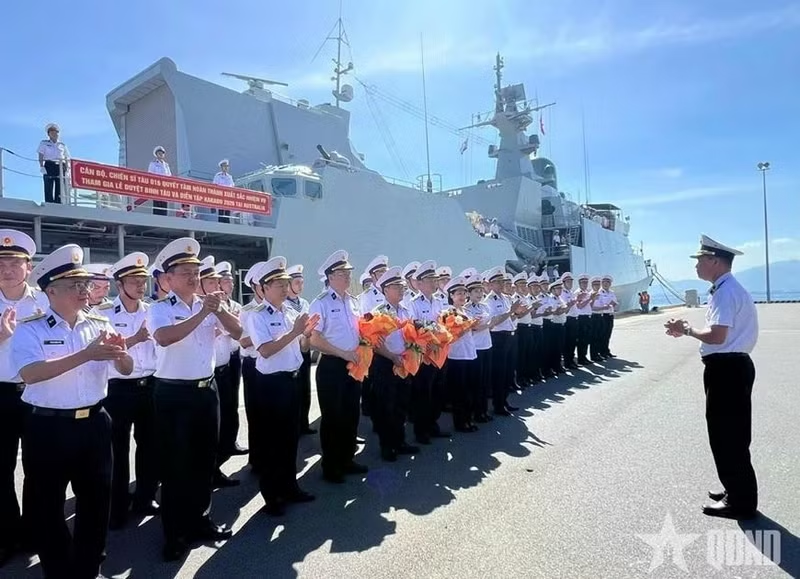
The deployment aligns with the Party and State’s guidelines and directives of the Central Military Commission and the Ministry of National Defence on international integration and defence diplomacy. Participation in the fleet review and Exercise Kakadu 2026 is expected to strengthen coordination in addressing shared maritime security challenges, deepen mutual trust and understanding, and advance cooperation among participating navies in support of peace, stability and development in the region and beyond.
The mission also contributes to further consolidating defence ties and practical cooperation between Viet Nam and Australia, in line with the Viet Nam–Australia Comprehensive Strategic Partnership.
Beyond diplomacy, the voyage provides valuable long-distance training, helping enhance command and coordination capacity, combat readiness, and proficiency in operating weapons and technical equipment during prolonged deployments at sea, while building experience in multilateral engagement.
During its stay in Australia, Ship 016 – Quang Trung and accompanying delegations will take part in the International Fleet Review and Kakadu 2026 activities, including port-phase events such as the opening ceremony, naval leadership conferences, planning meetings for sea phases, alongside training, sports and cultural exchanges, local heritage visits, and onboard receptions. The sea phase will focus on non-combat drills, including communications, formation manoeuvres, replenishment at sea, aerial photography manoeuvres, search and rescue, and specialist team training.
Kakadu, hosted by Australia since 1993, is a biennial multilateral naval exercise. This will be the second participation by a Vietnamese naval vessel, following Ship 18 of Brigade 171, Naval Region 2, which joined Kakadu 2024 in Darwin - the first-ever appearance by the Viet Nam People’s Navy at the exercise.
With its participation in Kakadu 2026 in Sydney, Ship 016 – Quang Trung is set to complete the longest voyage in the history of the Viet Nam People’s Navy, sailing more than 11,000 nautical miles over roughly 60 days.