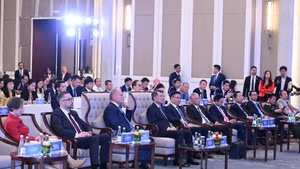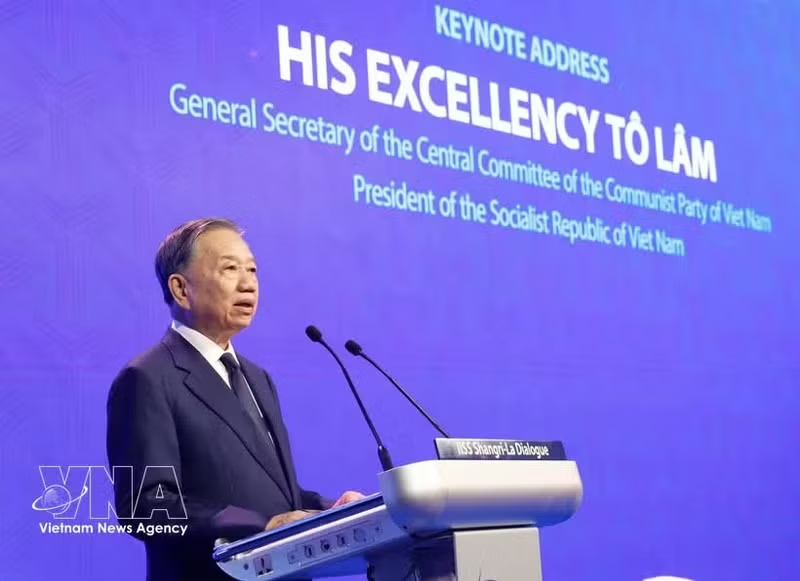
General Secretary of the Communist Party of Viet Nam Central Committee and State President To Lam made the remarks while responding to a question from a delegate from the ISEAS – Yusof Ishak Institute on how Vietnam’s drive to streamline its state apparatus could affect the country’s foreign policy, after delivering a keynote address at the 23rd Shangri-La Dialogue in Singapore on May 29.
He said the moves would not affect Viet Nam’s core foreign policy orientation but instead help the country more effectively pursue its foreign policy of independence, self-reliance, diversification and multilateralisation of international relations.
A more dynamic and better-governed Viet Nam would also become a more reliable and responsible partner for the region and the world, the leader stressed.
Viet Nam also views ASEAN as a strategic space directly tied to its peace, stability and development, and has consistently regarded the bloc’s success as its own, he continued.
Within ASEAN, Viet Nam does not seek to become a power centre but aims to be a proactive, constructive and responsible member, contributing to enhancing ASEAN’s solidarity and centrality, and promoting a balanced and substantive approach to regional challenges.
In the coming years, as its national capacity improves, Viet Nam will contribute more to ASEAN and work with other member states to strengthen the bloc as a strategic convergence point in areas including economic connectivity, digital transformation, security, supply chains, maritime security and narrowing development gaps, the leader said.
General Secretary and President Lam said he believes a united and resilient ASEAN that maintains its centrality will continue to serve as an important foundation for peace, stability and prosperity in the Indo-Pacific.
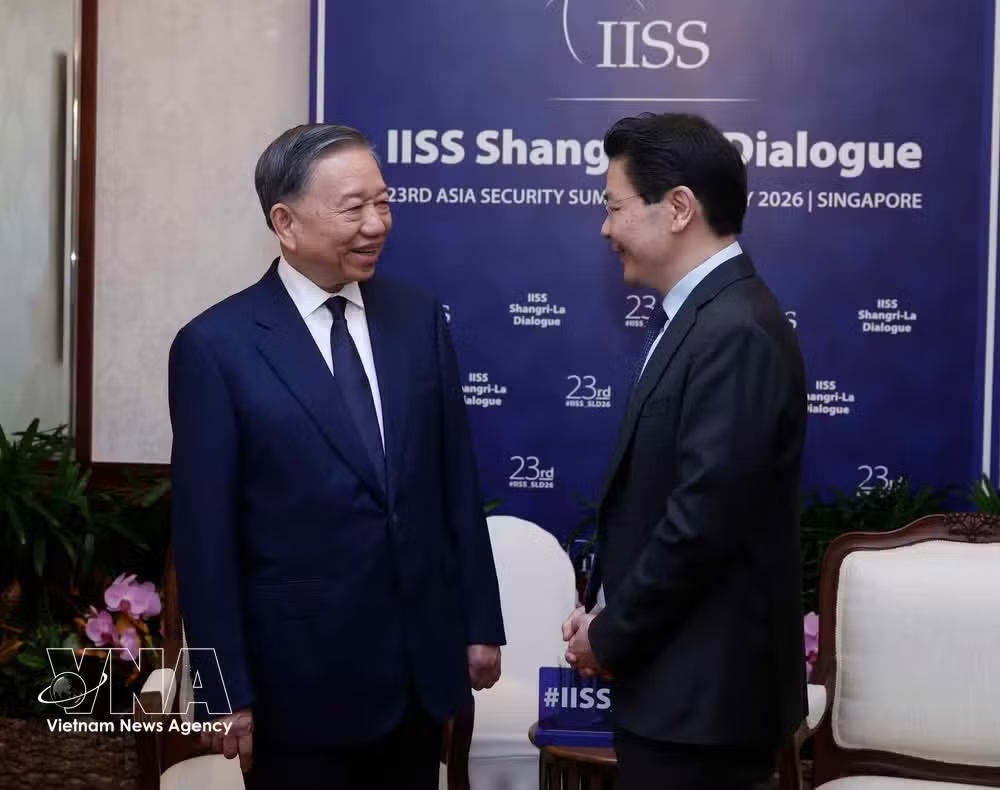
Responding to a question from a Chinese delegate on whether the Viet Nam-China 3+3 strategic dialogue mechanism could create a new approach to advancing regional security cooperation, he said the mechanism reflects Viet Nam’s policy of independence and self-reliance, while continuing the country’s tradition of self-strengthening combined with embracing the achievements of humanity.
He said the spirit is demonstrated in Viet Nam’s commitment to maintaining a peaceful environment and pursuing proactive and responsible engagement in addressing regional and global issues, alongside comprehensive, deep and effective international integration.
Viet Nam also affirms its adherence to the fundamental principles of international law and the United Nations Charter, while pursuing peace and mutually beneficial cooperation as a reliable partner and responsible member of the international community, he said.
For a question from another delegate on science and technology development in Viet Nam, particularly whether artificial intelligence and other emerging technologies present challenges or opportunities and how Viet Nam plans to govern them, the leader said Viet Nam needs to strengthen human responsibility and oversight over decisions with serious security implications, especially in the defence sector.
He said the more advanced technologies become, the more clearly human accountability must be defined and strictly regulated, including in the case of AI.
He stressed the need to protect civilian infrastructure and cyberspace, while avoiding attacks or sabotage targeting critical systems such as healthcare, energy, finance, ports, data networks and other essential public services, where AI is also contributing to development.
The leader also underscored the importance of transparency, information-sharing and trust-building through dialogue based on voluntary principles and technical standards, gradually moving toward stricter frameworks when consensus is reached on the use of science and technology applications, including AI, in business activities as well as defence, military and security fields.