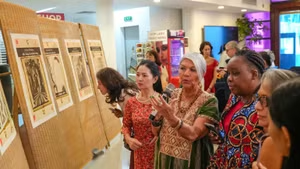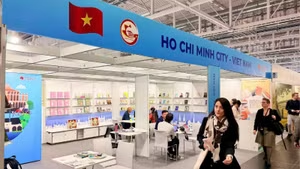
However, to promote the potential of cultural resources, research, production, and the market demand must be connected through an overall strategy.
Transforming indigenous values through design
The trend of applying knowledge and techniques from traditional handicrafts to modern products is opening a new direction for Viet Nam’s design industry. Many brands are proactively working with artisans and artists, incorporating local culture into fashion, furniture, and consumer products, gradually establishing their own identities in the market and spreading cultural values around the world.
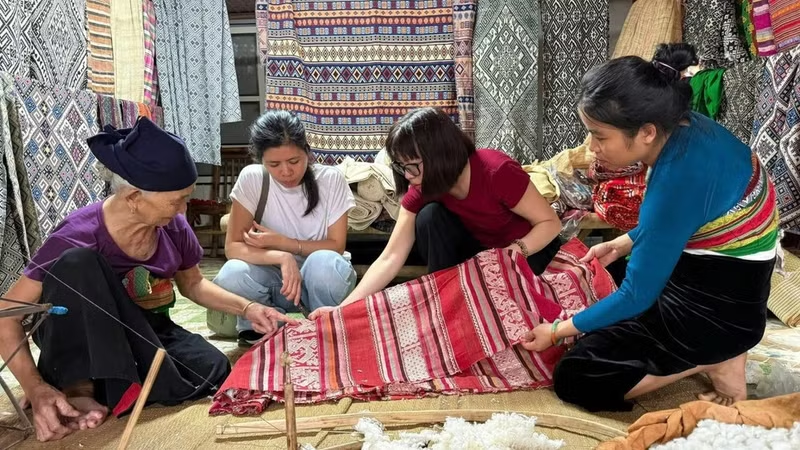
The fashion brand Kilomet109 has established close links between raw-material areas, the skills of craft practitioners, and its design team, following a sustainable fashion approach. The brand works with Nung, H’mong, Thai artisans in different regions through a closed-loop process, from cultivation and spinning to weaving and natural dyeing. Drawing on weaving, indigo dyeing, stone polishing, and beeswax painting techniques, Kilomet109 has developed its own design language, combining traditional craftsmanship with modern styles that bear a distinctive local cultural identity.
To enhance the customer experience, TiredCity uses modern visual language to explore Vietnamese images and stories in souvenir and consumer product design. The brand works with numerous artists and young illustrators, incorporating their works into a diverse range of products. Collections of T-shirts, bags, prints, and souvenirs bring images of Vietnamese culture closer to younger audiences. These products help bring images of the country into everyday life and spark young people’s interest in cultural values expressed through individual designs.
In the furniture sector, Viet Furniture combines traditional materials with modern design and production methods to create products with a distinctive identity. The “Ganh Ganh Gong Gong” collection is inspired by the traditional shoulder poles and familiar clay jars used in daily life in the past. Materials such as rattan, bamboo, and Bat Trang ceramics are used to recreate objects associated with Vietnamese labourers. The combination of the finest elements of traditional craft villages and contemporary design has brought local Vietnamese cultural features into living spaces.
These models show that indigenous knowledge is becoming source material for contemporary design, helping to enhance the value of traditional craftsmanship.
Designer Luu Viet Thang, co-founder of Viet Furniture, said that, in addition to craft-village heritage, Viet Nam possesses a rich treasury of cultural stories, along with a diverse system of patterns and motifs. This provides valuable source material for the creative community to explore and develop.
These models show that indigenous knowledge is becoming source material for contemporary design, helping to enhance the value of traditional craftsmanship. Dr. Lu Thi Thanh Le, a lecturer at the Faculty of Cultural Industries and Heritage, School of Interdisciplinary Sciences and Arts, Viet Nam National University, Ha Noi, said that traditional craftsmanship can be transformed into high-value products. Upgraded products can increase commercial value and marketability for craft villages and artisans.
Building a co-creative ecosystem
Practical experience from several brands shows that combining indigenous knowledge, creative thinking, technique, production, and the market can create products suited to modern life. Linking cultural resources, creative capabilities, and the market creates a value chain and promotes the commercialisation of cultural resources. However, these models also show that such links have so far largely been established thanks to individual brand initiatives. On a broader scale, developing the cultural industries in the design sector requires a co-creative ecosystem connecting research, production, and the market, expanding opportunities to utilise cultural resources, enhance their value, and commercialise them.
Some cultural industry experts believe that the value of the design chain lies in its ability to transform indigenous knowledge into creative, economic, and commercial value. A co-creative ecosystem will enable artisans’ knowledge to meet design thinking, technology, and production capabilities, thereby expanding opportunities for product development and market access. Such connections help improve the economic value of products, secure livelihoods for communities, and enhance the competitiveness of Vietnamese cultural brands. In a co-creative ecosystem, the origin and rights holders must be clearly identified, while benefit-sharing mechanisms must ensure fairness. Producers and investors must safeguard the legitimate rights and interests of communities of origin when utilising the cultural values in design.
Communities need to participate in deciding how their cultural assets are used.
Tran Tuyet Lan, General Director of Craft Link Social Enterprise Joint Stock Company, which has worked with artisan groups and ethnic minority communities to preserve and promote traditional handicraft values, develop handicraft products, and improve community livelihoods for 30 years, said that every pattern, technique, or cultural story belonging to a community group needs a mechanism to recognise its origin, rights holders, knowledge, and contributions of artisans, and establish transparent benefit-sharing agreements.
Communities need to participate in deciding how their cultural assets are used. Economic development must go hand in hand with social responsibility and respect for cultural origins. Craft Link products come with information regarding their origins, as well as a QR code detailing their traceability and production process. Every year, the company allocates part of its business profits to support communities in strengthening their capabilities and developing products.
Drawing on traditional knowledge and craftsmanship, contemporary design is being inspired by Vietnamese cultural identity, carrying values passed down through generations into the language of the modern era. This transformation creates aesthetic and economic value, contributing to improving livelihoods, promoting trade, and enhancing the competitiveness of Vietnamese products. On this foundation, a co-creation ecosystem connects knowledge, design, production, and the market, enabling the effective leveraging of cultural resources and the emergence of new creative design brands that bear a distinct Vietnamese identity.