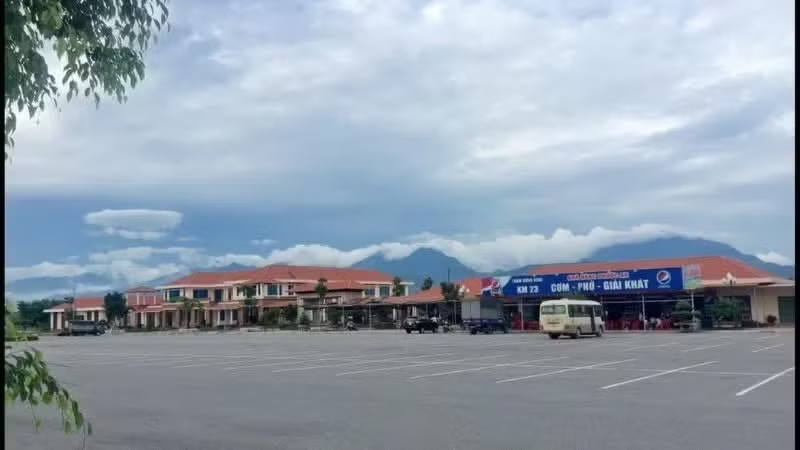
The Viet Nam Road Administration said it has implemented comprehensive operational plans to ensure traffic order and safety during the peak period, including the coordinated deployment of permanent and temporary rest stops and basic service facilities across the network.
At present, five rest areas are operating steadily along the key corridor from Ha Noi to Can Tho, namely those on the Gie–Ninh Binh, Cao Bo–Mai Son, La Son–Hoa Lien, Ho Chi Minh City–Long Thanh–Dau Giay, and Ho Chi Minh City–Trung Luong sections. A stopping point on the Da Nang–Quang Ngai Expressway has also been put into service, meeting immediate rest needs for drivers and passengers.
Following directives from the Ministry of Construction and relevant authorities, investors have been selected for all 21 planned rest areas. Construction is being accelerated, with most facilities expected to be largely completed within 2026.
Of particular note, 15 rest areas have already finalised essential public service components and begun operations in time for the holiday rush. These are distributed across key sections, including Mai Son–National Highway 45, Nghi Son–Dien Chau, Ham Nghi–Vung Ang, Vinh Hao–Phan Thiet, Phan Thiet–Dau Giay, and routes in the Mekong Delta from Can Tho to Ca Mau.
Four sites—on the Mai Son–National Highway 45, Ham Nghi–Vung Ang, Vung Ang–Bung, and Vinh Hao–Phan Thiet (Km205) sections—now include functioning petrol stations.
Across the entire Ha Noi–Ca Mau corridor, motorists can access a total of 21 rest areas and stopping points, spaced at an average interval of roughly 100km, each offering essential services.
Authorities also advise drivers to make use of interchanges to access nearby amenities, as most exits connecting to national and provincial roads provide fuel, food and rest facilities. Transparent publication of service locations is expected to help travellers plan journeys more effectively while easing congestion and improving safety during the extended holiday period.


![[Video] Viet Nam among Top three Asian destinations for return visitors](https://en-cdn.nhandan.vn/images/nyM650OGFWrOVWc-xajqN-rTZ68Rlmc1fiGJOhBRYHErj-E25MBpvJqrpphXazfrpe9t-fYCGuQU4CN0yXo3Rg/du-lich-vietnam.jpg.avif)