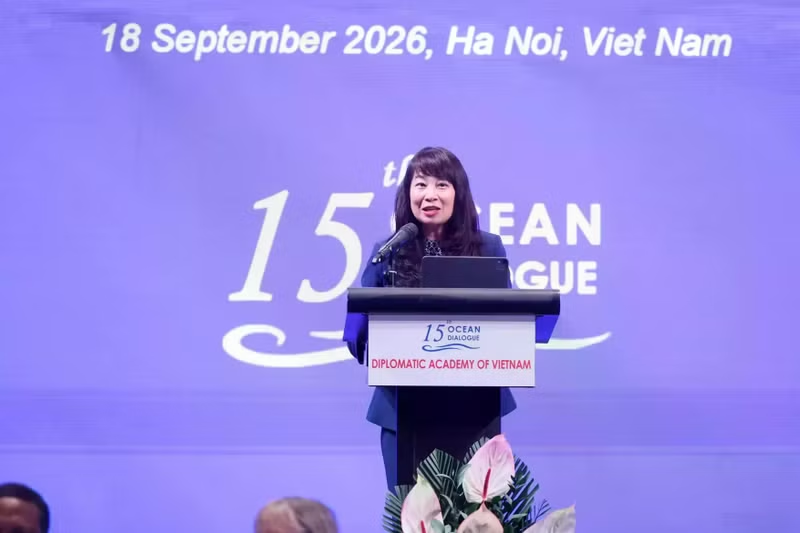
The event was jointly organised by the Diplomatic Academy of Viet Nam (DAV), the Foundation for East Sea/South China Sea Studies (FESS), the Konrad-Adenauer-Stiftung (KAS) and the Australian Embassy in Viet Nam. It attracted more than 140 in-person participants, including 17 international delegates from 10 countries, about 40 representatives of 35 foreign missions in Viet Nam, and 80 officials, researchers, academics and journalists from across the country.
In her opening remarks, Associate Professor, Doctor Nguyen Thi Lan Anh, Vice President of DAV, said the Agreement on Marine Biological Diversity of Areas Beyond National Jurisdiction (BBNJ Agreement) helps provide a comprehensive framework for protecting marine biodiversity in international waters.
As an implementing agreement under the 1982 United Nations Convention on the Law of the Sea (UNCLOS), the BBNJ Agreement should be implemented consistently with UNCLOS and existing global, regional and sectoral cooperation mechanisms, she said.
Anh stressed that effective implementation should begin at the national level, underpinned by international cooperation as well as science and technology. She noted Viet Nam’s Resolution No. 20-NQ/TW, issued by the 14th Party Central Committee on July 28, sets the goal of developing Viet Nam into a strong maritime nation, with emphasis on modern ocean governance, marine science and technology, and a healthy and sustainable marine environment.
This is an appropriate objective, contributing to the implementation of the BBNJ Agreement and reaffirming the country's commitment to complying with international law, including UNCLOS, she added.
Australian Ambassador to Viet Nam Gillian Bird said oceans are facing growing pressures from climate change, biodiversity loss and pollution. Australia considers healthy, safe and sustainable oceans essential to national prosperity and security, and it stands ready to ratify the BBNJ Agreement and participate in the first meeting of its members in January 2027 as a state member.
Australia is also committed to supporting regional countries in preparing for implementation, including through sharing expertise in marine protected areas, environmental impact assessment and ocean governance, the ambassador remarked.
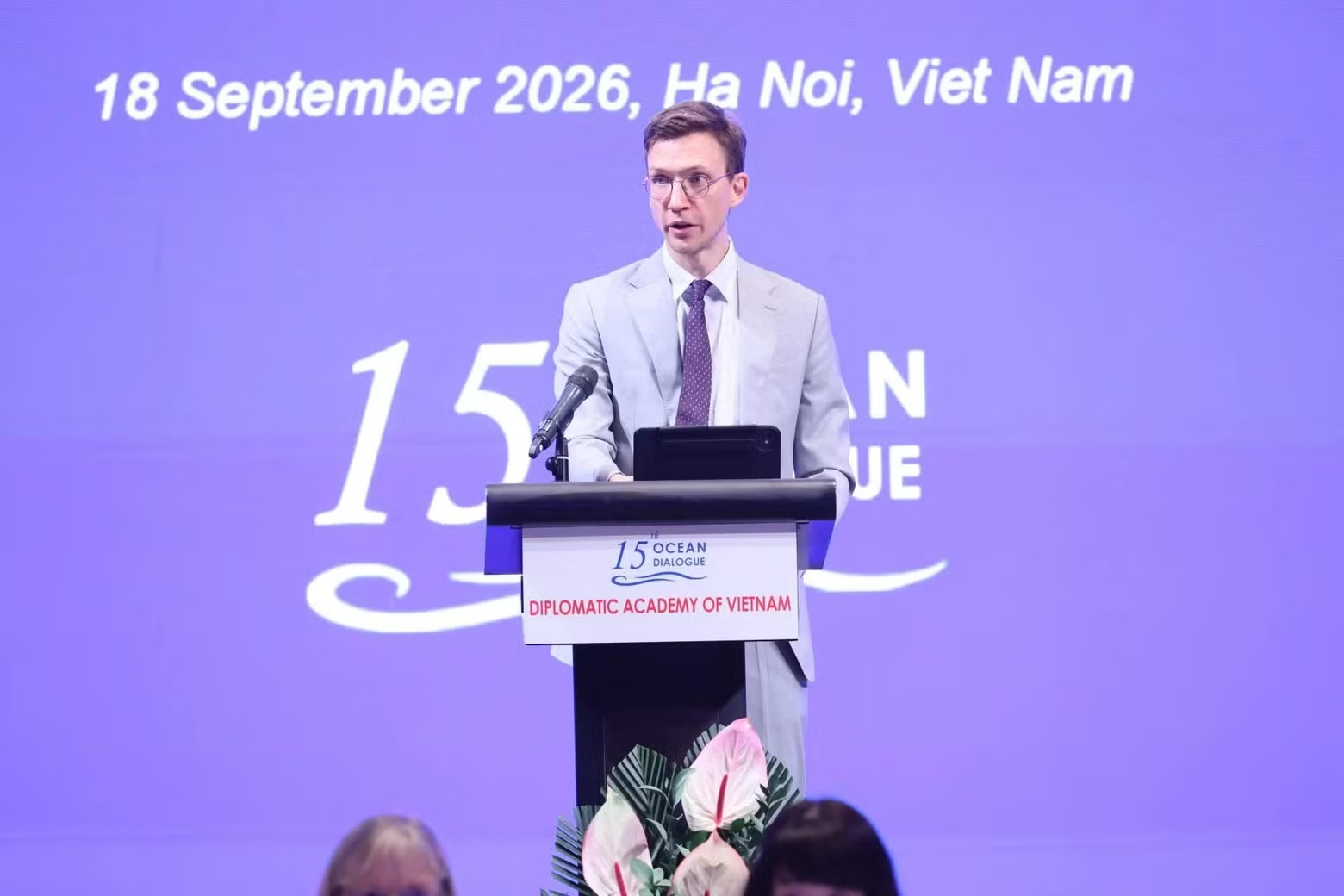
Lewe Paul, KAS Resident Representative to Viet Nam, said Germany regards marine biodiversity conservation, ocean protection and the maintenance of a rules-based international order as important areas of international cooperation. He highlighted the Ocean Dialogue as a valuable platform connecting international commitments with national-level implementation, and science with policymaking.
The 15th Ocean Dialogue featured three sessions focusing on ensuring the alignment between the BBNJ Agreement and national laws and institutions, promoting international cooperation, and developing supporting mechanisms and frameworks for implementation.
Discussions covered domestic legal reviews, inter-agency coordination, marine genetic resources, area-based management tools, environmental impact assessments, marine scientific research, information-sharing mechanisms, capacity building, marine technology transfer and financial mechanisms.