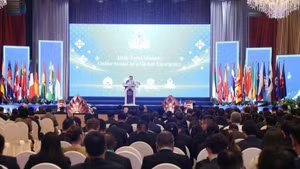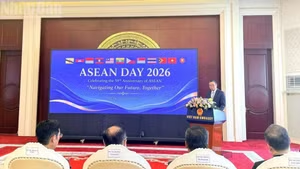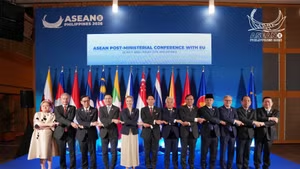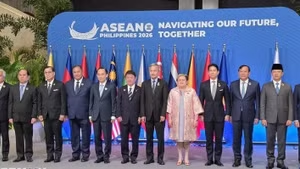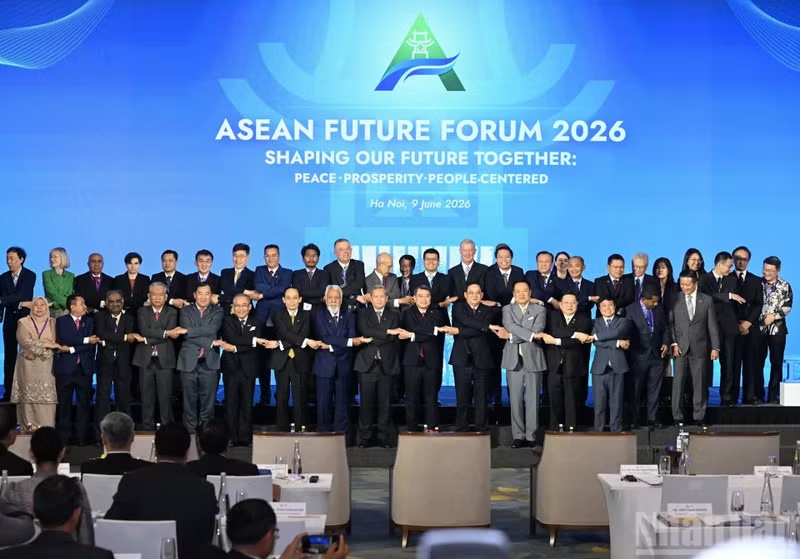
The opening session of the ASEAN Future Forum (AFF) 2026 took place on June 9 in Ha Noi, featuring a keynote address by Vietnamese Prime Minister Le Minh Hung, alongside remarks from leaders of ASEAN member states, senior United Nations officials and recorded messages from foreign ministers.
Peace as a prerequisite for development
In his remarks, Cambodian Prime Minister Hun Manet welcomed the forum’s theme "Shaping Our Future Together: Peace, Prosperity and People-Centred", saying it accurately reflects the region’s most pressing priorities at a time when the world is facing profound security, economic and development challenges. He stressed that ASEAN must take a clear-eyed view of threats to peace, stability and growth in order to formulate effective strategies for strengthening regional cooperation.
Hun Manet noted that ASEAN has transformed from a region once marked by conflicts, ideological divisions and mistrust into one of the world’s most stable and dynamic regions. He attributed this achievement to the bloc’s commitment to dialogue, confidence-building, respect for sovereignty, non-interference and the peaceful settlement of disputes.
At the same time, he cautioned that peace cannot be taken for granted as the world faces increasingly complex security challenges, ranging from cyber warfare and proxy conflicts to information manipulation campaigns.
On regional issues, the Cambodian leader reaffirmed his country’s commitment to neighbourly cooperation and called for closer coordination in addressing transnational challenges such as organised crime, drug trafficking, human trafficking and environmental degradation. He also reiterated support for the full implementation of the Declaration on the Conduct of Parties in the East Sea/South China Sea (DOC) and the early conclusion of an effective and substantive Code of Conduct in the East Sea (COC) to help safeguard regional peace and stability.
On the economic front, Hun Manet stressed the need for ASEAN to build a more resilient and closely connected economy in response to global crises. He underscored that people must remain at the centre of ASEAN Community-building efforts and called for stronger institutions, a more effective ASEAN Secretariat and broader stakeholder participation to advance a more peaceful, secure and prosperous region.
Four strategic priorities for ASEAN unity and integration
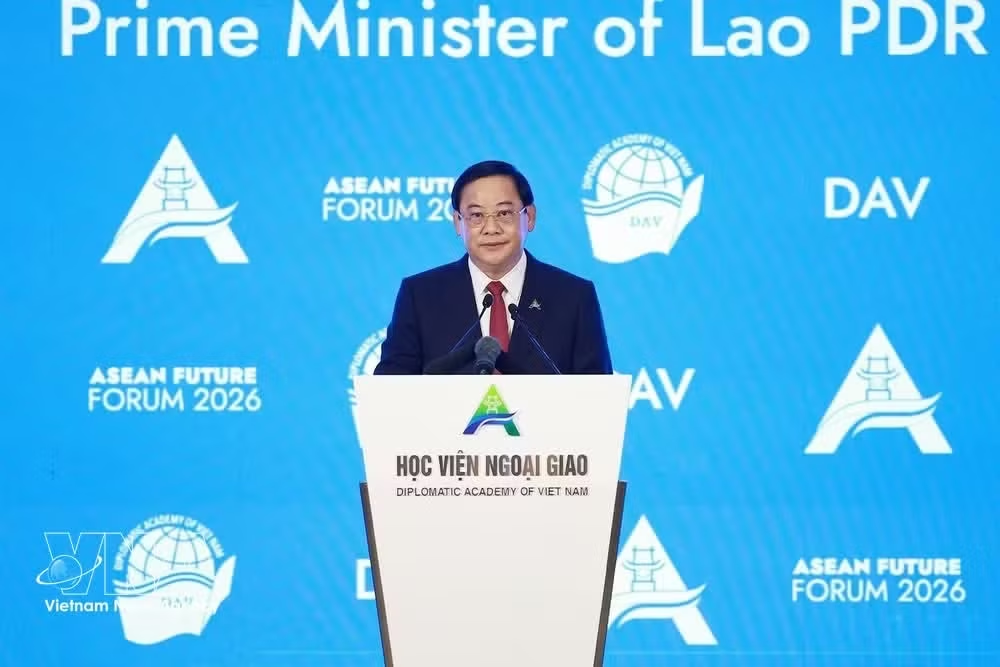
Addressing the forum, Lao Prime Minister Sonexay Siphandone described AFF as an increasingly important platform for countries to exchange views and develop common approaches to emerging regional and global challenges.
Against a backdrop of growing international uncertainty, he said ASEAN should reinforce unity, strengthen resilience and uphold its central role based on the bloc’s core principles. He also highlighted the need to enhance adaptability to emerging challenges, ensuring ASEAN remains a trusted platform for consultation, cooperation and preventive diplomacy.
Looking ahead, Sonexay proposed four strategic priorities for ASEAN: upholding the bloc’s fundamental principles and centrality; strengthening resilience to adapt to emerging trends, particularly digital transformation and artificial intelligence; promoting comprehensive connectivity in infrastructure, logistics and energy; and deepening intra-regional cooperation to enhance energy security.
He highlighted the strategic importance of major connectivity projects such as the Vientiane–Ha Noi Expressway and the Laos–Viet Nam railway along the East–West Economic Corridor, describing them as key drivers of trade, supply chain resilience and people-to-people exchanges.
The Lao PM also reaffirmed his country’s readiness to facilitate investment in energy infrastructure, leveraging Laos’ significant potential in hydropower, solar and wind energy.
Historic turning point
Thai Prime Minister Anutin Charnvirakul said current global upheavals pose enormous challenges but also create unprecedented opportunities for Southeast Asia to strengthen its role and standing amid profound international shifts. While many regions are grappling with instability, ASEAN has the potential to emerge as one of the world’s most stable regions and an attractive destination for investment inflows seeking safe and reliable environments.
To realise this potential, he said, ASEAN must continue balancing national interests with regional interests — a fundamental principle that has enabled the bloc to maintain stability, strengthen unity, and become a preferred partner for cooperation among major powers.
Reaffirming the need to preserve ASEAN’s central role in the evolving regional architecture, Anutin called for deeper regional cohesion. He said that ASEAN-led mechanisms have proven effective in fostering equal cooperation and maintaining strategic balance, stressing that the bloc must remain steadfast in maintaining this approach to adapt effectively to the evolving international environment.
The Thai leader also emphasised that regional cooperation must deliver tangible benefits to people. ASEAN’s success, he said, should be measured not by the number of meetings or declarations adopted, but by the safety, prosperity and confidence of its citizens. As ASEAN’s young people face both opportunities and challenges arising from technological advances, particularly artificial intelligence (AI), member states must strengthen cooperation to address challenges that directly affect people's daily lives, including online scams, cybercrime, public health risks, and natural disasters, while also investing more heavily in education, skills training, healthcare, and social security systems.
Shaping own future
Speaking for the first time as the leader of ASEAN’s newest member, Timor-Leste Prime Minister Xanana Gusmão said that despite global conflicts, geopolitical tensions, challenges to international law and the rapid rise of AI, ASEAN remains a model of dialogue, cooperation and the ability to bridge differences.
He described the bloc’s diversity in history, culture and institution as a source of strength that has helped preserve peace and stability. Calling on ASEAN to stay united and defend international law, Gusmão urged the grouping to become a stronger voice for peace in an increasingly polarised world while upholding the principles of respect for sovereignty, consensus-based decision-making, and peaceful settlement of disputes.
He also stressed the need for ASEAN to proactively establish common digital governance frameworks to ensure technology serves people inclusively rather than deepening social divisions. Timor-Leste, he said, stands ready to learn from regional partners and contribute to building a resilient and prosperous ASEAN.
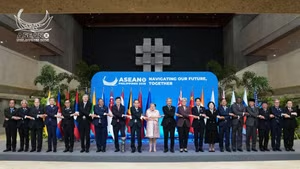
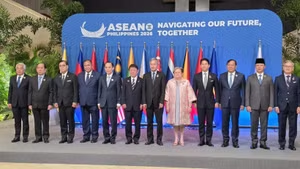
In a recorded message, Philippine President Ferdinand Marcos Jr. highly valued Viet Nam’s initiative in organising the AFF, noting that this year’s theme aligns closely with the vision of “Navigating Our Future, Together” under the Philippines' ASEAN Chairmanship in 2026.
Marcos said ASEAN is facing a decisive moment marked by intensifying strategic competition, pressure on multilateral norms, supply-chain disruptions and emerging technologies are reshaping foundations of economies and societies. These developments are no longer theoretical concerns but are directly affecting people through rising energy and food prices, trade disruptions and social risks.
He urged ASEAN to strengthen its centrality, improve strategic foresight and prioritise energy security, food security and citizen welfare. The Philippine leader also called for accelerating the ASEAN Power Grid project, describing it as a strategic long-term investment to enhance regional resilience. He emphasised the need to maintain the flow of essential goods, reinforce supply chains, improve information sharing and establish emergency mechanisms to assist citizens during crises.
Marcos further stressed that ASEAN must deepen connectivity, support small and medium-sized enterprises and ensure that regional initiatives remain people-centred. AI development, he added, should be safe, ethical, responsible, equitable and sustainable. He showed his belief that the strength of consultation and collective action will enable ASEAN to proactively shape its own future rather than merely react to developments.
Harnessing collective strength
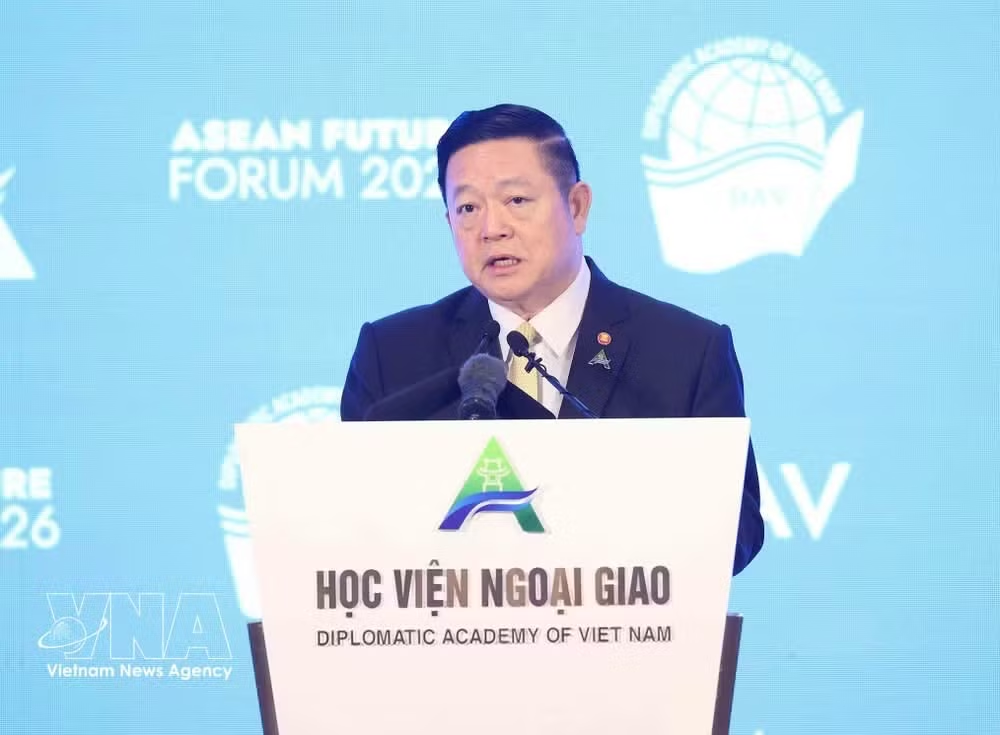
ASEAN Secretary-General Kao Kim Hourn outlined three major crises confronting the world today - geopolitical rivalry, economic fragmentation and a growing crisis of trust.
He warned that the ASEAN Community Vision 2045 faces severe tests that require strong collective capacity and solid political determination. Highlighting what he called the “four Fs” — Food, Fuel, Fertilizer and Finance — he noted that these areas remain particularly vulnerable to external shocks. Building resilience, he said, must encompass supply chains, labour mobility and social welfare systems to protect livelihoods for people. The key challenge is not creating new mechanisms but ensuring the effective implementation of existing frameworks.
He emphasised that ASEAN’s history has repeatedly demonstrated the strength of collective action and the bloc’s ability to turn adversity into opportunity through the regional mechanisms it leads.
Meanwhile, Izumi Nakamitsu, Under-Secretary-General and High Representative for Disarmament Affairs of the UN, warned that today’s global crises carry serious political, humanitarian and economic consequences, requiring solutions grounded in international law and centred on people.
She expressed particular concern over the resurgence of nuclear deterrence thinking, the erosion of humanitarian law and the growing trend toward militarisation. Against this backdrop, Nakamitsu praised ASEAN’s core role in preventive diplomacy and peaceful resolution of disputes.
She also warned of the rapid development of digital technologies, AI and autonomous weapons systems, calling on the international community to establish multilateral governance frameworks to ensure that technology is used solely to advance peace, sustainable development and common interests of the humanity.