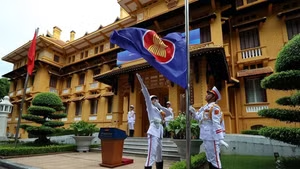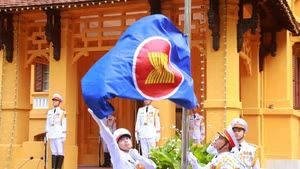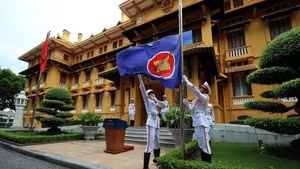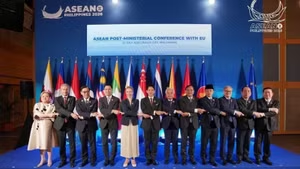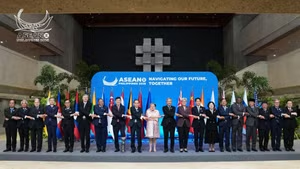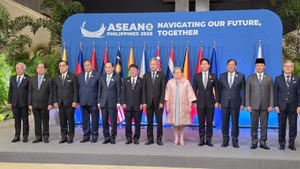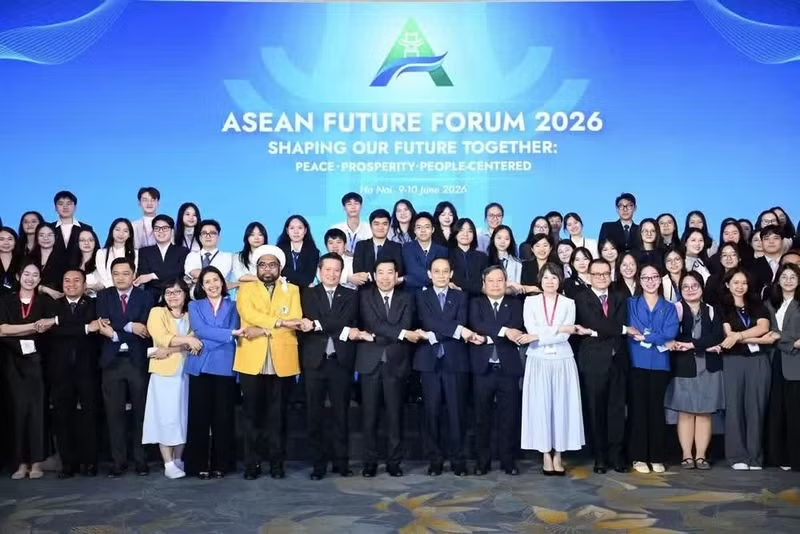
By successfully hosting the AFF, Viet Nam has left a strong impression as a country undergoing dynamic development and integration while making active contributions to the international community.
This year’s theme “Shaping Our Shared Future: Peace, Prosperity and People at the Centre”, has been widely praised for aligning closely with the ASEAN Community Vision 2045, demonstrating Viet Nam’s foresight and responsiveness at a time when the world faces growing uncertainty and division. Speaking at the opening session of the third AFF, Prime Minister Le Minh Hung stressed the special significance of this year’s forum, noting that its theme reflected the core values guiding ASEAN’s future direction.
Strengthening connectivity, shaping the future
The growing influence and appeal of the third AFF were reflected in the assessments of participants. Delegates agreed that Viet Nam’s successful hosting of such a high-profile event highlighted its increasing standing within ASEAN, the broader Asia-Pacific region and the international arena. The strong attendance of senior leaders, international officials, experts, academics, business representatives and young people at this year’s forum and previous editions demonstrated Viet Nam’s expanding diplomatic influence.
With dozens of in-depth discussions addressing ASEAN’s most pressing challenges, the AFF has established itself as a complementary platform to existing ASEAN mechanisms. Lao Prime Minister Sonexay Siphandone said the forum had evolved into an important platform where ASEAN member states could exchange views and seek common approaches to addressing emerging regional and global challenges.
ASEAN is currently facing a wide range of complex issues affecting community-building efforts, from peace and security to economic development and technological transformation. These challenges cannot be fully understood or addressed from a single perspective. In this context, the AFF serves as a forum for sharing ideas and connecting diverse viewpoints, which has become one of its key strengths.
Philippine President Ferdinand Marcos Jr. praised Viet Nam’s initiative in organising the forum, noting that this year’s theme was fully consistent with the “Navigating Our Shared Future” vision of the Philippines’ ASEAN Chairmanship in 2026.
US Deputy Secretary of State Christopher Landau, attending the forum, spoke warmly of the hospitality of the Vietnamese people and Ha Noi’s dynamic development. He described his visit to Ha Noi as “a dream”, highlighting the remarkable transformation of relations between Viet Nam and the US from former adversaries to partners working together to strengthen friendship and cooperation. He commended Viet Nam for successfully hosting the AFF and expressed strong US support for the country’s growing international role.
Meanwhile, French Ambassador to Viet Nam Olivier Brochet said he was particularly impressed by Prime Minister Le Minh Hung’s speech at the forum and by the atmosphere of constructive exchanges, which fostered confidence and optimism about cooperation despite ongoing international crises. He noted that ASEAN could play a significant role in promoting peace not only within the region but also globally.
A hub for innovative ideas
One of the forum’s defining features is its role as a gathering place for fresh ideas, creating an open space for more comprehensive approaches to ASEAN-related issues. For the first time, the AFF included a dedicated session on cooperation among Southeast Asian political parties, alongside the ASEAN Cities Leaders Conference.
The discussion entitled “The role of Southeast Asian political parties in building the ASEAN Community” marked a significant milestone in the Association’s cooperation process. Participants described the initiative as both timely and practical, providing political parties in the region with a forum to exchange views on issues of common concern, including trust-building, governance, national development, regional cooperation and the implementation of the ASEAN Community Vision 2045.
Delegates noted that political parties have played a crucial role in ASEAN’s achievements as key actors in national development and regional integration. Strengthening trust and cooperation among Southeast Asian political parties was therefore seen as essential to building a stronger ASEAN Community.
Welcoming Viet Nam’s initiative, delegates expressed hope that the mechanism would become a regular feature, helping to reinforce trust, promote mutual understanding and strengthen regional cohesion.
The ASEAN Cities Leaders Conference, held under the theme “Advancing the future through smart, sustainable and connected cities”, brought together leaders from cities across ASEAN, as well as experts, international organisations and development partners. As centres of population, resources, technology and innovation, cities are increasingly recognised as vital contributors to ASEAN’s resilience. The conference provided a platform for sharing experiences, exploring solutions and laying the groundwork for future cooperation.
Young people, meanwhile, are not only beneficiaries of ASEAN’s development achievements but also future leaders who will guide the region forward. ASEAN leaders have consistently encouraged youth to demonstrate responsibility and contribute to building a stronger Community.
The “ASEAN Youth Dialogue: Aspirations 2030”, held on the sidelines of the forum, underscored efforts to amplify the voice of young people in shaping the region’s future. Nguyen Hung Son, Director of the Diplomatic Academy of Viet Nam, stressed the importance of youth participation, noting that discussions about ASEAN’s future must reflect the perspectives and aspirations of the generation that will live in and shape that future.
ASEAN’s vision of unity, resilience, prosperity and people-centred development can only be realised through a generation of young people who are passionate, responsible, innovative and willing to take the lead in shaping the region’s future.