The overall objective of the plan is to improve capacity in management, surveillance, testing, early warning, epidemiological investigation, biosecurity practices, vaccination, quarantine, slaughter control, and the development of disease-free establishments and zones.
The aim is to gradually build a modern, coordinated, effective, and efficient animal disease prevention and control system that meets international integration requirements and is compatible with the two-tier local government model. This will contribute to sustainable livestock development in line with the Livestock Development Strategy for the 2021–2030 period, with a vision to 2045, as approved by the prime minister under Decision No. 1520/QD-TTg (dated October 6, 2020).
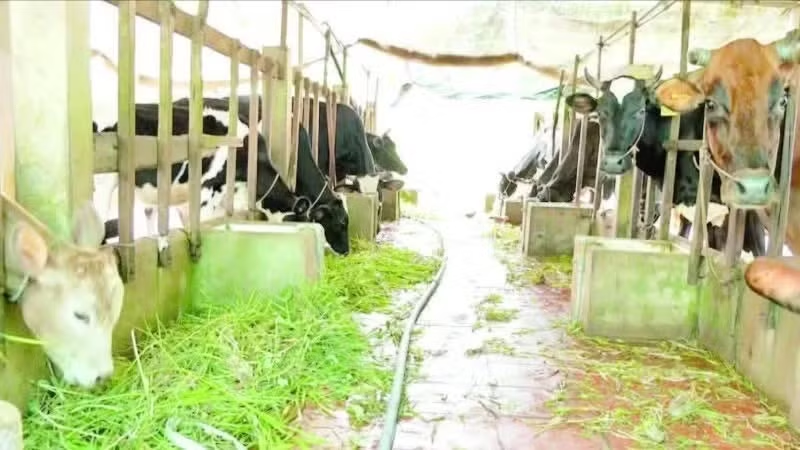
Specific targets include reducing the number of avian influenza outbreaks by at least 30% compared with the average for the 2019–2025 period; reducing the number of foot-and-mouth disease outbreaks and the number of livestock subject to compulsory culling by at least 30% compared with the average for the 2021–2025 period; and reducing the number of outbreaks and the number of pigs subject to compulsory culling due to African swine fever by at least 30% compared with the average for the 2020–2025 period.
Provincial-level People’s Committees, based on local conditions, will identify objectives, targets, priority areas, roadmaps, and implementation measures both annually and for the 2026–2030 period, ensuring efforts to reduce the number of outbreaks and increase vaccination coverage among livestock.
The Ministry of Agriculture and Environment will provide general guidance, urge implementation, conduct inspections and supervision, and compile and assess the implementation of the plan.
The plan sets out 10 specific tasks and solutions, including improving institutions; promoting bio-secure livestock farming; disease prevention through vaccines; disease surveillance; response measures when outbreaks occur; transport quarantine, slaughter control and veterinary hygiene inspection; development of disease-free establishments and zones; diagnosis, testing, scientific research, and technological development; communication to raise awareness and change behaviour; and international cooperation.