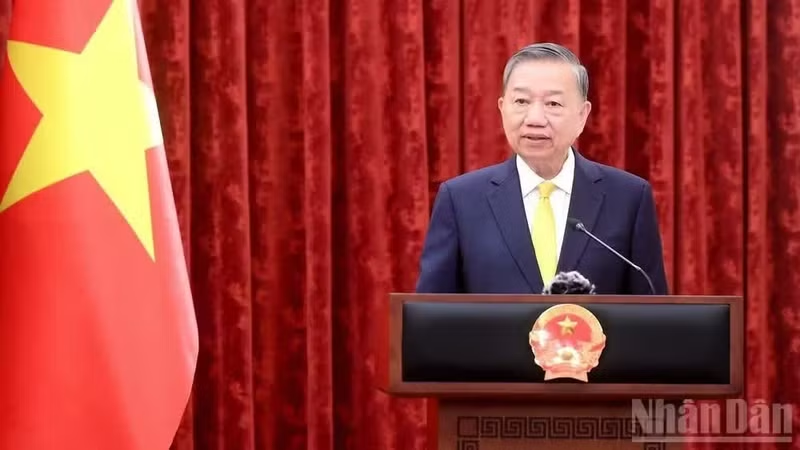
At the invitation of King Frederik X and his Queen, General Secretary of the Central Committee of the Communist Party of Viet Nam and President of the Socialist Republic of Viet Nam To Lam, accompanied by his spouse and a high-level Vietnamese delegation, will pay a State visit to the Kingdom of Denmark from October 19 to 21, 2026. On this occasion, Nhan Dan Newspaper's reporter spoke with the Vietnamese Ambassador to Denmark, Nguyen Le Thanh, regarding the significance of this visit.
Q: Denmark was one of the first Western nations to establish diplomatic relations with Vietnam, back in 1971. In 2013, Denmark entered into a Comprehensive Partnership with Viet Nam, marking a shift in the bilateral relationship toward a framework for comprehensive development cooperation. What the significance of this State visit to Denmark by General Secretary and President To Lam is in terms of advancing the Viet Nam-Denmark Comprehensive Partnership?
A: The state visit to Denmark by General Secretary and President To Lam holds special significance. It marks the first state visit by a General Secretary of the Communist Party of Viet Nam to Denmark and is the only state visit that Denmark will host in 2026. The visit takes place as the two nations celebrate 55 years of diplomatic relations, at a time when their cooperation is becoming increasingly profound, substantive, and effective.
This visit will serve as a historic milestone in bilateral relations, reflecting the strategic vision, political determination, and mutual trust shared by the leaders of both countries, while providing fresh momentum to elevate Viet Nam-Denmark ties to new heights.
First and foremost, the visit offers an opportunity to further deepen the foundation of political and diplomatic relations that has been cultivated over more than half a century. Having been one of the first Western nations to establish diplomatic ties with Viet Nam in 1971, Denmark has since become one of Viet Nam’s key partners in Europe.
The relationship has been continuously strengthened and expanded, marked by the establishment of a Comprehensive Partnership in 2013 and a Green Strategic Partnership in 2023. Against this backdrop, the visit plays a crucial role in defining the major directions for bilateral cooperation in this new phase of development.
Secondly, the visit will provide a strong impetus for advancing cooperation in areas such as the economy, trade, investment, science and technology, and innovation—all of which align with the development priorities and requirements of both nations. Viet Nam is entering a new phase of development, accelerating a shift in its growth model—one anchored in science and technology, innovation, and digital transformation—while simultaneously advancing a green transition and sustainable development.
These are areas in which Denmark possesses significant strengths. The two nations offer strong complementarity, opening doors for deeper cooperation across a range of fields: from the exchange of experience and policy frameworks to investment, research and technological development, and the training of high-quality human resources—ultimately fostering new products, solutions, and drivers for growth.
Furthermore, this visit holds great significance for strengthening coordination between Viet Nam and Denmark on regional and international issues of mutual concern. Both countries share a common vision for a world defined by peace, stability, cooperation, and development—a vision rooted in respect for the United Nations Charter and international law, a commitment to multilateralism, and a dedication to international collaboration in addressing shared challenges.
This serves as a vital foundation for both sides to continue their dialogue and enhance coordination within multilateral mechanisms, thereby contributing actively to peace, stability, and sustainable development—both regionally and globally.
I am confident that the success of this important visit will provide a powerful new impetus, elevating the partnership between our two nations to new heights—making it increasingly profound, extensive, and effective. In doing so, it will further underscore the growing role and significance of the Viet Nam-Denmark relationship within the foreign policy of each nation.

Q: The year 2026 marks the 55th anniversary of the establishment of diplomatic relations between Viet Nam and Denmark. How would you assess the key highlights of this bilateral cooperation?
A: Looking back over the past 55 years, I believe the most significant development is that the relationship between Viet Nam and Denmark has deepened substantially—in its nature, substance, and scope. Evolving from a traditional friendship and development cooperation, the two nations have built a partnership based on equality and mutual benefit, encompassing an increasingly diverse, practical, and strategic range of collaborative areas.
First and foremost, the framework and vision for this relationship have been continuously elevated, built upon a foundation of trust cultivated over more than half a century.
The Viet Nam-Denmark relationship has reached several major milestones: the establishment of diplomatic ties in 1971; the formation of a strategic partnership focused on climate change, the environment, energy, and green growth in 2011; the establishment of a comprehensive partnership in 2013; and, most recently, the creation of a Green Strategic Partnership in 2023.
The success of this significant visit will provide a powerful impetus, elevating cooperation between the two nations to new, increasingly profound, and effective heights. Furthermore, it reaffirms the growing role and importance of the Viet Nam-Denmark relationship within the foreign policy of each country.
Nguyen Le Thanh, Ambassador of Viet Nam to Denmark
These frameworks demonstrate that the relationship has consistently expanded in both breadth and depth, aligning with the interests and development priorities of each country. In particular, the Green Strategic Partnership has placed the green transition and sustainable development at the core of the bilateral relationship, while also creating opportunities to foster cooperation across various other sectors.
At the same time, political and diplomatic relations continue to serve as a solid foundation for the overall bilateral relationship. High-level and other-level exchanges and contacts have been maintained, contributing to enhanced mutual understanding, strengthened trust, and greater coordination within both bilateral and multilateral frameworks.
Notably, Viet Nam occupies an increasingly significant position in Denmark’s policy of strengthening relations within the Indo-Pacific region. In its 2023 Foreign and Security Policy Strategy, Denmark identified Vietnam as a priority country for expanding and elevating its regional ties. This underscores that Denmark values Viet Nam not only as a high-potential growth market but also as a key partner in advancing economic cooperation, the green transition, and sustainable development, while bolstering Denmark’s presence in the region.
Second, economic, trade, and investment cooperation continues to be a key driver of the relationship between the two countries.
Despite the various challenges facing international trade, trade between Viet Nam and Denmark has maintained a positive growth momentum. In the first eight months of 2026, two-way trade turnover increased by nearly 38% compared to the same period in 2025, with Viet Nam’s exports to Denmark rising by approximately 28%.
Viet Nam is increasingly viewed by Danish enterprises as a dynamic market and a long-term investment destination in the region. As of the end of July 2026, Denmark had 179 active projects in Viet Nam with a total registered capital of nearly 2.5 billion USD, ranking 21st among the 153 countries and territories investing in Viet Nam.
What is particularly noteworthy is not only the scale of capital but also the quality and strategic direction of these investments. Many major Danish corporations—such as LEGO, Maersk, Pandora, Vestas, and Novo Nordisk—have been developing their business operations and expanding their investments in Viet Nam across sectors including manufacturing, logistics and port infrastructure, energy, pharmaceuticals, green technology, and other high value-added industries. Cooperation has also extended into new, high-potential areas such as healthcare and life sciences, innovation, digitalisation, and technology.
These sectors align with Viet Nam’s strategic goals of transforming its growth model, enhancing production capacity, fostering innovation, and achieving deeper integration into global value chains. The increasingly extensive presence of Danish enterprises also reflects their confidence in Vietnam’s economic development prospects and its investment and business environment.
Third, cooperation on the green transition is deepening, becoming a prominent hallmark of the relationship between the two nations.
Both countries possess complementary strengths and closely aligned interests in this area. Viet Nam boasts a dynamic economy, a market of over 100 million people, and significant potential across various sectors—including renewable energy, science and technology, and innovation—while becoming increasingly integrated into international supply chains.
Meanwhile, Denmark offers expertise and advanced technology in clean energy development, environmental solutions, sustainable food production, the circular economy, and several other key fields. This complementarity creates opportunities for collaboration, investment, and the development of sustainable value chains, delivering tangible benefits to both nations.
Fourth, connectivity between the two countries is being further strengthened, creating more favorable conditions for cooperation and development.
The launch of Viet Nam Airlines’ (VNA) first direct flight route between Ho Chi Minh City and Copenhagen, scheduled for December 2025, marks a significant milestone. It not only bridges the geographical distance but also unlocks new opportunities to boost trade, investment, tourism, business ties, and people-to-people exchanges.
The potential for cooperation between the two countries remains vast. Given the foundation of 55 years of bilateral relations, the strong momentum following the visit of General Secretary and President To Lam, and the growing complementarity between Viet Nam’s development needs and Denmark’s core strengths, I am confident that the relationship between our two nations will become even more robust, extensive, and effective in the years to come.
Q: Denmark is a highly developed industrial nation, particularly in the fields of green transition and sustainable development—areas that are also key priorities in Vietnam’s economic development strategy for the new phase. In your view, what steps should both countries take to fully tap into this potential and foster effective cooperation in these sectors?
A: The prospects for cooperation between Viet Nam and Denmark in these areas are immense, rooted in our respective strengths, potential, and mutually complementary interests.
Denmark possesses a sophisticated foundation in science, technology, and innovation—notably in renewable energy, life sciences, green technology, maritime industries, and automation. Meanwhile, Viet Nam boasts a dynamic economy, a large market and workforce, steadily improving production and innovation capabilities, and a pivotal position within regional production and supply chains.
In particular, Viet Nam is making a decisive shift toward a growth model driven by science, technology, innovation, and digital transformation—in line with the spirit of Resolution 57-NQ/TW—while prioritising the development and gradual mastery of strategic technologies.
The combination of the respective strengths and development orientations of the two countries opens up opportunities for joint research, development, and application of technology, leading to the creation of new products and solutions, the expansion of markets, and deeper integration into global value chains.
To help translate potential and strengths into concrete cooperation programmes and projects—thereby generating new products, technologies, and value for both nations—efforts could focus on several priority areas:
First, it is essential to boost cooperation in the green energy transition, moving beyond policy and planning toward investment, industrial development, and the creation of renewable energy supply chains.
This is a field where the two countries already share a long-standing foundation for cooperation, with significant room for further development. Denmark possesses strengths in green energy technologies—particularly wind power—as well as in power system planning and operation, the integration of renewable energy, and the enhancement of energy efficiency. Meanwhile, Viet Nam holds great potential for wind and solar power, faces a growing demand for energy, and offers favourable conditions for the development of related industries.
The two nations have been collaborating on energy transition since 2013. The Viet Nam-Denmark Energy Partnership Programme for the 2026–2030 period continues to focus on long-term energy planning, renewable energy integration, energy efficiency, and the sharing of expertise regarding mechanisms and policies for offshore wind power development.
Building on this foundation, I believe there are ample opportunities for both sides to expand their cooperation—shifting from policy and planning toward investment and the development of renewable energy projects, technologies, and their associated supply chains. ...enhancing the participation of businesses from both countries in the research, production, and supply of equipment and services, thereby jointly developing green energy industries and markets.
Second, establishing science, technology, and innovation as a new driver of growth in the bilateral relationship.
This is a highly promising field, especially as Viet Nam prioritises the development of strategic technologies—such as artificial intelligence, robotics and automation, biotechnology, energy technologies, and advanced materials. Denmark possesses strong capabilities in the research, development, and application of technology across these and related sectors, supported by an innovation ecosystem characterised by close integration among universities, research institutes, and businesses.
In the immediate term, it is essential to further strengthen connections between the businesses, universities, and research institutes of both nations. The focus should be on joint research, collaborative technology development, high-quality human resource training, and the testing, application, and commercialisation of research outcomes. Through these efforts, both sides can not only leverage their respective strengths but also enhance their collective innovation capacity, developing products and solutions that are competitive in the Vietnamese, Danish, and international markets.
Third, expanding cooperation in the fields of healthcare, life sciences, and biotechnology, with a focus on bridging research and practical application.
Denmark is a nation with distinct strengths in the life sciences, featuring a well-developed pharmaceutical industry, robust capabilities in biomedical research and innovation, and an ecosystem that fosters close collaboration among universities, hospitals, research institutes, and businesses. Meanwhile, Viet Nam possesses a large healthcare market, an extensive network of hospitals, universities, and research institutions, and a growing demand for the development and application of medical technology.
Both countries can combine their respective research capabilities, human resources, and practical experience to advance joint projects in areas such as smart hospitals, digital health, biotechnology, precision medicine, and advanced healthcare solutions. At the same time, they can strengthen cooperation in training, expert exchanges, and networking among healthcare facilities, research institutions, and businesses to foster the research, development, and implementation of new medical products and technologies.
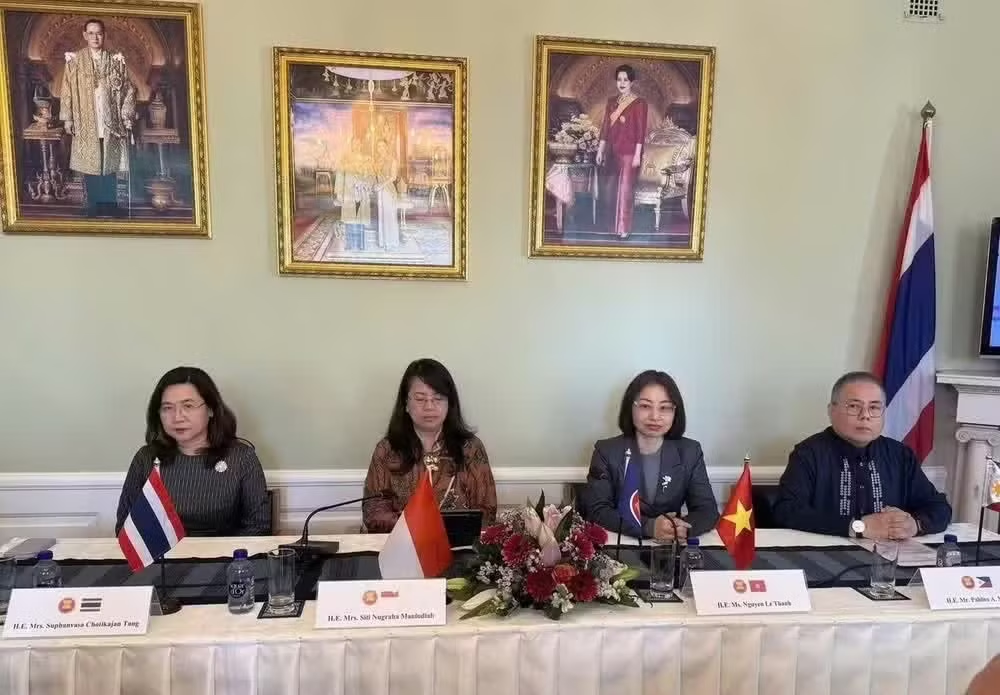
From the perspective of the Embassy of Viet Nam in Denmark, and to help translate these cooperation potentials into concrete action, we will collaborate with Aalborg University Hospital to organise the Viet Nam–Denmark Conference on Smart Hospitals, Digital Health, and Biomedical Innovation, to be held in Denmark from October 28–29, 2026.
The conference aims to strengthen connections between hospitals, universities, research institutes, and businesses in both countries, while fostering collaboration in research, development, and the application of medical technology—thereby laying the groundwork for specific, long-term cooperative programmes.
Furthermore, the maritime sector, logistics, and the development of green supply chains also represent highly promising areas for cooperation.
Given Denmark’s strengths in maritime transport, logistics, and sustainable technology—complemented by Viet Nam’s advantages in terms of its geoeconomic location, seaport infrastructure, manufacturing capacity, and increasingly vital role within regional supply chains—both nations have significant opportunities to enhance business connectivity, develop logistics infrastructure and services, and promote green, sustainable value chains.
This, in turn, will bolster competitiveness and resilience in the face of fluctuations within the global economy. Given the foundation of a trusted political relationship, the complementary strengths of our two economies, and the shared determination to cooperate, I am confident that science, technology, innovation, the green transition, and other high-potential sectors will increasingly serve as key drivers.
These areas will enable both Viet Nam and Denmark to leverage their respective strengths, generate new value, enhance competitiveness, and make meaningful contributions to the sustainable development of each nation.
Thank you very much!