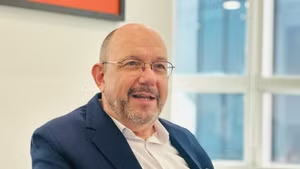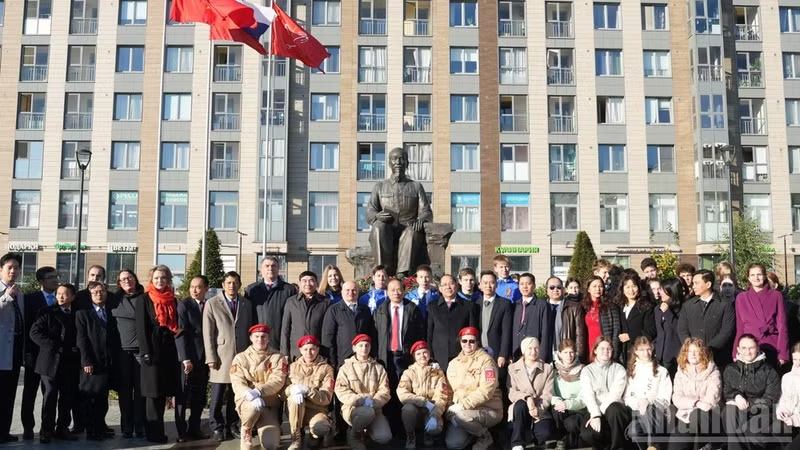
Nguyen Ngoc Hung, Vice President of the Viet Nam Union of Friendship Organisations:
More than three-quarters of a century after diplomatic relations were established on January 30, 1950, relations between Viet Nam and the Russian Federation have been tested by historical challenges, overcome changes in the world situation, and continued to be strengthened on the foundations of trust, sincerity, loyalty, and mutual support.
The Vietnamese people have always cherished and deeply remembered the wholehearted and invaluable support and assistance extended by the people of the former Soviet Union and the Russian Federation today to Viet Nam in its struggle for independence and national reunification, as well as in the cause of national construction, defence, and development.
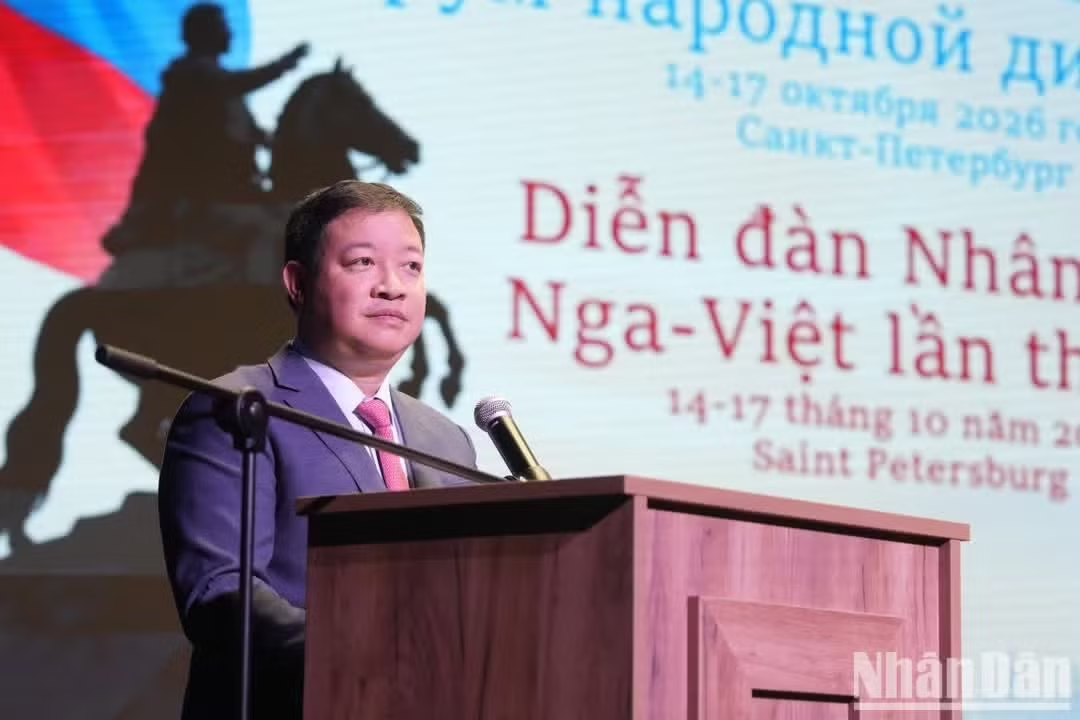
Across generations, these sentiments have been sustained and nurtured through personal relationships between teachers and students, colleagues and friends, as well as scientists, artists, experts, localities, and social organisations in the two countries. These ties have created a broad and enduring social foundation for bilateral relations.
Traditional friendship between Viet Nam and the Russian Federation is therefore a precious shared asset of the two countries and peoples, carefully nurtured, preserved, and passed down by successive generations of leaders and people in both countries. The responsibility of today’s generation is not only to cherish and preserve this asset, but also to enrich it with new values, new achievements in cooperation, and new links between the two peoples.
This spirit is in line with the consistent direction set by the two countries’ senior leaders, who regard the strengthening and development of Viet Nam–Russia relations as a strategic and objective choice serving the fundamental, long-term interests of both countries and their peoples.
As a co-initiator and organiser of the People’s Forum between the two countries, the Viet Nam Union of Friendship Organisations highly appreciates the close, sustained, and responsible coordination of the Saint Petersburg city authorities, particularly the city’s Committee for External Relations and relevant agencies, as well as people-to-people organisations and associations in Viet Nam and Russia, including the Viet Nam–Russia Friendship Association, the Union of Vietnamese Organisations in Russia, and the Russian–Vietnamese Cooperation Development Foundation “Traditions and Friendship.”
Their efforts have helped turn the Viet Nam–Russia People’s Forum initiative into reality and establish it as an annual people-to-people dialogue mechanism, held alternately in the two countries.
There remains considerable scope for Viet Nam–Russia people-to-people cooperation in science and technology, digital transformation, the economy, trade, healthcare, education and training, high-quality human resource development, culture, and tourism. There is also broad potential for cooperation among localities, businesses, universities, and research institutes, as well as for exchanges between the younger generations of the two countries.
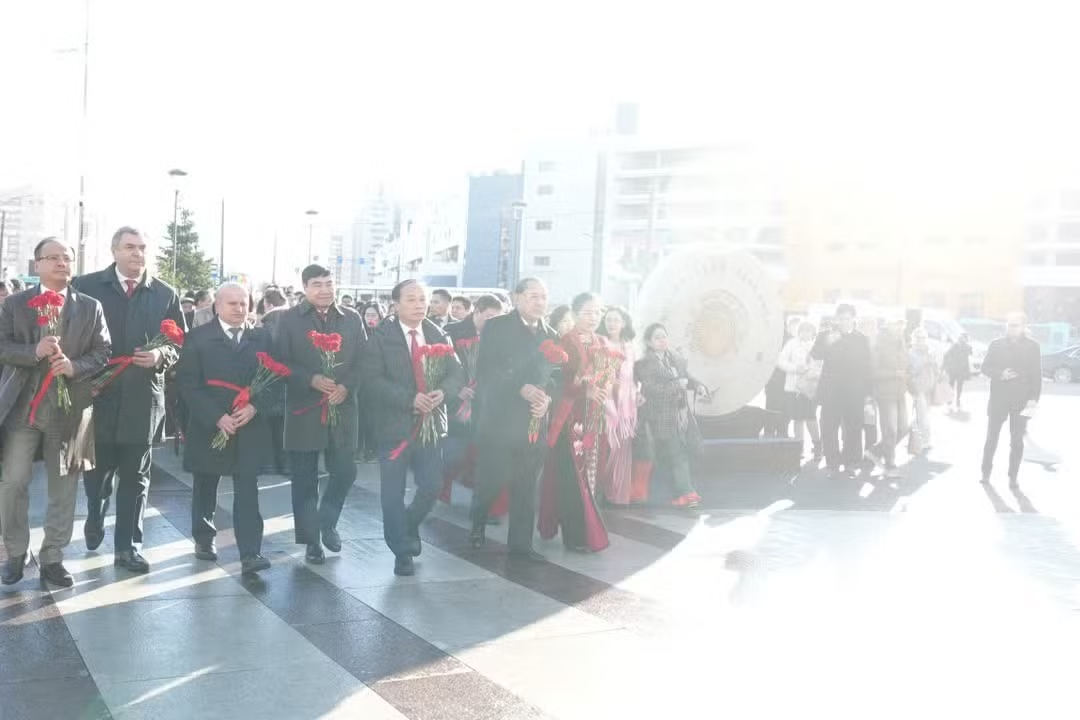
Our forum should become a platform not only for discussing potential, but also for identifying partners ready to take joint action, determining initiatives that can be implemented immediately, and establishing cooperation networks capable of being sustained over the long term. Each session should build on the achievements of previous ones while creating new value for Viet Nam–Russia relations.
Every promising proposal should be linked to a specific partner and implementing focal point; every agreement should have a roadmap, a coordination mechanism, and clear objectives; and every cooperation programme should aim to deliver results of value to the people, localities, and businesses, as well as to the development of both countries.
Alongside continuing to promote effective existing forms of cooperation, I propose that both sides expand modern approaches that can create value and generate wider impact. They should strengthen network-based connections among scientists, experts, universities, research institutes, businesses, and localities in the two countries; promote models linking research with training and practical application; make effective use of digital platforms to maintain regular contact between partners; and create more opportunities for young people, young intellectuals, early-career scientists, and young entrepreneurs from both countries to participate, innovate, and carry forward Viet Nam–Russia friendship through achievements suited to the new era.
I hope that, following this forum, we will see more joint projects, research initiatives, training programmes, and expert exchanges, as well as more links between businesses and localities. I also hope that more young Vietnamese and Russian people will come to understand and trust one another and work together to shape the future.
Do Xuan Hoang, member of the Viet Nam Fatherland Front Central Committee and President of the Union of Vietnamese Organisations in Russia:
Relations between Viet Nam and the Russian Federation have been built over generations through sincere affection, trust, and profound shared historical experiences. For many Vietnamese people, Russia is not merely an important partner, but also a place that holds memories, friendships, knowledge, and values that have helped shape their lives.
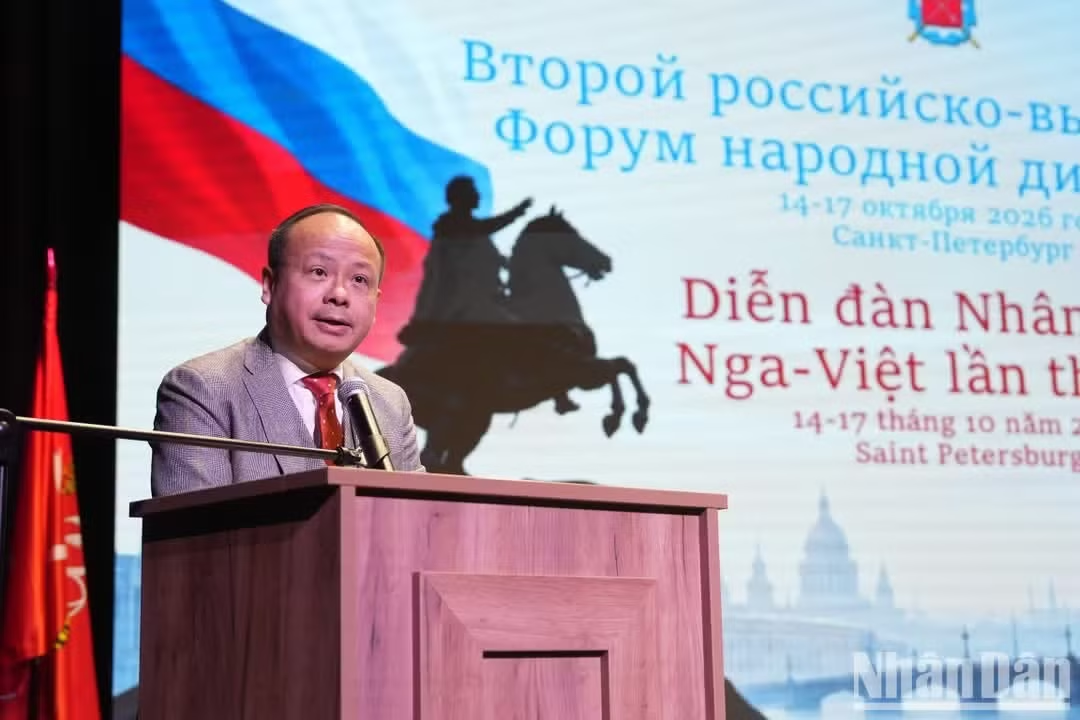
The Viet Nam–Russia Comprehensive Strategic Partnership is opening up opportunities for cooperation across numerous fields. The joint statement issued by the leaders of the two countries in September 2026 also highlighted the role of science, technology, innovation, human resources, and cultural exchanges. This gives rise to a clear task: how can the two countries’ broad orientations be translated into concrete programmes and tangible results in socio-economic life?
In my view, three areas of work are needed to fulfil this task.
First, continue to preserve and promote traditional friendship.
Second, expand and deepen practical cooperation networks among businesses, universities, research institutes, social organisations, and localities in the two countries.
Third, create conditions for the people, particularly younger generations, to take an active role in building Viet Nam–Russia relations through knowledge, initiatives, and long-term activities.
Over decades of studying, working, doing business, and living in Russia, the Vietnamese community has developed extensive networks, accumulated considerable experience, built up economic activities, and contributed to exchanges between the two peoples. The community includes numerous entrepreneurs, scientists, experts, engineers, and doctors, as well as people working in culture and education, along with a younger generation able to engage with both cultures.
Our task is to establish mechanisms to connect these resources, make effective use of them, and enable them to continue growing. We need to move towards more structured cooperation models in which the community does more than introduce partners: it should also help develop projects, share experience, seek technologies, and support businesses in both countries in overcoming practical obstacles. Conditions must be created so that everyone can find a way to contribute that suits their abilities, experience, and aspirations.
In this spirit, I would like to propose several specific ideas.
First, establish a Russia–Viet Nam intellectual network.
This idea has already been put into practice, with the network officially launched during General Secretary and President To Lam’s state visit to the Russian Federation in September 2026.
Second, establish a mechanism to connect Vietnamese and Russian businesses and markets.
This would involve organising specialised business forums, connecting industry associations, helping businesses find partners and exchange market information, and assisting them in assessing risks and ensuring transparency in business cooperation.
Alongside traditional trade, attention should also be given to cooperation in food processing, agriculture, logistics, manufacturing technology, digital transformation and other fields suited to the needs and capabilities of both sides.
Third, launch a Viet Nam–Russia youth connectivity programme.
Student exchanges, vocational internships, cultural exchanges, Russian-language learning, and joint research programmes should be regarded as long-term investments in the future. The aim is to foster a generation that understands one another, can work in international environments, and can carry forward Viet Nam–Russia friendship.
Fourth, promote cultural exchange programmes.
We can promote exchanges in culture and the arts, introduce literature and history, organise activities for multicultural families, and create opportunities for young people from the two countries to meet in person. We should also promote and encourage the study of Russian and Vietnamese. The aim is not merely to preserve existing values, but to make culture a living bridge in modern society.
Fifth, ensure practical outcomes so that valuable ideas do not remain merely points of agreement reached in the conference hall. A more pragmatic approach is needed, including identifying coordinating focal points, assigning responsibilities, selecting priority tasks, and assessing results against criteria such as the number of cooperation programmes implemented, partners connected, research or business projects established, participation by young people, and tangible benefits for the community.
I hope that the second Russia - Viet Nam people-to-people diplomacy forum will become a platform for generating new initiatives, forging new relationships, and developing concrete action programmes.