Igniting the “catalyst”
Several years ago, Quang Ninh wrote a remarkable success story, leaving a distinctive mark on transport infrastructure innovation. To mark National Day in 2018, the Bach Dang Bridge complex and the Hai Phong–Ha Long Expressway were opened to traffic, cutting journey times between Ha Noi and Ha Long by approximately two-thirds. Travel took just around an hour and a half, compared with more than five hours previously.
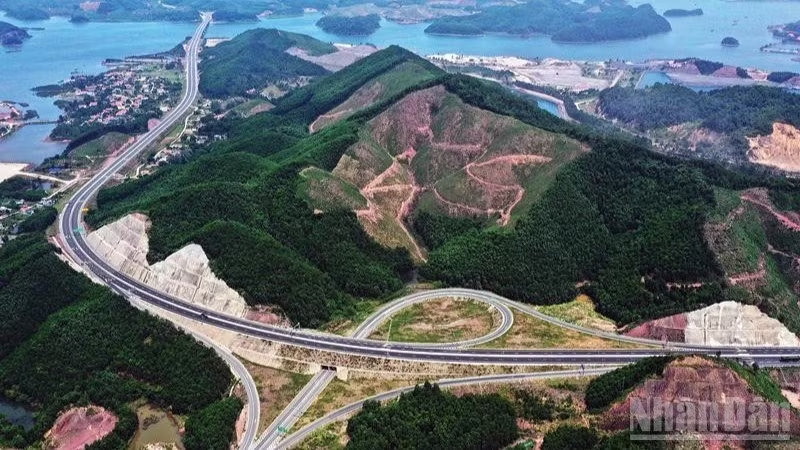
That was not the end of the story. On the occasion of the National Day in 2022, exactly four years later, the Van Don–Mong Cai section, which runs through islands, mountains, and forests, was also opened to traffic.
Within just five years (2018–2022), Quang Ninh transformed itself from a relatively isolated locality into a province boasting an impressive network of expressway infrastructure. From the Bach Dang Bridge onwards, the route runs through Ha Long and Van Don before reaching Mong Cai, forming a continuous, modern arterial corridor. The achievement set a record, making Quang Ninh the province with the longest expressway in Viet Nam, at nearly 200km.
Travelling smoothly along the broad, open highway, through seemingly endless green forests and past breathtaking blue seas, visitors can now enjoy what once seemed an impossible dream: having Co Cuu noodle soup for breakfast, swimming at Tra Co Beach at noon, shopping at the border gate in the afternoon, and returning to Ha Long for the night.
The decisive catalyst that helped bring the Bach Dang Bridge complex and Quang Ninh’s main expressway corridor to fruition, galvanising political resolve to invest in the highway network and strengthening connectivity across the Northern key economic triangle, was the Ha Noi–Hai Phong Expressway.
In the early 2000s, National Highway 5 was operating beyond capacity and suffering frequent congestion. The transport sector drew up an investment plan for the Ha Noi–Hai Phong Expressway, designed with four lanes. However, after years of delay, the project remained on paper due to insufficient capital.
Acting Chairman of the Board of Directors of the Viet Nam Development Bank (VDB) Nguyen Quang Dung once told us that the idea of building the Ha Noi–Hai Phong Expressway had taken shape when VDB leaders accompanied Government leaders on study visits to the Republic of Korea and China to learn from their experience in expressway investment and construction. Drawing on lessons from the development of expressway networks in both countries, in 2007 the Government assigned VDB the leading role in mobilising capital to build the route under a build-operate-transfer (BOT) arrangement.
However, after the project had been drawn up, its enormous total investment requirement made it impossible to attract sufficient private-sector funding. It therefore demonstrated the pioneering role that State-owned enterprises can play in fulfilling political objectives and building infrastructure ahead of demand, thereby laying the foundations for the country’s industrialisation and modernisation.
To mark the 118th anniversary of President Ho Chi Minh’s birthday (May 19, 2008), construction officially began on the 105km Ha Noi–Hai Phong Expressway. The road, measuring 32–35m in width, was designed with six lanes to international Class A standards, with total investment of nearly 45.5 trillion VND. The project pioneered a rare model in which a bank directly financed and built an expressway.
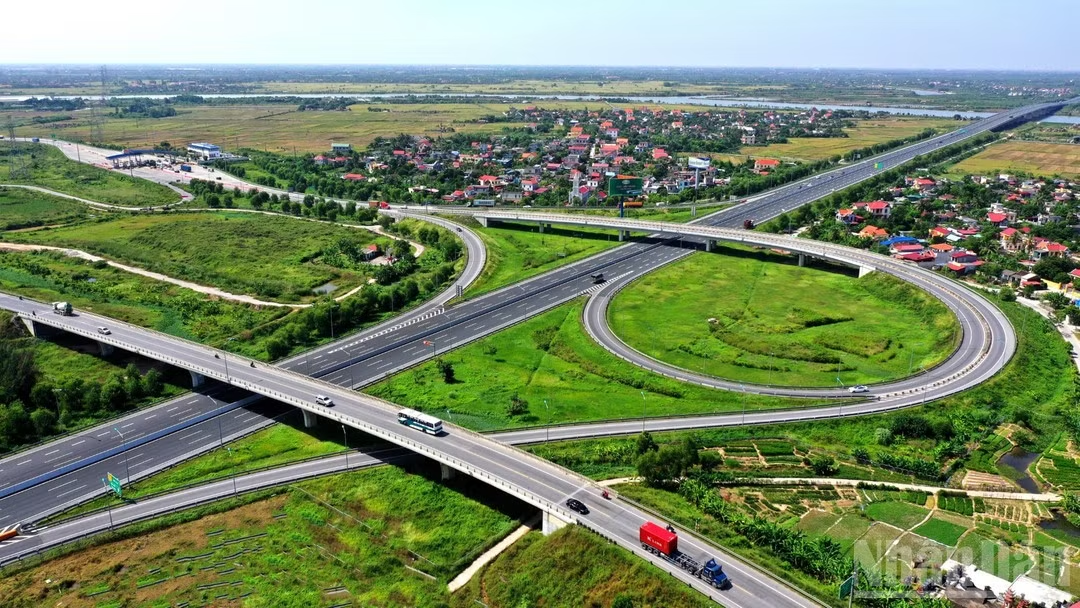
As construction packages along the route progressed simultaneously, then Chairman of the Board of Directors of the Viet Nam Infrastructure Development and Finance Investment Joint Stock Company (VIDIFI) Dao Van Chien explained during an inspection visit to the construction site that, immediately after taking over the project, VIDIFI had boldly proposed acquiring land for a corridor approximately 100m wide. This helped reduce site clearance costs and facilitated future expansion.
More than a decade after opening, the expressway continues to operate efficiently and hold several records.
The “key” to unlocking new development space
According to VIDIFI General Director Tran Anh Tu, the Ha Noi–Hai Phong Expressway was officially inaugurated and opened along its entire length at the end of 2015. Since then, acting as a catalyst, it has rapidly transformed the socio-economic landscape of localities along the route. Industrial parks and seaports have proliferated, attracting substantial investment, particularly in large-scale, high-tech projects.
“After more than 10 years of operation, the Ha Noi–Hai Phong Expressway has gone beyond the limits of an ordinary transport route. It has become a lever driving a wave of foreign direct investment (FDI) into the industrial hubs along the corridor, while serving as an economic lifeline for the Northern region,” Tran Anh Tu stressed.
In 2025, Quang Ninh marked its 13th consecutive year among the country’s leading localities in the Provincial Competitiveness Index (PCI). Hai Phong, meanwhile, has been the only city to sustain double-digit growth for more than 10 straight years. At the end of July, the port city officially launched its Free Trade Zone (FTZ), covering nearly 6,300ha and reinforcing its emerging position on the international integration and investment map.
Director of the Ha Noi–Hai Phong Expressway Management and Operation One Member Limited Liability Company Do Van Thuan said that when the expressway first opened, it handled around 18,000 passenger car units (PCUs) per day. The figure has since surged to a record of more than 75,000 PCUs per day, over four times the initial level. So far, traffic on the entire route has reached 93% of its designed capacity.
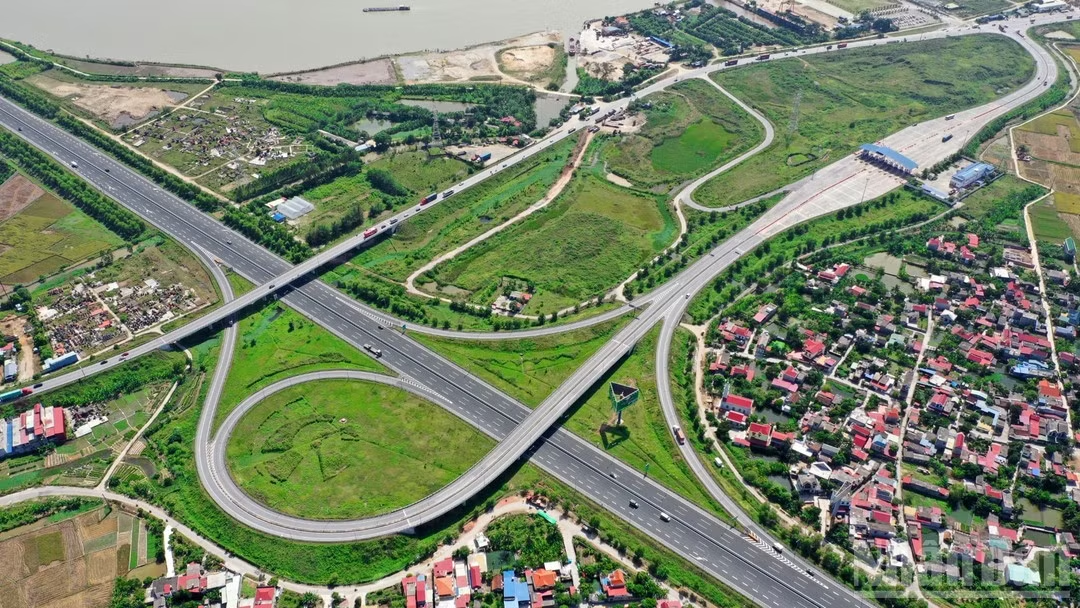
Chairman of the Hai Phong Transport Association Le Van Tien said that the Ha Noi–Hai Phong Expressway had brought about a genuine revolution for the transport sector, optimising logistics across the entire region. Without this infrastructure breakthrough more than a decade ago, the Northern regional logistics system would certainly have struggled to handle the enormous volume of imports and exports today.
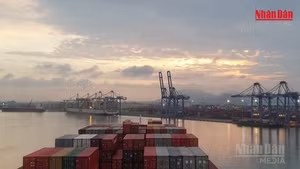
As Hai Phong consolidates its position as an international maritime gateway, the expressway serves as a vital artery linking the industrial hinterland of the Northern region with deep-water ports. This enables domestic businesses to compete on a more equal footing in the global marketplace.
Over roughly 25 years, Viet Nam has invested in and opened around 3,350km of expressways, a figure that even transport sector managers at the time would scarcely have imagined. Looking back to the early 2000s, when the concept of an expressway was still unfamiliar domestically, the pioneering efforts of local road and bridge engineers to find a way forward on the 41km Ho Chi Minh City–Trung Luong Expressway were fraught with hardship and challenges.
Despite limited investment capital, the Transport Engineering Design Inc. (TEDI), the organisation tasked with studying the project, made the bold decision to construct 16km of elevated roadway. Although more expensive, this approach met long-term development requirements while enabling the centralisation of girder production and installation systems, helping to industrialise and modernise construction and transport engineering.
In 2008, the Prime Minister approved the master plan for the development of Viet Nam’s expressway network through 2020, with a vision beyond 2020. The plan identified 22 routes with a total length of 5,873km and was regarded as an essential foundation for the country’s industrialisation and modernisation.
In 2010, Viet Nam had completed fewer than 100km of expressways. During the 2011–2020 period, another 1,000km was opened to traffic. Following the implementation of the Resolution of the 13th National Party Congress on three strategic breakthroughs, with the development of a modern, integrated infrastructure system as a key priority, numerous projects were launched over the subsequent five years, generating an unprecedented wave of investment.
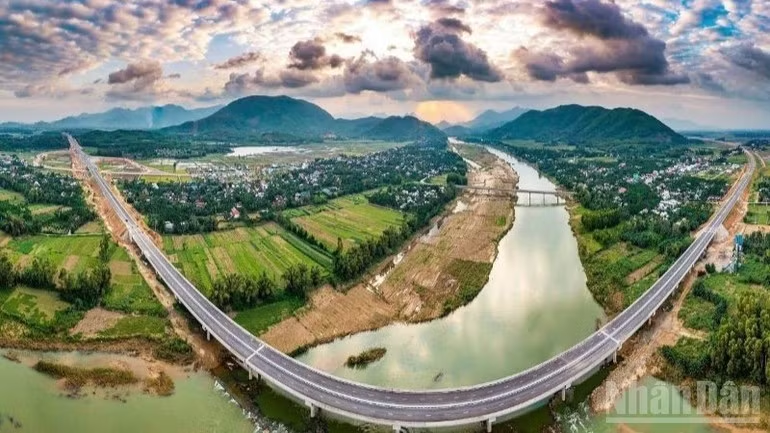
“The five-year period from 2021 to 2025 marked a peak and a breakthrough in expressway investment, in terms of scale, construction progress, operational length, and capital efficiency. During this time, the average construction pace reached approximately 400km per year, more than four times the rate in the preceding five years,” said Head of the Department of Economics and Construction Investment Management under the Ministry of Construction Le Quyet Tien.
“By the end of 2025, Viet Nam had more than 3,000km of expressways, connecting the entire eastern North–South Expressway corridor from Lang Son to Ca Mau. As of late June this year, a total of 3,345km had been opened to traffic nationwide, helping transform the landscape of many rural areas, promote socio-economic development, strengthen regional connectivity, and reduce logistics costs,” he added.
The North–South Expressway has become a powerful magnet, enabling localities along the route to develop new investment corridors. Many neighbouring areas have rapidly emerged as hubs for industrial parks, logistics, and tourism, attracting a series of large-scale projects.
Local authorities have been leveraging their infrastructure advantages to unlock opportunities for sustainable socio-economic development. Looking ahead, Viet Nam’s expressway network will continue to expand.
Under the recently announced revised road network master plan, Viet Nam is expected to develop 46 expressway routes with a total length of more than 10,100km by 2050. This national sectoral plan will guide transport development across the country, mobilise investment resources, and connect economic centres, urban areas, border gates, seaports, airports, and transport hubs. It will also provide an important basis for localities to proactively build infrastructure and strengthen regional connectivity.