Every year, from July onwards, floodwaters (also known as the flood season) flow down from the upper reaches of the Mekong River into the delta. An Giang Province and Dong Thap Province, located at the downstream end of the Mekong, benefit from these waters, from fish and aquatic resources to fertile alluvial deposits.
Enjoying the flood season
By December, the floodwaters recede and flow back into major rivers. The retreating waters carry aquatic resources into the Mekong Delta, while leaving behind layers of fertile silt for the fields. The flood season is like a distant friend who arrives quietly on schedule each year, then departs noisily after a brief stay.
As the waters gradually rise into fields and riverine alluvial plains, a distinctive flood-season culture takes shape, centred on activities such as fishing and aquaculture, cultivating floating rice, and growing aquatic plants.
Photographers also seize the opportunity to capture vivid images of nature’s vitality: mangrove apple trees submerged in water, people hauling fishing nets, others harvesting water lilies and sesbania flowers, and night markets trading seasonal produce that appear only during the flood season.
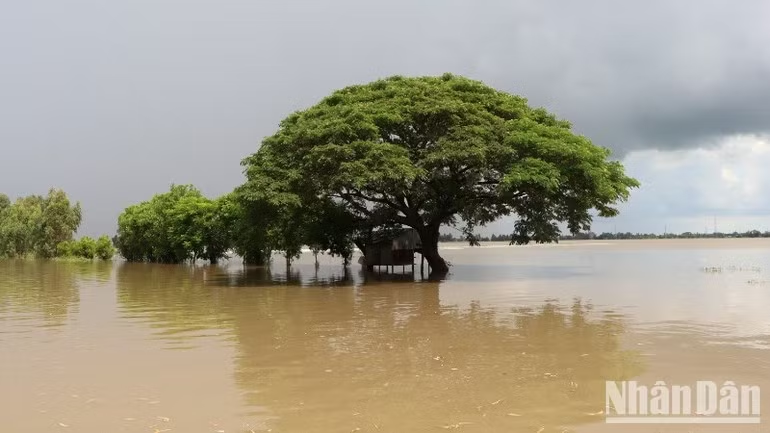
In 2023, Chau Phu District (former) organised the event “Flood Season Festival at the fields of Thanh My Tay Commune”, drawing large numbers of visitors and locals. The programme featured a series of river-related activities such as pushing fish traps to catch snakehead fish, hand-catching field snails, using traditional bamboo fish traps for visitors to experience, and other hands-on activities.
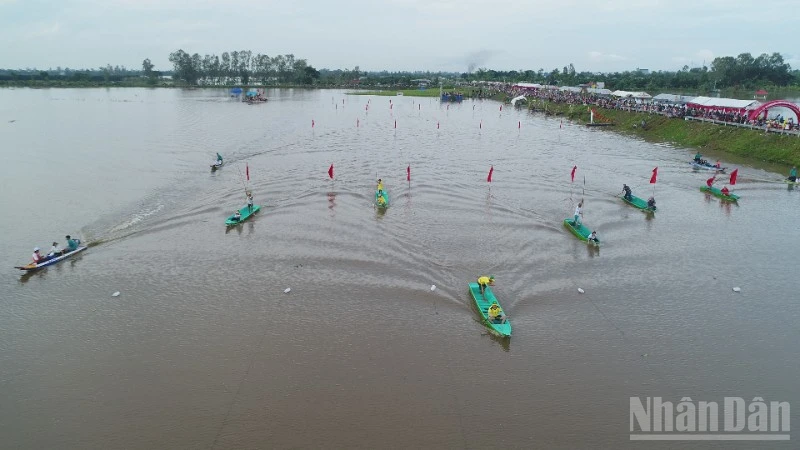
During the 2025 flood season, many localities along the Hau River organise flood-season recreational and entertainment activities. In late September, the An Giang Provincial People’s Committee, in coordination with the Phu Huu Commune People’s Committee, organised the “Flood Season Sports Festival” at Bun Ren Sluice, Vinh Loc Hamlet. Phu Huu Commune lies at the upstream section of the Hau River and receives incoming floodwaters. Rice fields are transformed during the flood season into vast water bodies rich in shrimp and fish.
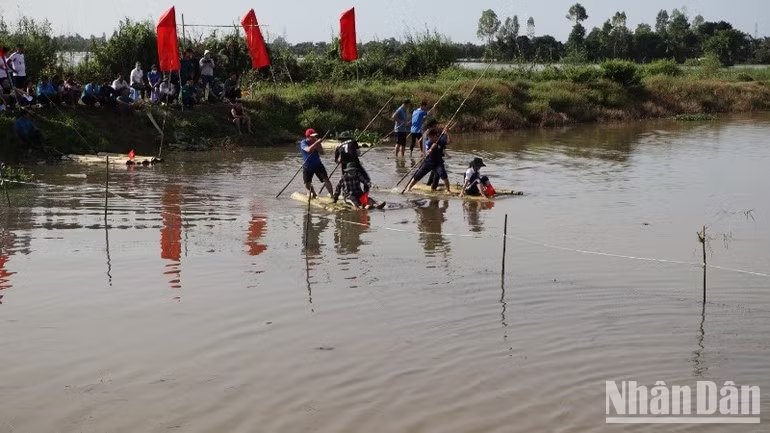
The sports festival included events such as double sculling races for men and mixed teams over distances of 150 to 200 metres, banana-trunk boat races, duck-chasing on flooded fields, and more. The festival helped promote the beautiful image of Phu Huu during the flood season and attracted visitors for upcoming flood seasons.
In October and November, the Chau Phong Commune People’s Committee and the My Thoi Ward People’s Committee organised flood-season events for the first time, featuring activities such as banana-trunk boat racing and duck catching.
These events attracted large crowds, demonstrating the strong appeal of the flood season. The organisation of flood-season festivals by communes and wards has become notable information drawing the attention of tourists.
Flood-season tourism
This flood season, farmer Nguyen Van Tai of Vinh Dong Hamlet, An Cu Commune, opened his fields to allow alluvial waters to flow in and enclosed his paddies to attract natural fish stocks. Tai and his neighbouring farmers also cooperated to cultivate clean lotus.
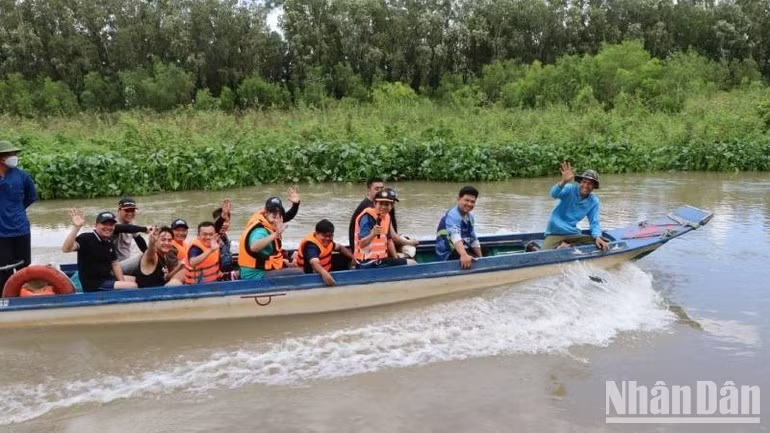
Mr Tai’s group organises flood-season eco-tourism, using flat-bottomed boats to transport visitors across flooded fields, wading through water to visit lotus ponds, hauling nets to catch field fish, and experiencing traditional fish-based dishes. From this model, the group has gained additional tourism income compared to previous years.
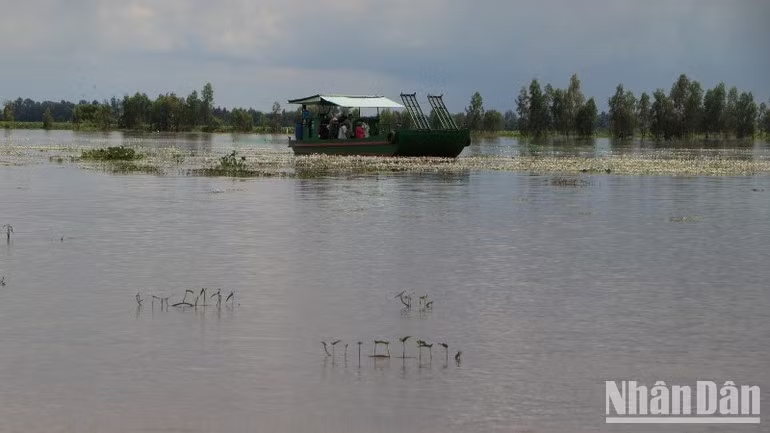
This deep-field tourism model delights visitors as they immerse themselves in nature, personally scooping up alluvial soil soaked in the fields and removing fish thrashing vigorously in the nets.
In 2025, Tinh maintained the model, setting up flood-themed mini landscapes, displaying fishing nets, three-plank boats, rustic thatched huts, and planting sesbania flowers to create a compact yet vivid flood-season setting.
Many visitors prefer visiting the café at sunset and sunrise to leisurely admire the scenic harmony of mountains and waters during the flood season, quietly contemplating the shimmering golden rays of the setting sun stretching across the flooded fields, and watching the last light of day fade behind Co To Mountain.
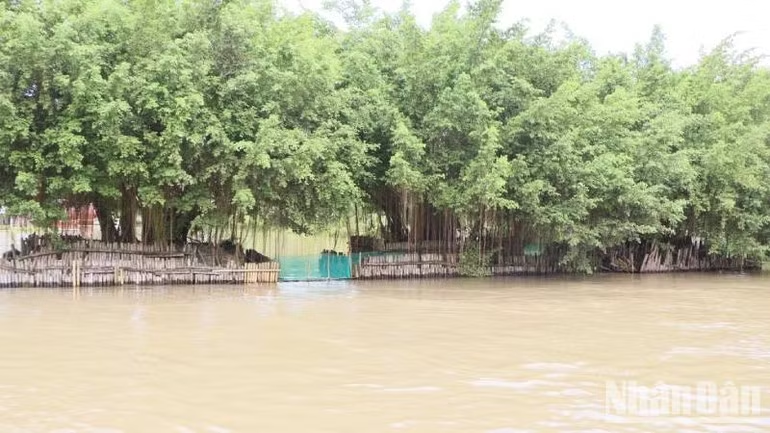
In previous years, the Tan Trung Tourism Cooperative in Tan Trung Commune (now Phu Tan Commune) welcomed visitors to enjoy activities at the Tan Trung Reservoir. In the dry season, the reservoir bed becomes an alluvial plain, but during the flood season it acts like a funnel receiving water from the Vam Nao River, turning into a large lake ideal for tourism development.
Through tours organised from Ho Chi Minh City, visitors can immerse themselves in local life — harvesting water chestnuts and sesbania flowers, dismantling fish shelters, hauling nets to catch fish, foraging for snails and crabs, and observing stilt houses seemingly floating during the flood season —thereby gaining a deeper understanding of what the flood season truly means.
Along the banks of the Hau and Tien rivers, many areas take advantage of the flood season to develop green tourism, allowing visitors to explore the lives of farmers and fishermen during this unique period.
The flood season has long been closely associated with delta communities and is an inseparable part of the cultural life of this wetland region. With well-guided investment and effective development, An Giang Province is expected to gain an additional tourism product that allows visitors to immerse themselves into experiencing nature during the four-month flood season, providing local residents with sustainable income through tourism route linkages.
![[Video] Viet Nam among Top three Asian destinations for return visitors](https://en-cdn.nhandan.vn/images/nyM650OGFWrOVWc-xajqN-rTZ68Rlmc1fiGJOhBRYHErj-E25MBpvJqrpphXazfrpe9t-fYCGuQU4CN0yXo3Rg/du-lich-vietnam.jpg.avif)