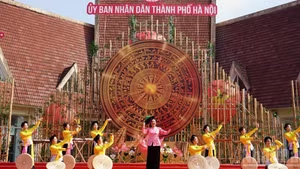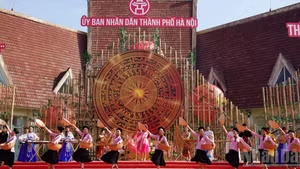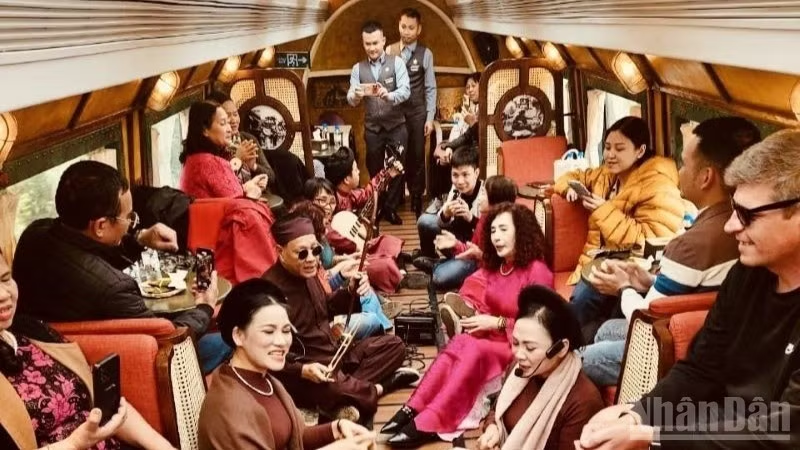
Through this initiative, the train has opened up a distinctly cultural spring journey, awakening memories, heritage, and the spirit of reunion in the heart of the capital. This marks the first spring season in which The Ha Noi Train has operated officially, offering a different kind of spring excursion for visitors of all generations.
Modern life may streamline certain customs and alter rituals, yet the sense of a springtime reunion and the flavour of tradition remain something many long to reconnect with. Running until March 8, 2026, the Thang Long–Kinh Bac journey has been conceived as a spiritual “mobile pause”, where individuals and families alike can rediscover a “rendezvous” with memory and Ha Noi’s identity through Tet past and spring present.
According to a representative of The Ha Noi Train, the train itself is merely a tangible vehicle for carrying a sense of return. “In a fast-moving society, we believe that slowing down and touching the depth of culture and memory is a very real need. The Thang Long – Kinh Bac journey is precisely such a pause, a gateway in time where each person and family can experience culture together and reconnect with Tet and cherished memories of the past.”
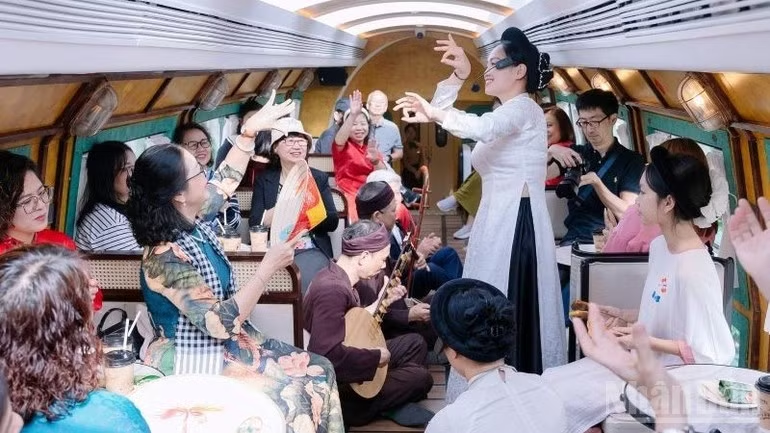
The train comprises five carriages named after Ha Noi’s historic gateways — O Cau Den, O Quan Chuong, O Cau Giay, O Cho Dua, and O Dong Mac — each evoking places closely associated with the capital’s history. They are decorated in the style of living rooms from old Ha Noi households, creating a holistic experience that weaves together culture, heritage, art, cuisine, and spirituality. From a cultural perspective, this approach is envisioned as an annual spring appointment, where hope, memory, and the spirit of homecoming converge.
The Ha Noi Train has been designed as a mobile cultural space, recreating layers of Ha Noi’s memory through architecture, performance, and gastronomy. The train includes five double-decker seated carriages and two open-space carriages, with a total capacity of 287 passengers. Each carriage seats between 44 and 65 guests, with wide-opening windows allowing travellers at any seat to take in the passing scenery.
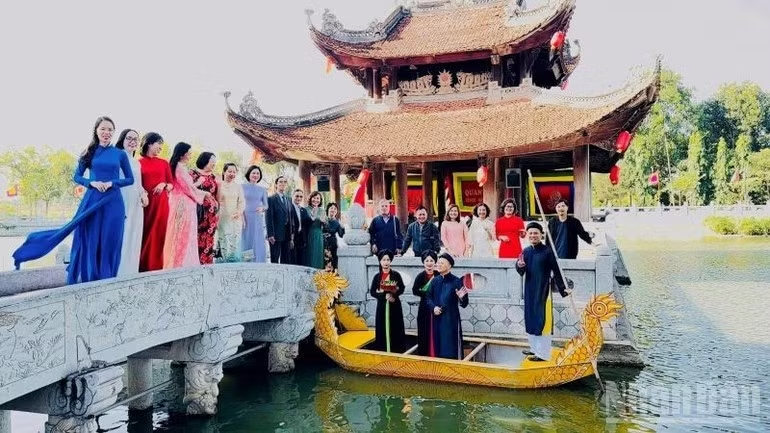
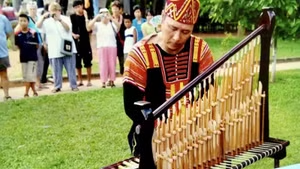
Departing from Ha Noi Station, the approximately three-and-a-half-hour journey brings visitors to Tu Son Station in Bac Ninh Province, opening onto the cultural landscape of Kinh Bac — the ancestral homeland of the Ly Dynasty and the cradle of Quan ho folk singing, a locality home to numerous UNESCO-recognised heritage elements. Travellers enjoy seasonal delicacies imbued with the flavours of traditional Tet while listening to spring melodies and stories and taking part in immersive artistic experiences that dissolve the boundary between performers and audience.
A stop at Den Do, dedicated to the eight emperors of the Ly Dynasty, recalls the historic relocation of the capital to Thang Long and the flourishing era of Dai Viet. In the early-year atmosphere, visitors offer incense prayers for peace and prosperity, continuing a cherished and sacred Vietnamese tradition. On the return leg, the train pauses for around 20 minutes at Long Bien Station, allowing passengers to admire the century-old historic bridge, take photographs in the open carriages, and preserve memories amid the timeless charm of ancient Ha Noi.
Ticket prices are maintained during the Tet period, with free admission for children under three and preferential rates for families and group bookings under specific conditions. Fares for the O Cau Den, O Quan Chuong, O Cau Giay, and O Dong Mac carriages are 550,000 VND per first-floor seat and 650,000 VND per mezzanine or second-floor seat, while the O Cho Dua VIP carriage is priced uniformly at 750,000 VND per ticket.
The journey is designed as an occasion for families and friends to sit together in a tranquil setting, where grandparents recount Tet stories of old, parents rediscover moments of stillness, and children engage directly with heritage through lived experience.
The intergenerational connection flows with the journey back to origins — from the imperial capital of Thang Long to the ancestral land of Kinh Bac, from the modern city to the deep well of its civilised past.