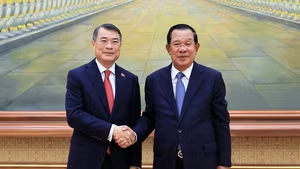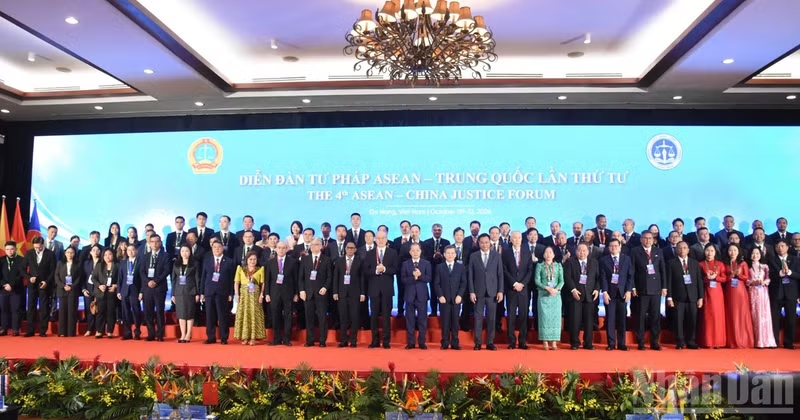
Politburo Member, Secretary of the Party Central Committee and Head of the Party Central Committee's Commission for Internal Affairs Le Minh Tri attended the forum and delivered welcoming remarks.
The forum brought together approximately 130 domestic and international delegates. It served as a high-level dialogue and cooperation mechanism between the supreme courts of ASEAN member states and the Supreme People's Court of China.
Amid deepening international integration, cross-border legal issues have created a growing need for closer coordination among judicial authorities and greater capacity to apply technology in judicial proceedings.
Addressing the forum, Politburo Member Le Minh Tri said that international integration and judicial reform were placing new demands on judicial systems to improve their effectiveness, expand international cooperation and meet increasingly diverse and demanding international commitments.
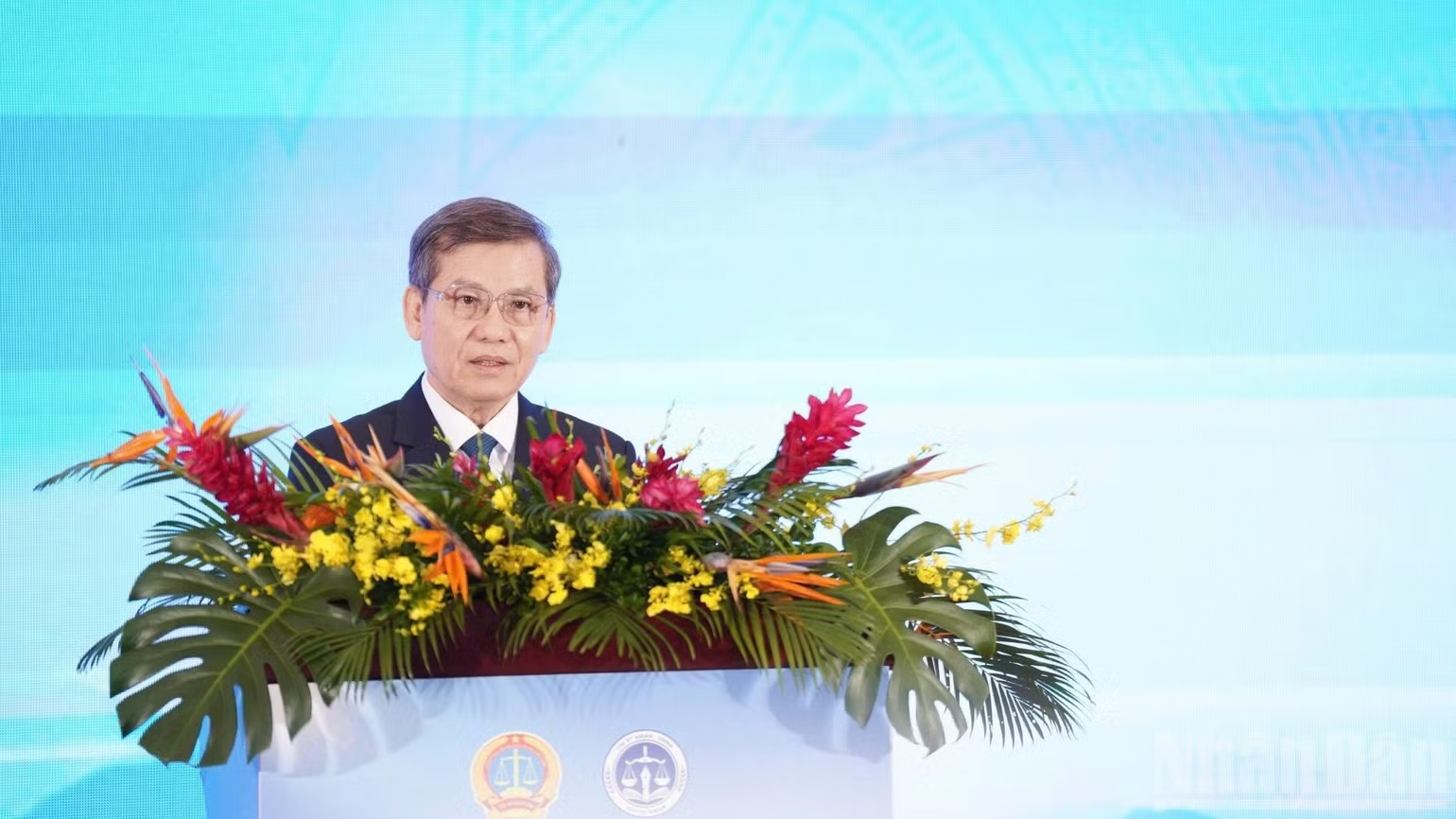
At the same time, efforts to improve legal frameworks and advance judicial innovation and reform are being implemented more comprehensively and vigorously than ever across ASEAN countries and China.
The ASEAN–China Judicial Forum is an important cooperation mechanism for judicial authorities in the region, providing a platform for ASEAN and Chinese judicial bodies to exchange experiences and promote cooperation in combating crime and resolving commercial and civil disputes.
Le Minh Tri emphasised that Viet Nam has consistently attached great importance to expanding international cooperation in the judicial sector, considering it an effective means of strengthening the capacity of judicial personnel, particularly in adjudication and case resolution.
Such cooperation also contributes to improving institutions and enhancing the quality and effectiveness of judicial activities, safeguarding justice, protecting human and citizens' rights, and upholding the legitimate rights and interests of individuals and businesses during international integration.
These efforts are aimed at strengthening public trust, ensuring fairness and justice, and contributing to the development of a socialist rule-of-law society.
Viet Nam hopes to further deepen judicial cooperation between its Supreme People's Court and the supreme courts of ASEAN member states, thereby making greater contributions to broader ASEAN–China cooperation in the coming years.
Le Minh Tri affirmed that Viet Nam's hosting of the forum further demonstrated the country's commitment to pursuing comprehensive and increasingly effective judicial cooperation.
The event also reflects Viet Nam's sense of responsibility towards the overall development of ASEAN–China cooperation, in line with the Party and State's foreign policy of independence, self-reliance, peace, friendship, cooperation and development, and the multilateralisation and diversification of external relations.
Viet Nam remains committed to being a friend, a reliable partner and an active and responsible member of the international community.
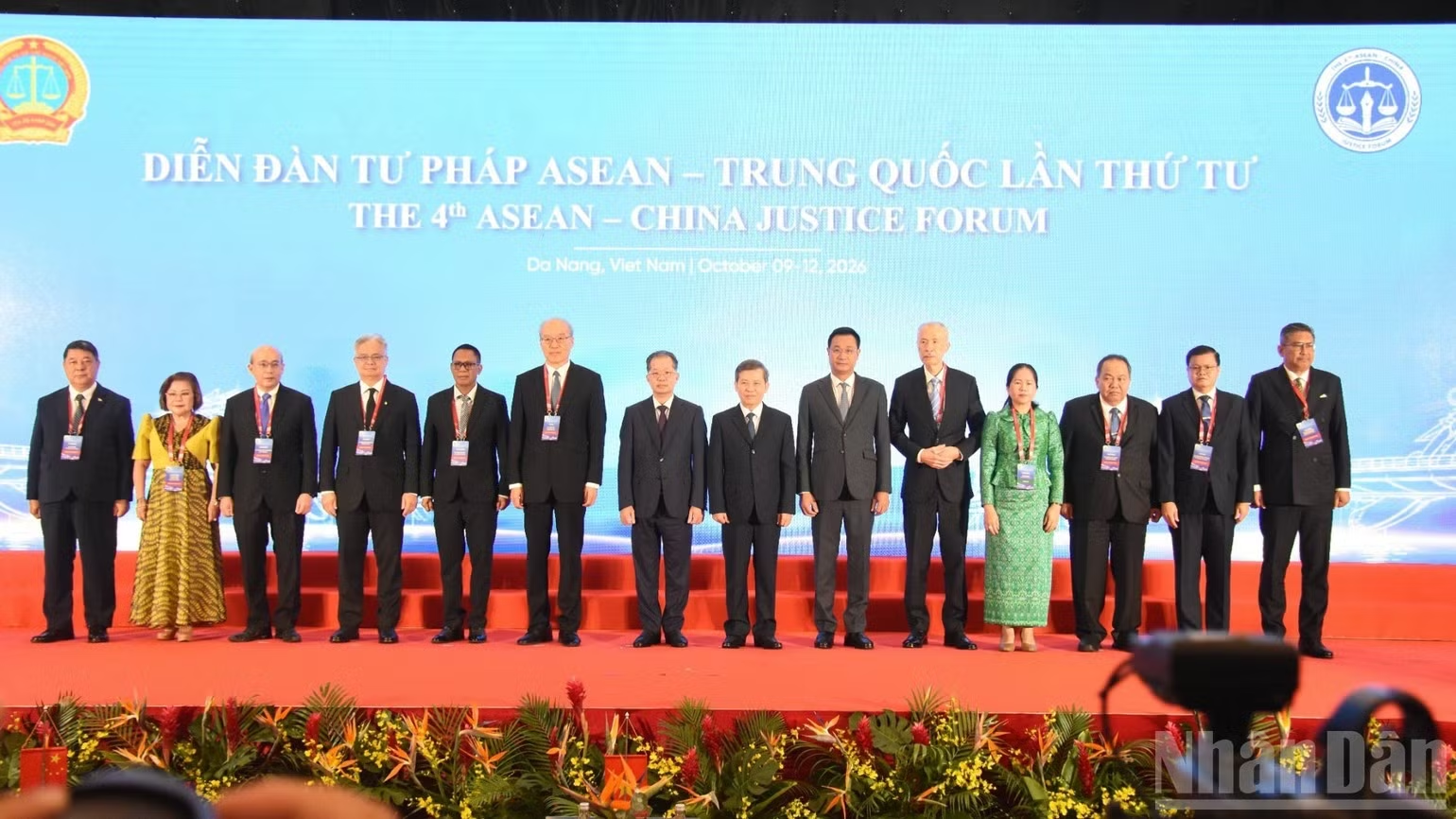
Launched in 2014, the ASEAN–China Judicial Forum has previously been held three times, in 2014, 2017 and 2022, in Nanning, Guangxi Zhuang Autonomous Region, China. Viet Nam's hosting of the fourth forum is particularly significant as ASEAN and China mark the fifth anniversary of their Comprehensive Strategic Partnership. The event is expected to deepen regional judicial cooperation, facilitate exchanges of experience in judicial reform, and promote the development of electronic courts and the application of technology in judicial proceedings.
Delivering the opening remarks at the forum, Chief Justice of the Supreme People's Court of Viet Nam Nguyen Van Quang said that since ASEAN and China established dialogue relations in 1991, their ties have developed strongly and achieved significant results through the joint efforts of both sides over the past 35 years.
ASEAN and China established a strategic partnership in 2003. In 2021, at the special summit to commemorate the 30th anniversary of ASEAN–China dialogue relations, the two sides officially announced the elevation of their relationship to a comprehensive strategic partnership.
This marked a major milestone in the development of ASEAN–China relations, laying an important foundation for the two sides to establish and implement cooperation mechanisms across various fields.
Against this backdrop, the Supreme People's Court of Viet Nam is honoured to host the fourth ASEAN–China Judicial Forum in 2026. The event is a meaningful activity marking the fifth anniversary of the ASEAN–China Comprehensive Strategic Partnership, helping enrich the activities and significance of the “ASEAN–China Year”.
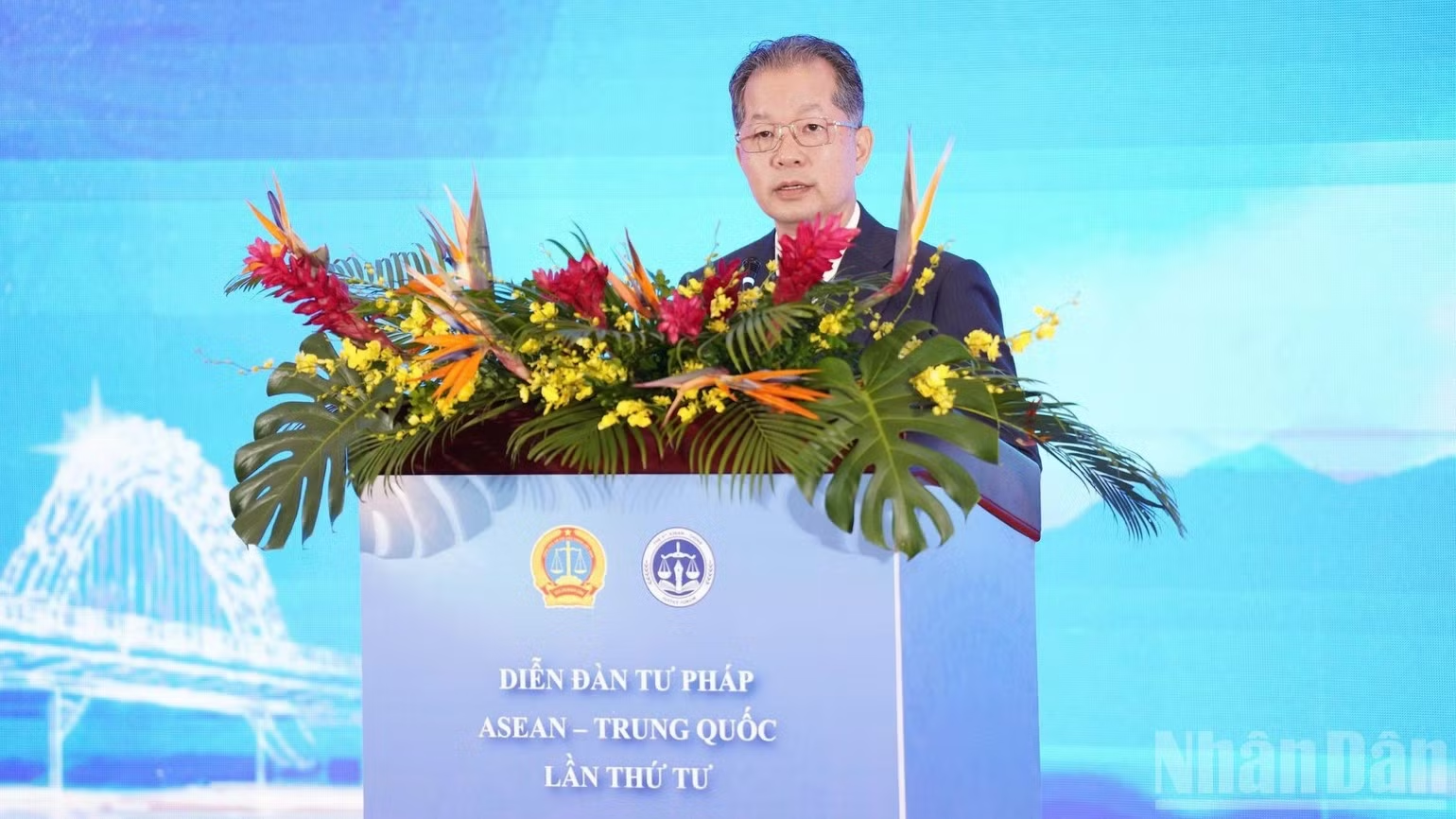
Chief Justice Nguyen Van Quang affirmed that the forum provided an opportunity for delegates to exchange experiences in handling criminal, civil and commercial cases involving cross-border elements.
It also offered a platform to propose new approaches to strengthening judicial cooperation in an increasingly effective manner, consistent with international law and the treaties to which each country is a party, amid deepening regional and international integration.
The forum also provided an opportunity to share experiences in developing electronic and smart courts and applying artificial intelligence to support judicial modernisation, enhance transparency, and facilitate access to justice for individuals and businesses.
These are important issues closely linked to the responsibilities of each country's courts and the collective responsibilities of judicial institutions across ASEAN and China.
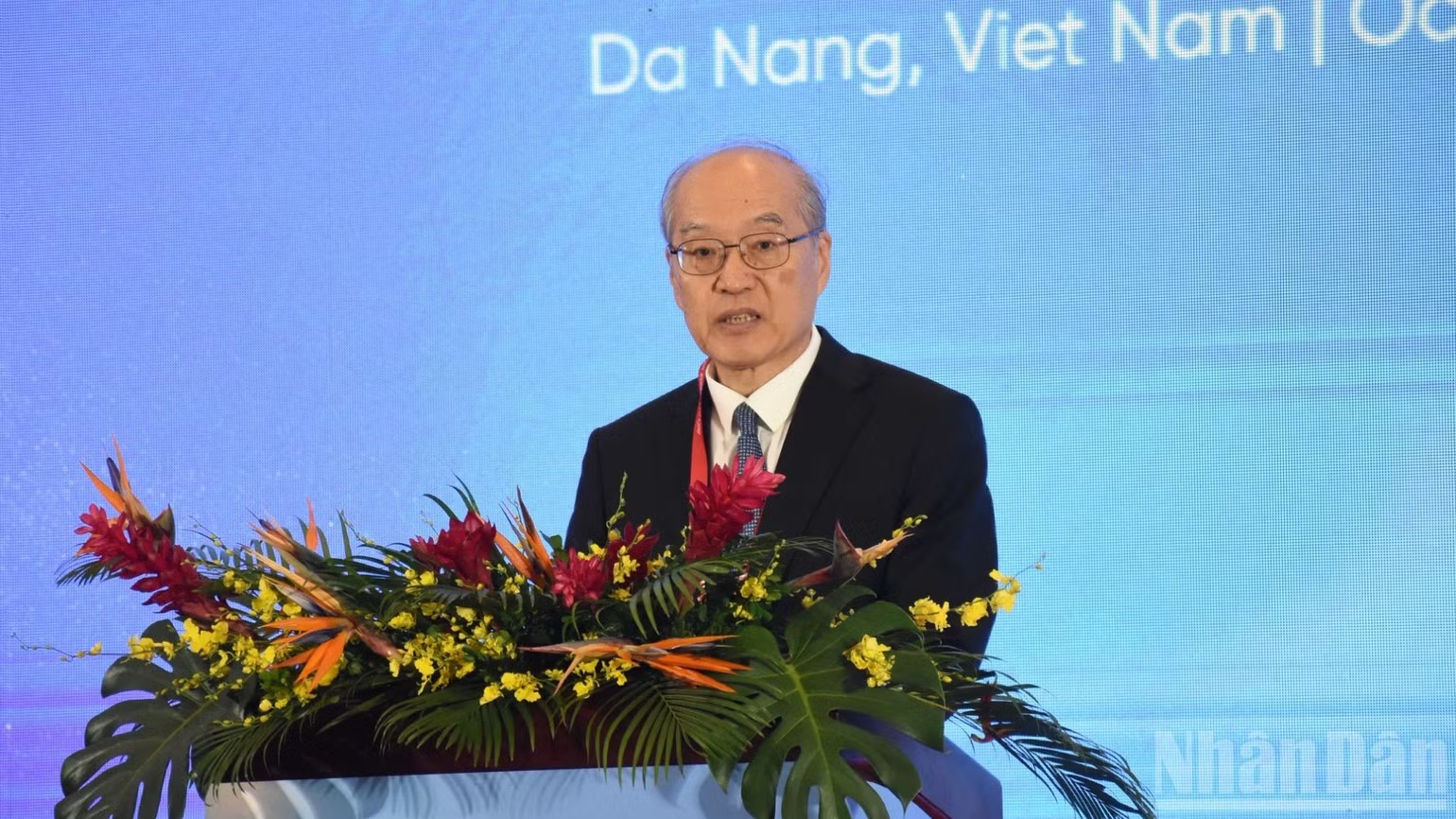
Zhang Jun, President of the Supreme People's Court of China, affirmed that the forum's theme closely reflected the changing times and regional development trends.
He expressed confidence that the forum would help provide a solid judicial foundation for socio-economic development in China and ASEAN countries, while contributing positive, stable and constructive judicial momentum to the region and the wider world.
To achieve these objectives, Zhang Jun proposed that delegates focus their discussions on four key areas. First, efforts need to be made to build consensus and lay a solid foundation for cooperation based on mutual trust and respect. Second, the joint management of cross-border risks and strengthening of safeguards for the region's openness and development. Third, focus should be promoted in advancing digital justice and harnessing technological advantages to support judicial activities. Fourth, the areas of cooperation should be expanded and the practical and multi-level judicial exchanges should be diversified.

Zhang Jun affirmed that Chinese courts stand ready to work with their ASEAN counterparts to uphold their shared commitment to the rule of law and fulfil the responsibilities of the times.
Through higher-level judicial cooperation, they aim to support high-quality regional development, continue contributing judicial expertise and resources to building a closer China–ASEAN Community with a shared future, and make positive contributions to implementing the four global initiatives and building a world of peace, security, prosperity, openness, inclusiveness and environmental sustainability.
Taking place in Da Nang from October 9 to 12, the forum focuses on two main areas: cooperation in handling cross-border criminal cases and civil and commercial disputes in the digital era; and sharing experiences in developing electronic courts and applying artificial intelligence to support adjudication, along with future prospects. As part of the forum, delegates will discuss and adopt the Da Nang Joint Communiqué 2026, recording the outcomes of the fourth forum and outlining directions for ASEAN–China judicial cooperation in the coming years.