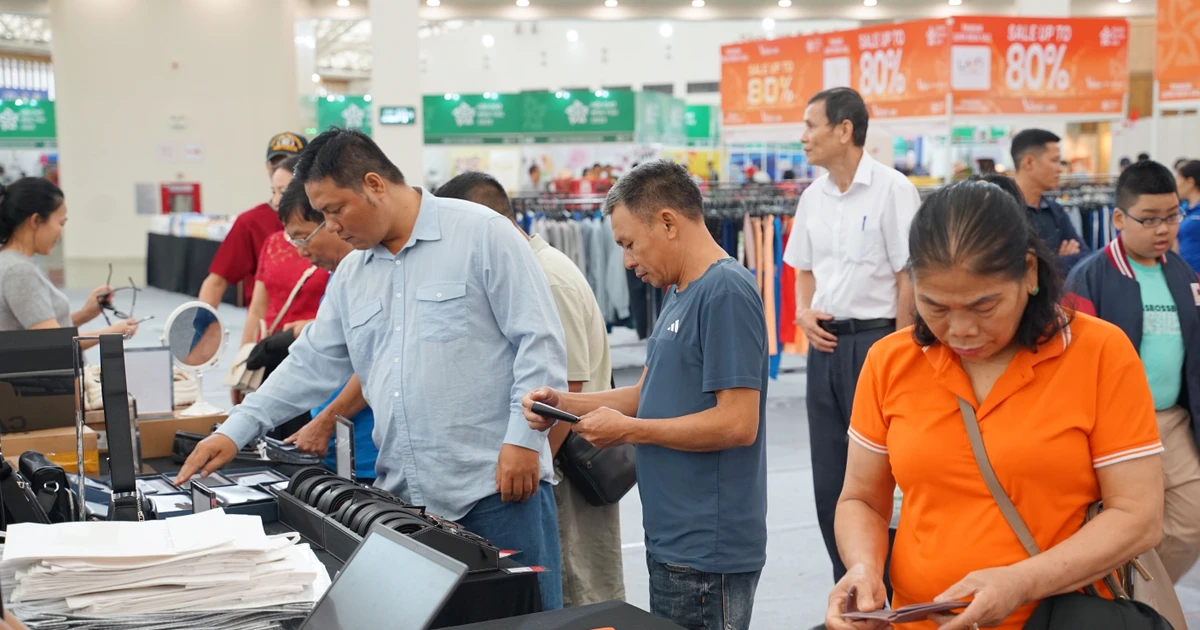
The Ministry of Industry and Trade has officially launched the Viet Nam Grand Sale 2025 programme. Running from December 1, 2025 to January 18, 2026, the programme is expected to create opportunities for businesses to accelerate production and the circulation of goods.
Dual goals expected
According to Deputy Director of the Trade Promotion Agency under the Ministry of Industry and Trade Le Hoang Tai, the most notable highlight of the programme is that businesses are allowed to apply promotional discounts of up to 100% of the value of goods.
In addition, enterprises must conduct promotional activities legally, honestly, publicly and transparently, while ensuring the legitimate rights and interests of consumers and maintaining the quality of goods and services in accordance with current regulations. This offers consumers the chance to find high-quality products at reasonable prices, while helping businesses promote their brands and strengthen customer connections.
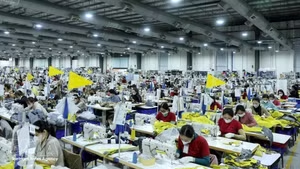
“Through this programme, the Ministry of Industry and Trade aims to achieve dual objectives. First, to support businesses in accelerating the consumption of goods, clearing inventories, speeding up capital turnover and expanding production capacity. Second, to enable consumers to access quality products at affordable prices, thereby contributing to social welfare and improving people’s living standards.”
Vo Nguyen Phong, Director of the Ha Noi Municipal Department of Industry and Trade, said the city has implemented various measures to boost economic development, stimulate consumer demand, and increase total retail sales and consumer service revenue, while creating favourable conditions for businesses to expand production and strengthen trade connections. At the same time, the capital continues to enhance the effectiveness of its Investment, Trade and Tourism Promotion Programme and diversify activities under the 'Vietnamese people prioritise using Vietnamese goods' campaign. Thanks to these efforts, in the first ten months of 2025, Ha Noi recorded impressive growth, with total retail sales of goods and consumer service revenue reaching 789.1 trillion VND, up 12.7% year-on-year.
The city is now continuing the “Ha Noi Promotion Month 2025”, part of the domestic stimulus campaign and in response to the Viet Nam Grand Sale 2025 launched by the Ministry of Industry and Trade. The programme has mobilised nearly 1,000 points of sale and more than 1,500 participating businesses, attracting over 50,000 in-person shoppers and millions of online transactions; retail system revenues have surged by 150%–200%. Some product categories, such as electronics, fashion and household goods, have risen by 200%–300% during peak discount periods.
Ha Noi has also taken the lead in implementing the “Ha Noi Sleepless Night – Ha Noi Midnight Sale” model, offering discounts of up to 70%–100%, establishing a distinctive brand for the city during the promotional season. E-commerce platforms have reported a 25%–40% increase in orders from Ha Noi, reflecting the strong growth of online commerce and digital consumption behaviours.
Significant challenges ahead
Despite the year-end “golden season” of shopping and various consumer stimulus programmes, Viet Nam’s retail market continues to face substantial challenges. According to the Consumer Survey 2025 conducted by PwC Viet Nam (a provider of audit, tax, legal, deal and advisory services), 48% of Vietnamese consumers consider economic instability the biggest threat over the next 12 months. This is the highest rate in the region (the Asia–Pacific average at 47%), reflecting growing concerns about macroeconomic volatility, inflation and household budget pressures.
In addition to economic worries, climate change (47%) and health risks (44%) are also major concerns. Rising prices and affordability top the list of challenges facing consumers today (43%). This widespread anxiety shows that consumers are prioritising price and value in their purchasing decisions.
Price sensitivity has also become a defining feature of consumer behaviour in Viet Nam in 2025, with 47% of Vietnamese consumers ranking price as the most important factor when purchasing food—nearly equal to the Asia–Pacific average of 50%. This marks a shift from 2024, when inflation and affordability were the primary concerns; today, decisions are shaped more by daily trade-offs between cost, nutrition and sustainability.
From a retail-business perspective, Le Manh Phong, Chief Operating Officer of GO! stores in Ha Noi and northern Viet Nam under Central Retail Viet Nam, predicts that year-end and Lunar New Year 2026 purchasing power will maintain stable growth of around 10%, similar to recent years. However, consumer behaviour is undergoing a clear transformation. Shoppers are prioritising products that offer “real value” - good quality at reasonable prices - rather than following brands as they once did. Food safety and transparent origins remain the most preferred product categories. Meanwhile, demand for imported goods rises during the Lunar New Year season as consumers seek new and distinctive products for gifting and family use.
“GO! System has carefully prepared its Tet (Lunar New Year) 2026 inventory in terms of quantity, quality and variety, ensuring that it meets shifting consumer needs while maintaining stable prices during the peak season,” he said.
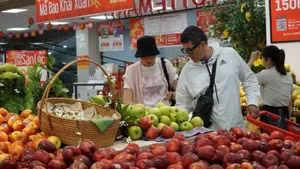
According to Nguyen Anh Nghia, Northern Regional Director of WinMart, the final months of the year always see a surge in shopping demand, especially when the Gregorian New Year and Lunar New Year 2026 fall relatively far apart. This requires retail systems to prepare more thoroughly in terms of supply, pricing and product assortment. During Christmas and the New Year, consumers prioritise decorative items, gifts, imported goods and modernised products. Meanwhile, demand during the Lunar New Year shifts towards traditional items such as cooking oil, rice, salt and foods for the holiday feast—products closely tied to Vietnamese culture.
To meet these needs, WinMart has been working with suppliers two to three months ahead of Tet to ensure abundant, diverse and price-stable supplies throughout the peak period. Essential categories—including rice, sugar, fish sauce, fresh foods, vegetables, meat, fish and imported fruits—have been prepared in large quantities.
Alongside securing supply, WinMart is also rolling out major promotional campaigns across its entire network to boost purchasing power. Notably, the “Festival Fun – Big Party Kickoff” programme in December features more than 1,000 discounted products daily, with many items reduced by up to 50%, as well as “buy one get one” and “buy two get one” offers. Win members enjoy an additional 20% discount on Meat Deli and WinEco products, giving consumers access to clean, high-quality foods at competitive prices.
“Beyond providing a short-term stimulus during the Tet shopping season, these promotional programmes also contribute to overall retail growth, helping businesses expand production and spread a modern, civilised shopping culture,” he said.
In a rapidly evolving consumer market, Nguyen Luong Hien, leader of Consumer and Retail Services at PwC Viet Nam, believes that business leaders must take decisive steps to adapt and grow. Key actions include optimising value for money, aligning with changing purchasing behaviour, and upholding ethical standards that meet consumer expectations. Transparency, consistency and trustworthiness are essential to building confidence. Genuine sustainability, verified through third-party certifications, also plays an important role.
“By focusing on core values, business leaders can overcome challenges, drive growth and capture opportunities in Viet Nam—poised to become one of the world’s largest and fastest-growing consumer markets by 2030,” he affirmed.
Ha Noi is currently implementing a “45-day-and-night campaign” to achieve a 2025 Gross Regional Domestic Product (GRDP) growth rate of 8% or higher, laying a solid foundation for double-digit GRDP growth in the years to come.
![[Infographic] VN-Index rises 0.34% on October 6](https://en-cdn.nhandan.vn/images/j0QNt7m_5iy1OXpnUKiwG61aYhTv_B140GWhfriF26IM-hJLr-YyB-igcHJ7cLRKshCXmgI3hJXGVRYJMfGPzA/chung610-8460.jpg.avif)