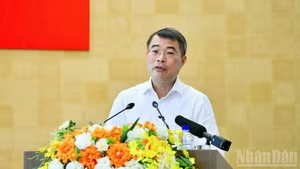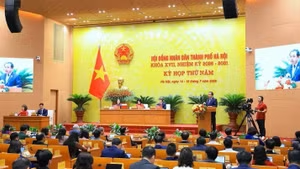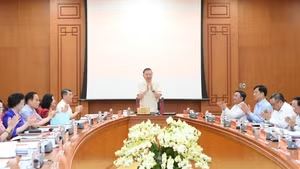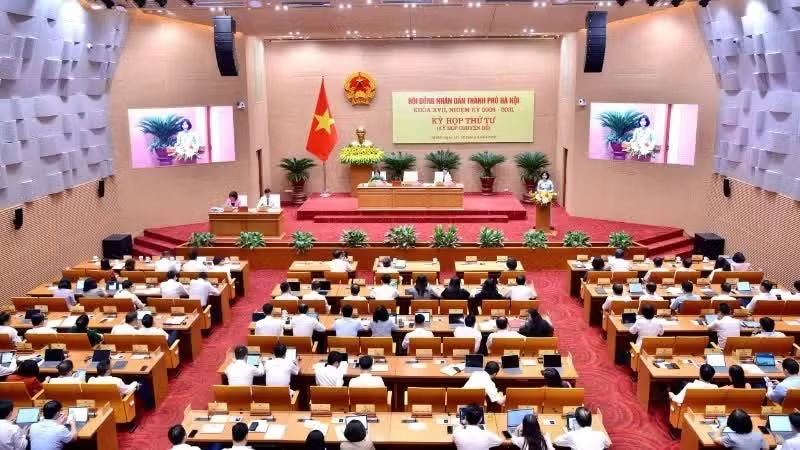
Addressing the session, Ha Noi Chairman Vu Dai Thang stated the meeting was convened to finalise all resolutions required for the Capital Law’s implementation before it takes effect on July 1.
The mechanisms and policies under consideration are intended not only to address immediate issues but also to open new avenues for development, laying the groundwork for a modern urban governance model and enhancing the long-term competitiveness of the capital.
The most significant innovation within the resolutions implementing the Capital Law is a decisive shift from a regulatory approach to a development-enabling one.
Notably, all the resolutions have been drafted with citizens and businesses placed at their heart.
Many of the policies are designed to improve the investment and business environment, attract strategic investors, enhance the quality of public services, expand social welfare programmes, and broaden access to quality healthcare, education, and transport services.
“The city must ensure that these new mechanisms are operational from July 1 to avoid legal gaps and service disruptions for citizens and businesses,” Thang emphasised.
The session’s first working day focused on discussing draft resolutions, covering several matters of considerable public interest.
Within the science, technology, and environment sector, discussions focused on resolutions governing land allocation, land leasing, and land-use conversion, preferential policies on exemptions from and reductions in land-use fees and rents, and compensation policies for land acquisition.
The urban affairs sector encompasses several new resolutions anticipated to significantly impact urban development and residents’ lives, covering underground spatial planning, low-altitude spatial planning, support for the transition to clean-energy transport, and measures to restrict private vehicles in the city’s central areas.
During the discussions, councillors assessed the new policies’ impact, feasibility, framework coherence, and practical effectiveness.
The effect of the policies on residents’ daily lives has been a particular focus throughout the drafting process and during the municipal People’s Council’s deliberations and decision-making.
Over the next two days, the municipal People’s Committee will incorporate deputies’ feedback and finalise the drafts before submitting them for approval to the municipal People’s Council.
The meeting is expected to conclude on June 15.