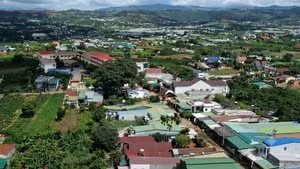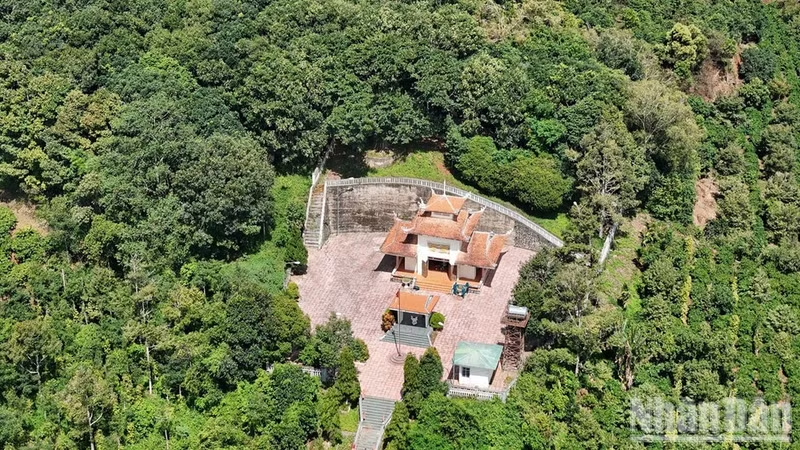
Duc Lap – Dak Sak held a particularly strategic position during the resistance war against the US for national salvation. The enemy built the area into an “iron gateway” to control the southern Central Highlands, secure the strategic Truong Son transport route and protect the corridor along the Cambodian border. Hill 722 became one of the fiercest battlefields of the Duc Lap Campaign in the autumn of 1968, where many officers and soldiers fought to their last breath for national independence and reunification.
To commemorate the immense sacrifices of the heroic martyrs, a memorial to fallen heroes was built at Hill 722 after national reunification. In 2012, the Ministry of Culture, Sports and Tourism designated Hill 722 – Dak Sak a national historical relic, affirming the special significance of a land marked by the feats of arms and heroic sacrifices of generations of officers and soldiers.
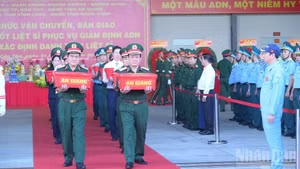
Vice Chairwoman of the Dak Sak Commune People’s Committee Y Thoa said that more than half a century after the fierce battles at Hill 722 – Dak Sak, the search for and repatriation of martyrs’ remains has never ceased, with the armed forces, local authorities and people persistently carrying out the task. Hill 722 – Dak Sak is now a historic revolutionary site of particular significance to the locality. The commune authorities have always regarded coordination in searching for and repatriating martyrs’ remains as both a political duty and an act of gratitude to previous generations who sacrificed their lives for national independence.
In response to the Government-launched “500-day-and-night campaign to accelerate the search, repatriation and identification of martyrs’ remains”, towards the 80th anniversary of War Invalids and Martyrs’ Day (July 27, 1947–2027), the Party committee and authorities of Dak Sak Commune have identified the task as one of special political importance, mobilising the entire political system and local people through a range of coordinated measures.
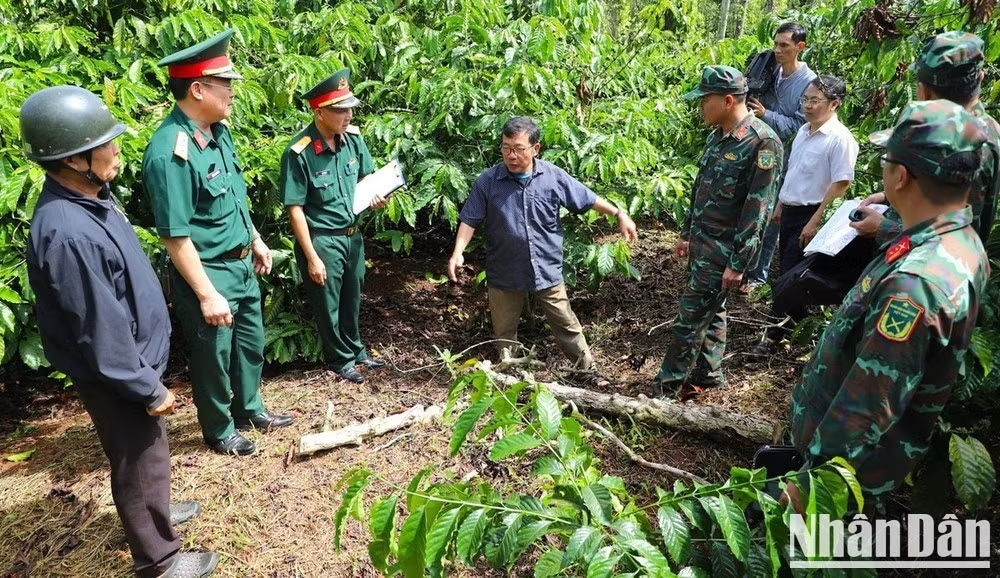
The Commune Military Command has proactively advised the Party committee and authorities to step up communication efforts and encourage residents, veterans and historical witnesses to provide information, while expanding coordination with local parishes to seek the participation of Catholic communities in locating valuable sources of information. According to Lieutenant Colonel Dang Cao Cuong, Commander of the Dak Sak Communal Military Command, information collected from various sources has enabled the locality to identify five sites suspected of containing martyrs’ graves. These have been reported to the provincial Military Command for further verification, while additional information continues to be collected to support survey work.
A particularly notable feature of this year’s search, repatriation and identification effort is the participation of many eyewitnesses. Despite his advanced age, Nguyen Van Vuong, a resident of Tho Hoang 2 Village, still carries vivid memories of the war, and becomes emotional whenever recalling the 1968 battle.
“After the fighting ended, US forces brought in heavy machinery to level the ground and rebuild their defensive system and airstrip. They gathered the remains of all those who had fallen into a mass grave. I witnessed it all, and I have always hoped that the martyrs who died at Hill 722 that year would soon be found and brought back to their families and home villages,” Vuong said.
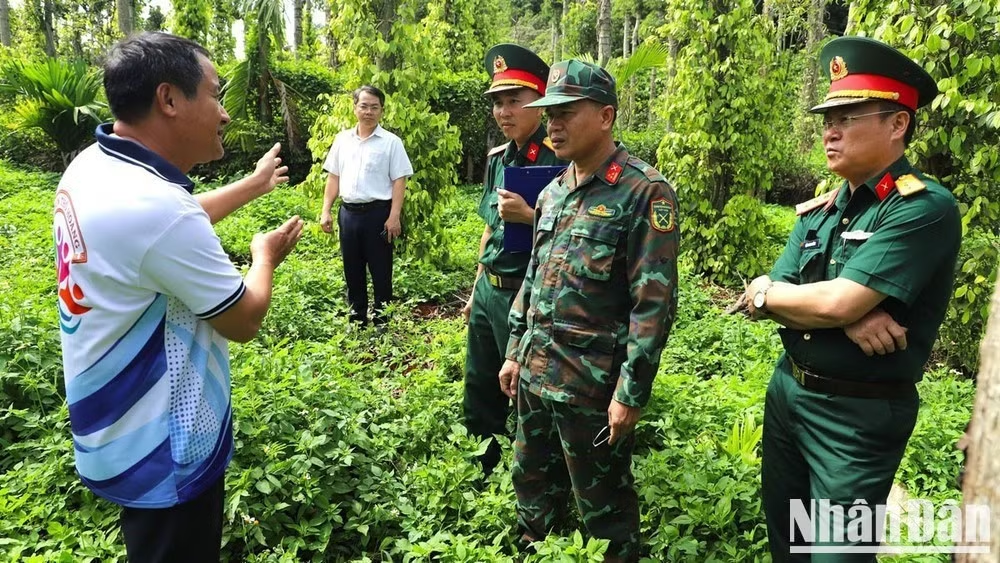
In addition to information drawn from the wartime memories of those who took part in the battle, many local residents have actively provided valuable information to support the search. Nguyen Tien Trung of Xuan Loc 2 Village said he had previously heard about a grave believed to be that of a martyr near a local garden. Ngo Xuan Ky of Tho Hoang 2 Village also said that three sets of remains had been discovered during farming activities in the garden area of Nguyen Van Phuc.
Meanwhile, Nguyen Van Han, also from Tho Hoang 2 Village, said that in 2020 his family discovered a set of human remains while levelling land. As there were no accompanying personal effects to help establish the person’s identity, the remains were reburied at Tho Hoang 2 Cemetery. In the following years, the family continued to uncover traces including bone fragments, ammunition, pieces of nylon sheeting and areas of unusual soil, believed to be former trenches and possible burial sites of martyrs.
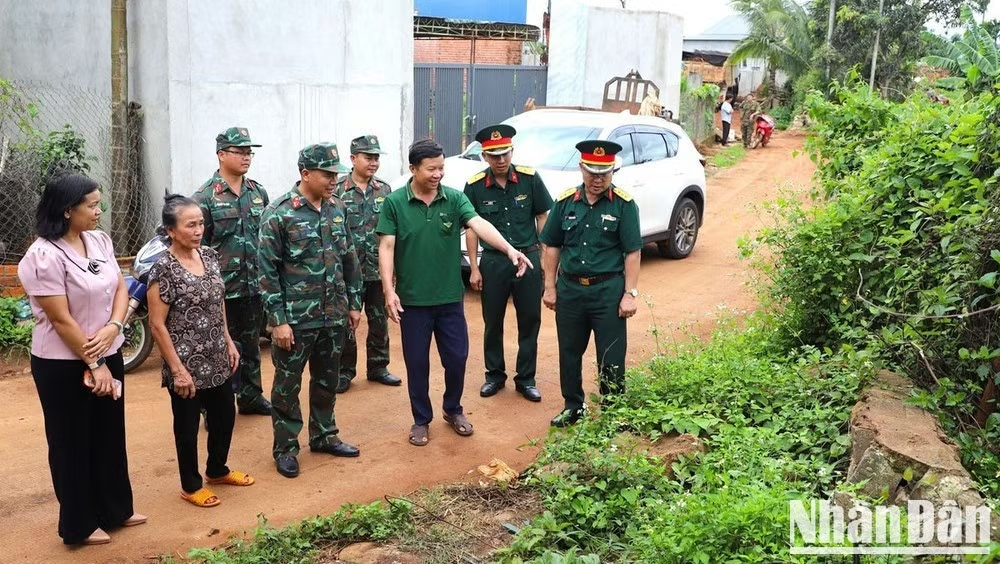
Based on initial information, the Lam Dong Provincial Military Command instructed the Area 2 Defence Command to coordinate with relevant agencies, units and local authorities in conducting field surveys at various locations believed to potentially contain martyrs’ remains, with the determination to bring the fallen soldiers back to their comrades and families.
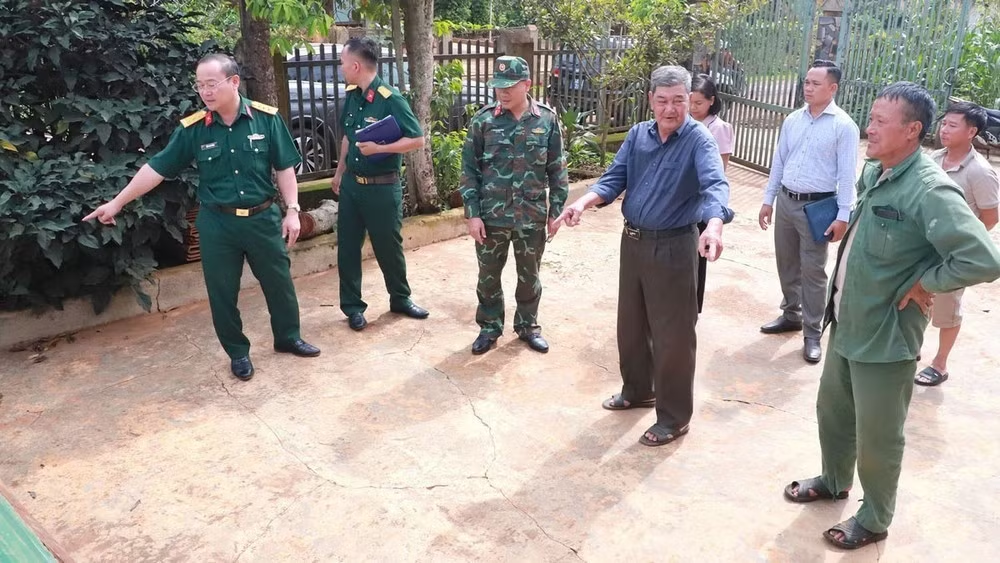
At Hill 722 – Dak Sak, the working team met eyewitnesses directly, examined the terrain, cross-checked records, military maps and archival documents, and gathered further information relating to battles that once took place in the area.
Through the survey process, functional forces initially recorded a number of valuable leads, including areas believed to be associated with the places where officers and soldiers of Regiment 66 and other units that fought at Hill 722 were killed or buried.
Lieutenant Colonel Y Thanh B’Krong, Political Commissar of the Area 2 – Dong Gia Nghia Defence Command, said information provided by witnesses in Dak Sak Commune showed many points consistent with the course of the attacks in 1968, providing an important basis for further verification by functional forces. Once the survey is completed, if locations are assessed as highly reliable, the unit will report to higher authorities to proceed with the next steps, combining traditional methods with technological applications to improve the effectiveness of the search.
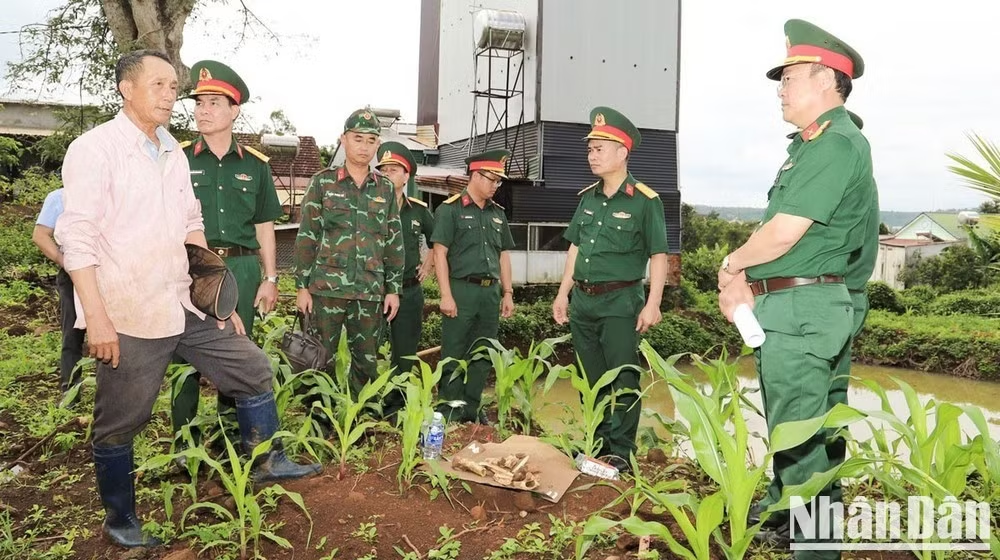
Alongside actively providing information, many residents of Dak Sak Commune are also ready to support the search effort. Nguyen Van Han of Tho Hoang 2 Village said his family fully supports surveys and excavations on their farmland whenever required by specialised agencies.
“We only hope the martyrs will soon be found and brought back to their families,” Han said.
Like Han, many other local households, including the families of Nguyen Van Vuong, Nguyen Tien Trung and Ngo Xuan Ky, are also willing to facilitate surveys by the authorities on their residential and farming land where there are grounds to believe that martyrs’ remains may be buried.
The war may be long over, but the responsibility to those who gave their lives remains. The search for martyrs’ remains at Hill 722 – Dak Sak continues Viet Nam’s enduring tradition of remembrance and gratitude, honouring those who devoted their youth and their lives to the independence and freedom of the Fatherland.