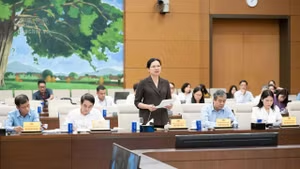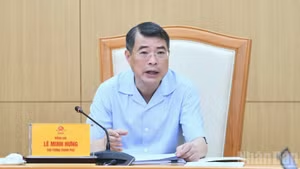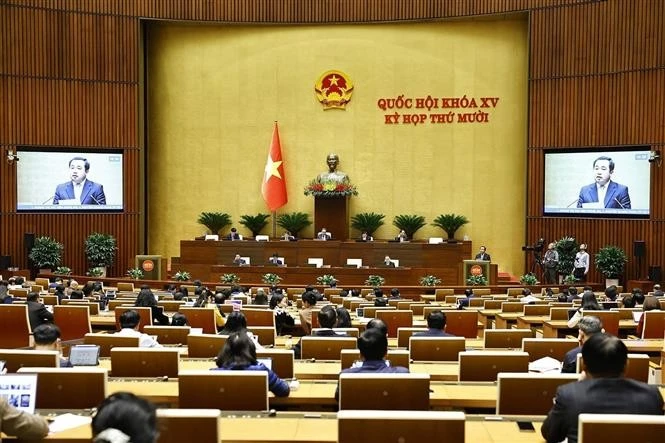
In a plenary discussion on the investment policy for the national target programmes on new-style rural development, sustainable poverty reduction and socio-economic development in ethnic minority and mountainous areas through 2035, deputy Vuong Thi Huong from Tuyen Quang province said extending the disbursement deadline to the end of 2026 is critical to allow localities to complete assigned tasks and relieve pressure on capital allocation.
Pointing to the deteriorating state of many general hospitals in ethnic minority and mountainous areas, where facilities often lack functional rooms and basic equipment yet remain ineligible for funding under the current programme, Huong argued that sweeping healthcare improvement requires the policy framework to explicitly cover upgrades, renovations, repairs and equipment procurement for these hospitals.
Deputy Nguyen Thi Thu Ha from Quang Ninh proivince urged more appropriate special mechanisms for production development projects, calling for streamlined administrative procedures and fewer conditional hurdles. She proposed the Government establish only broad principles, criteria and support frameworks while delegating appraisal, approval and implementation authority to provincial and communal administrations to better match local conditions.
Ha advocated direct cash transfers to poor, near-poor and recently escaped-poverty households through a registered task-based system tailored to forestry livelihoods, noting that afforestation projects with two- to three-year cycles should receive payments upon registration and verified completion.
She further recommended the draft resolution on the merger explicitly permit integration of local budgets, other legal capital sources and funding from separate projects into the national target programme, backed by flexible coordination mechanisms.
Addressing lawmakers’ concerns over merging the three programmes into a single framework, Minister of Agriculture and Environment Tran Duc Thang said the move demonstrates the Government’s resolve to meet the Party and State’s goals of improving living standards for all people, especially those in ethnic minority and mountainous areas.
The merger will not cut existing policies or narrow beneficiary coverage, Thang said, adding it will instead sharpen focus and prioritise resources for ethnic minority and mountainous regions, which remain Viet Nam’s most impoverished areas.