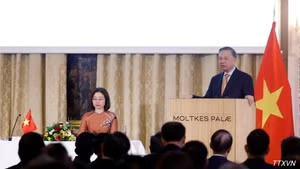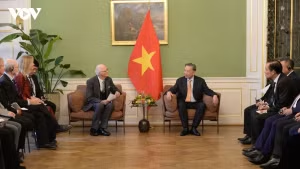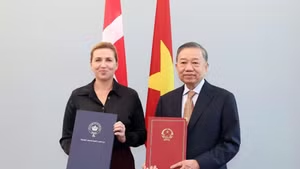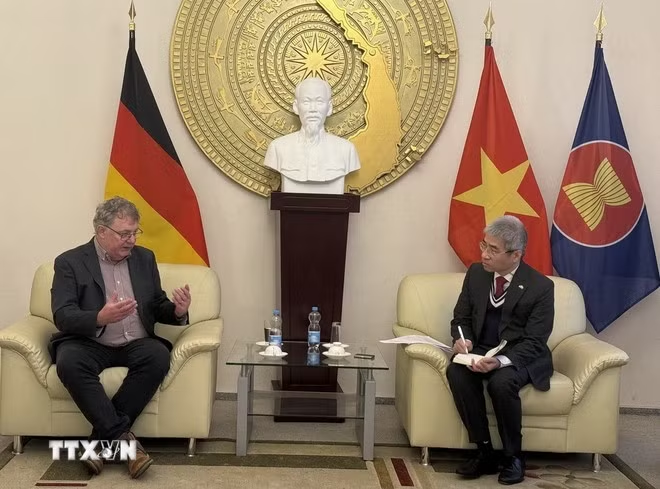
Thanh on January 9 met with Patrik Köbele, Chairman of the German Communist Party (DKP); and Wulf Gallert, Co-chair of the International Commission of left party Die Linke. The discussions focused on the political, economic and social situations in both countries, as well as international issues of mutual concern.
On this occasion, Thanh briefed the German party leaders on preparations for the upcoming 14th National Congress of the CPV.
Meeting with Köbele, Thanh expressed his appreciation for the long-standing traditional ties between the two communist parties. He stressed that Viet Nam has always highly valued the valuable support extended by German communists and people during Viet Nam’s past struggle for national independence.
Both sides underscored the importance of respecting the United Nations Charter and international law, and voiced opposition to the use of military force that undermines global peace and stability.
Expressing keen interest in the CPV’s 14th National Congress, Köbele said he had studied the draft documents and resolutions to be submitted to the congress, and was deeply impressed by Viet Nam’s achievements in recent years. He praised the CPV for maintaining close and enduring ties with the people, and expressed hope that following the congress, Viet Nam would continue to uphold and strengthen this spirit of unity.
He noted in particular that the draft documents not only highlight positive achievements, but also include systematic self-criticism and reflections. Such constructive criticism, he said, helps ensure that the CPV remains closely connected to the people and responsive to their concerns.
Later the same day, at the headquarters of Die Linke, Thanh met with Gallert. Both sides reaffirmed the importance they attach to the close relationship between the two parties and highly valued the maintenance of an annual dialogue mechanism.
The two sides agreed to continue working together to maintain independence, self-reliance, and respect for the UN Charter and international law, while firmly opposing unilateral military actions, hegemonism and great-power imperialist thinking. Amid rapidly evolving global developments and emerging challenges, they agreed to strengthen cooperation and mutual support at multilateral forums and international mechanisms, contributing to efforts to counter hegemonism, promote a rules-based international order, and safeguard the independence, sovereignty and territorial integrity of all nations.
![[Infographic] Comprehensive strategic partnership between Viet Nam and Denmark](https://en-cdn.nhandan.vn/images/SCsTDAWshkugd_CR7euN3dJE8R5tBjXTeI_Ei3N1rqlMQ51GV2YGcjvxpQFD7-NjQniu1tgyhNBVDsDJmLSxVpkf6BzifI5ne9fyVawgZKkw1QSqvshBTU8QQcE1uc2tD2kFaBWIxM59QGKFzthJwQ/comprehensive-strategic-partnership-between-viet-nam-and-denmark-8462.png.avif)