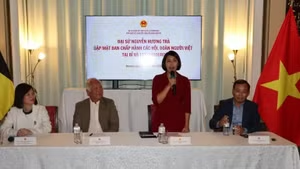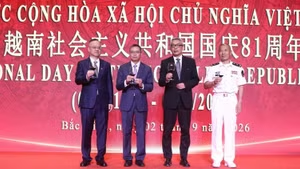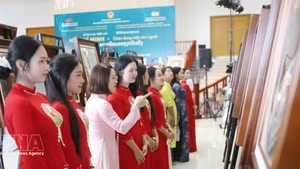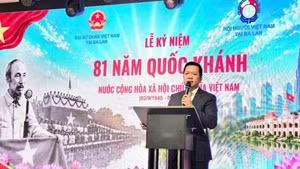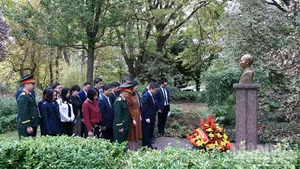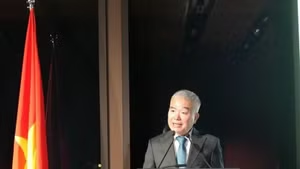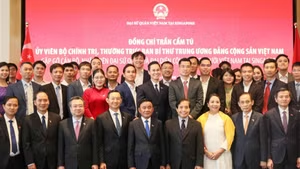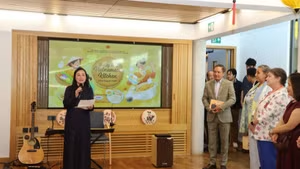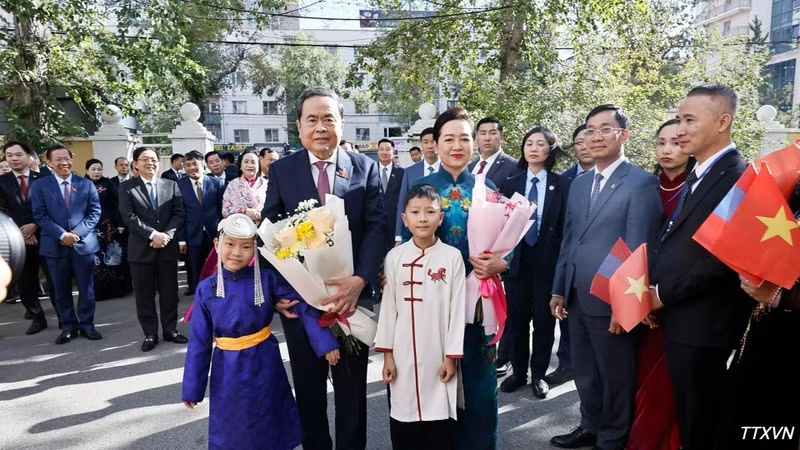
Vietnamese Ambassador to Mongolia Nguyen Tuan Thanh said the Vietnamese community there has always placed its trust in the Party and State, strictly observed local laws, and maintained solidarity, close ties and a strong attachment to the homeland.
The embassy stays in regular contact with the community, monitors their situation, and provides support in residency, legal status, consular affairs, citizen protection and coordination with local authorities while also updating them on major national events as well as Party and State policies, he said.
At the meeting, community members wished that the NA, Government and relevant agencies will further fine-tune policies and laws to help overseas Vietnamese (OV) maintain ties with the homeland, do business and contribute their expertise and resources to national development.
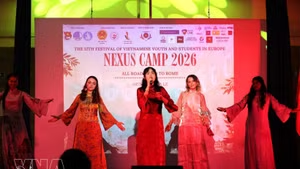
They suggested the Party and State continue paying attention to preserving the Vietnamese language and culture among younger generations born and raised abroad. For relatively small communities far from the homeland such as in Mongolia, this is especially important to help younger generations understand Viet Nam’s history and culture and maintain bonds with their homeland.
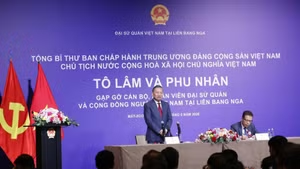
NA President Man conveyed greetings from General Secretary of the Communist Party of Viet Nam Central Committee and President To Lam, Prime Minister Le Minh Hung and Standing Member of the Party Central Committee’s Secretariat Tran Cam Tu to the Vietnamese people living, studying and working in Mongolia.
On Viet Nam–Mongolia relations, the top legislator said the two countries share a long-standing friendship. Despite geographical distance, there remains considerable room for cooperation, and greater air and rail connectivity will facilitate people-to-people exchanges, tourism and the transport of goods between the two countries.
Briefing the community on Viet Nam’s socio-economic development, he said after more than 40 years of Doi Moi (Renewal), the country have maintained economic growth, macroeconomic stability and inflation control while ensuring social security and improving living standards.
The Vietnamese Party and State always consider OVs an important and inseparable part of the nation, serving both as important resource for national development and a bridge for friendship and cooperation between Viet Nam and countries around the world, he said.
The leader acknowledged the difficulties facing Vietnamese people in Mongolia, particularly the harsh climate, and expressed his hope that the community will further uphold solidarity and mutual support while settling down their lives, doing business, studying and integrating into the host society.
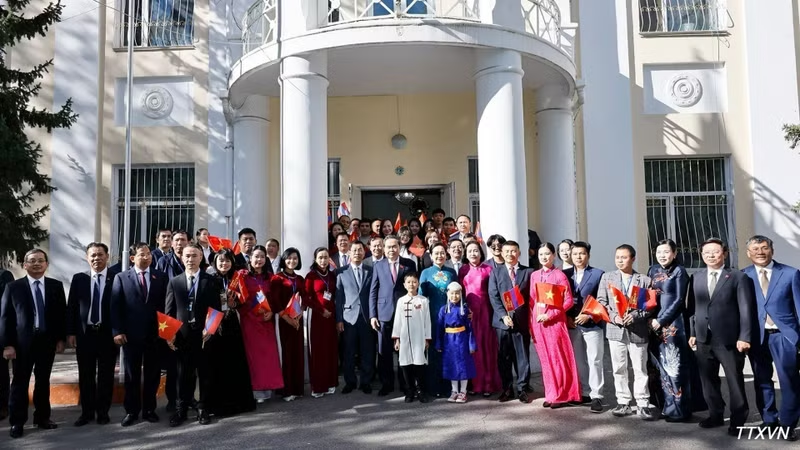
Affirming that the Vietnamese Party and State remain committed to fine-tuning OV policies, he said the community’s recommendations and difficulties will be considered by relevant domestic agencies in coordination with the embassy to devise appropriate solutions for stronger bilateral cooperation and better support for the Vietnamese community in Mongolia.
On specific bilateral issues, he said the two sides should continue studying ways to improve air and rail connectivity to meet travel demand and boost tourism. They should also settle animal quarantine and food safety issues to expand the range of goods eligible for trade. Bilateral trade reached some 155 million USD in 2025, a considerable increase from prior years but still below potential and the level of political ties.
NA President Man asked representatives of ministries and agencies accompanying the delegation to continue exploring ways to effectively realise high-level agreements, thereby increasing bilateral trade and expanding cooperation across various fields.
He urged the embassy to regularly and promptly provide the Vietnamese community in Mongolia with information on the country’s situation, Party guidelines and State policies and laws. He called on the OVs to keep preserving national cultural identity, particularly the Vietnamese language among younger generations, strengthen solidarity and mutual support, and comply with host country laws.