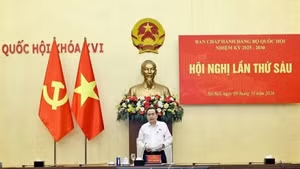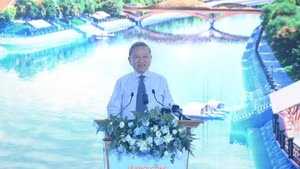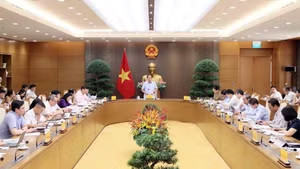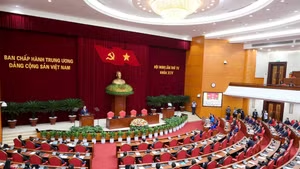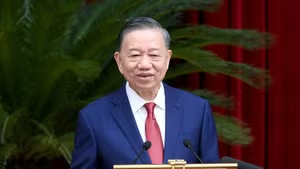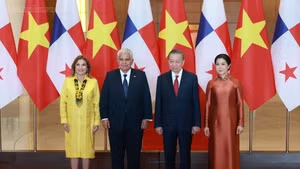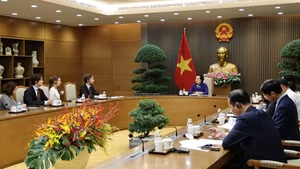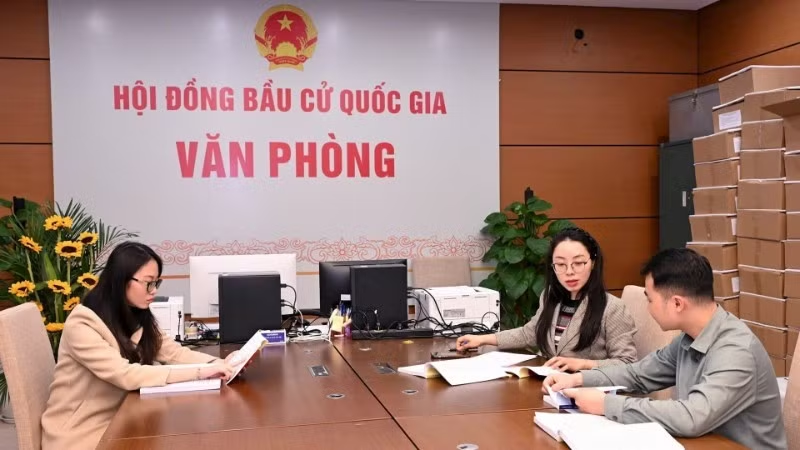
The election of the 16th National Assembly has been identified as the foremost priority task of the National Assembly and the entire political system in 2026. National Assembly Chairman Tran Thanh Man has affirmed that successfully organising the election is a crucial foundation for selecting truly deserving representatives who are “both virtuous and talented”, steadfast in their ideals, close to the people, and capable of meeting the requirements of national development in the new context.
Important new developments
This election introduces new requirements for innovation in organisational methods in order to adapt to the national digital transformation process, while proactively and flexibly responding to the challenges posed by misinformation and distortion in cyberspace.
One particularly notable difference is the shortening of both the timeline and preparation period. Election Day has been brought forward by two months, instead of taking place in May as usual. Accordingly, the term of the 15th National Assembly and People’s Councils for the 2021–2026 term is also shortened to align with the timetable for consolidating the organisational structure of the State apparatus at all levels.
In addition, the reduction of the period from the close of candidate application submissions to election day from 70 days to 42 days necessitates adjustments to the entire schedule for consultative conferences, the announcement of candidate lists, and the handling of complaints and denunciations. This places greater demands on proactive, close, urgent and well-coordinated cooperation among agencies and organisations at all levels.
Another important new point is the adjustment of authority to determine polling areas and the organisations responsible for elections in line with the two-tier local government model and the current administrative structure. This helps streamline operations, ensure unified direction, and create conditions for a more scientific, economical and practical organisation of the electoral process.
At the same time, election campaigning methods have been expanded to allow online campaigning or a combination of in-person and online formats. This new regulation not only aligns with the national digital transformation trend, but also creates more equal conditions for candidates in remote and disadvantaged areas, while requiring higher standards of technical safety, information security and cyber security.
Notably, the National Election Council has been granted greater autonomy to make adjustments and issue professional guidance when practical situations arise, in order to ensure flexibility, timeliness and effectiveness throughout the entire process. Strengthening the Council’s steering role represents an important step forward in administrative reform and the modernisation of electoral work.
Legal foundations and political determination
Directive No. 46-CT/TW of the Politburo on leading the election of deputies to the 16th National Assembly and People’s Councils at all levels for the 2026–2031 term states: “The entire political system must unite and concentrate all efforts on preparing the necessary conditions to successfully organise the election, ensuring democracy, equality, legality, safety and thrift.” In this spirit, leadership and direction of the election at both central and local levels are being implemented decisively, comprehensively and in a coordinated manner.
The management and strict control of election-related information have been given particular attention, especially as social networks and artificial intelligence increasingly influence voters’ perceptions. Revolutionary journalism is therefore required to proactively provide accurate, transparent and timely information, while fulfilling its role in guiding public opinion, strengthening social trust, promoting legal awareness, truthfully reflecting the preparation process, and combating and refuting false information, thereby ensuring transparency and consistency in public discourse.
Ensuring democracy, openness and transparency at every stage—from consultative conferences introducing candidates, to the announcement of official candidate lists and the preparation of facilities—demonstrates respect for the rule of law and strengthens public trust in the State and the National Assembly.
Voters need to make discerning choices, selecting individuals with strong political resolve, professional competence, moral integrity and a genuine commitment to serving the people. Candidates themselves must also prepare thoroughly for voter meetings during the campaign period, develop action programmes that closely reflect local realities, and respond to the aspirations and expectations of voters in the constituencies where they stand for election, so that voters have a sound basis for their decisions. This is also a prerequisite for ensuring that the highest organ of State power truly represents the intellect, will and aspirations of the people, accompanying the entire Party and the entire population in the cause of building and defending the Fatherland.
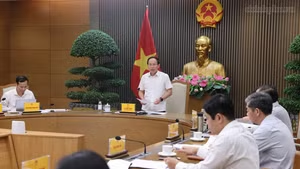
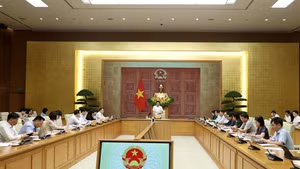
According to Ta Thi Yen, Deputy Head of the National Assembly’s Committee for Deputy Affairs and Deputy Head of the Standing Office of the National Election Council, the Office of the National Election Council is working with great urgency and intensity to process information and ensure progress and quality in accordance with planned schedules and statutory procedures.
The people and voters have complete confidence that, with thorough preparation and the spirit of national unity, the election on March 15 will certainly be a great success, selecting worthy representatives of the people’s will and aspirations, ushering in a new term for elected bodies, and creating a firm socio-political foundation for the successful implementation of the Resolution of the 14th National Party Congress, driving the country’s rapid and sustainable development and continuously improving the material and spiritual quality of life of the people.
The election of the 16th National Assembly is not only a political and legal event, but also a broad and profound democratic exercise throughout society. It is an occasion for every citizen to directly exercise their right of mastery and to demonstrate their will and responsibility for the country’s development.