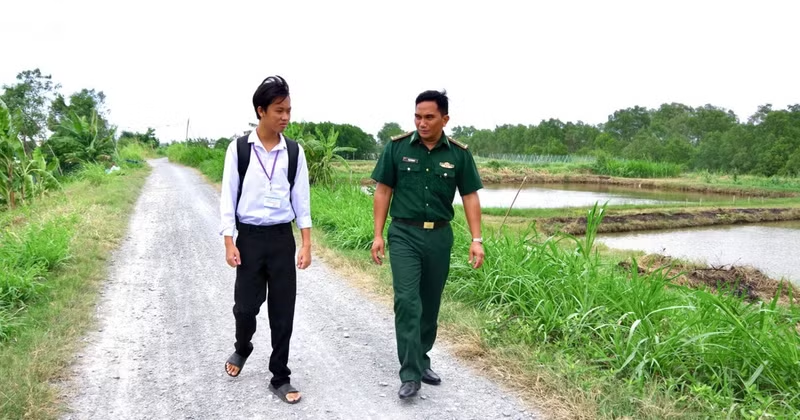
From a home without his parents, Tran Hoang Duy found a source of support at My Long Border Guard Station in Vinh Long Province. Years later, when he returned to his family, he carried with him another kind of baggage: the maturity nurtured by the care and discipline of the border guards.
In 2019, when he was in the third grade, Duy and his elder brother, Tran Quoc Thinh, were taken in by My Long Border guard station as “children of the border guard station”. The two brothers had lost their father, while their mother had remarried and had not returned for many years.
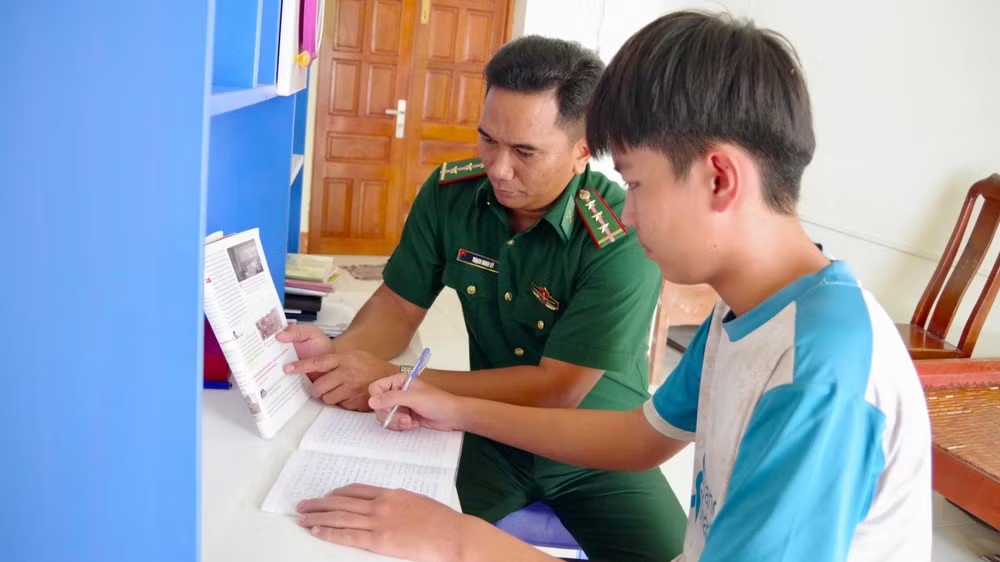
In the early days, the two boys lived with their maternal grandmother and aunts amid difficult economic circumstances. After bringing them to the station, officers and soldiers at My Long Border Guard Station managed everything from meals and accommodation to a study corner, schooling, and their daily activities.
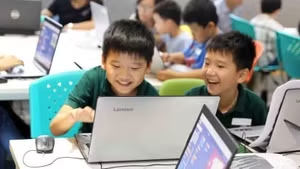
The boys resided alongside the soldiers and took part in physical education and sports, agricultural production, and cleaning duties at the barracks. These seemingly small activities gradually created an environment in which they could settle into a stable life and concentrate on their studies.
Senior Lieutenant Professional Serviceman Thach Minh Sy, a mass-mobilisation officer who directly cared for the two brothers, still recounts how bewildered Duy was in those early days. The care and attention of the officers and soldiers helped the boys quickly adapt. From being a weak student, Duy went on to achieve good academic results for many consecutive years.
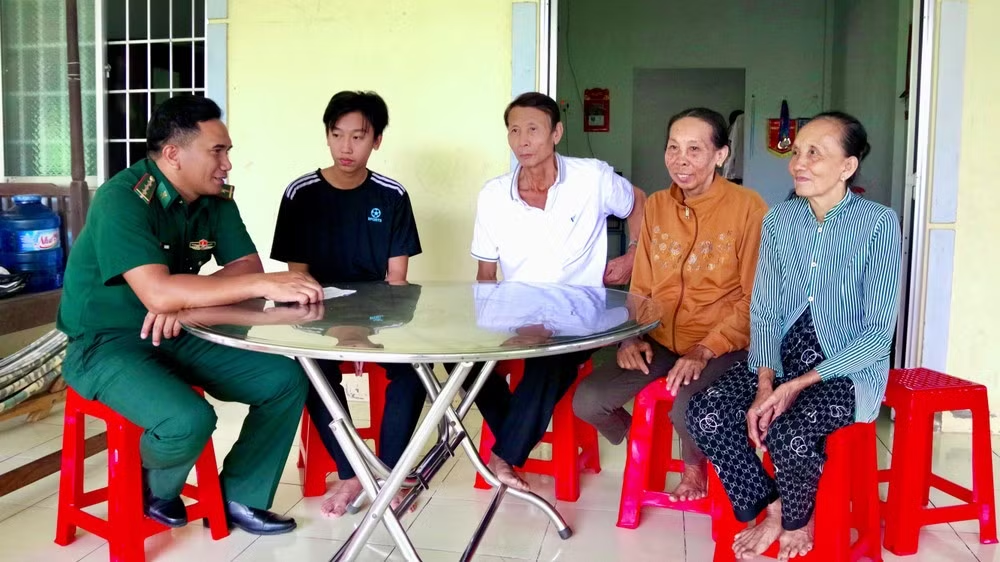
In 2026, Duy completed ninth grade and the unit returned him to his family and local authorities. On the occasion, the Command of the Vinh Long Border Guard Force presented him with a savings book worth 71 million VND, funded by contributions from officers and soldiers and support from benefactors.
Before Duy, his elder brother Tran Quoc Thinh had also returned to his family when he entered 10th grade. In 2025, Thinh completed 12th grade. The brothers’ journey demonstrates that support for disadvantaged children goes beyond a monthly allowance. More importantly, it provides them with an environment in which to study, develop themselves, and build confidence in the future.
The story at My Long Border Guard Station is not an isolated case. As of March 2025, officers and soldiers across the Border Guard Force were assisting 2,372 disadvantaged students under the “Supporting children to school – Children of border guard stations” programme, including 387 children who had been brought to units to be cared for. Many of them subsequently continued their studies at universities and colleges both within and outside the military.
The programme is implemented under the motto “Give children education, give them hope”, targeting students facing difficult circumstances, children of families eligible for social policies, and ethnic minority students. The Ministry of National Defence subsequently expanded the programme across the armed forces under the project “Army officers and soldiers supporting children to school”.
At border guard stations, this support takes the form of modest, everyday acts: a meal, a study corner, a lift to and from school or a reminder to keep up with schoolwork. For children without the support of a family, such regular companionship can be no less meaningful than material assistance.
Colonel Nguyen Quoc Cuong, Deputy Director of the Border Guard Force’s Department of Political Affairs, asserted that the programme demonstrates the affection and sense of responsibility of officers and soldiers towards people living in border, coastal, and island areas. It also serves to care for children, create favourable conditions for them to study and develop, and enable them to look towards the future.
In Vinh Long, Colonel Nguyen Duy Thanh, Head of Political Affairs of the Provincial Border Guard Command, stressed the programme’s significance in strengthening ties between the military and the people. The “Supporting children to school – Children of border guard stations” programme demonstrates the responsibility and affection of Border Guard officers and soldiers towards the people, serving to strengthen military–civilian solidarity and spread the image of “Uncle Ho’s soldiers”.
Each case presents a unique story. Duy once felt a pang of sadness when he saw his friends being picked up by their parents on rainy days, while Thinh once had to choose between continuing his education and finding work to help support his younger brother.
Pham Van Giau, from a poor household, was afforded the opportunity to continue his education from second grade through 12th grade after My Long Border Guard Station provided him with 500,000 VND a month. Giau’s mother, Pham Thi Tien, noted that without the support, her son might have had to leave school long ago.
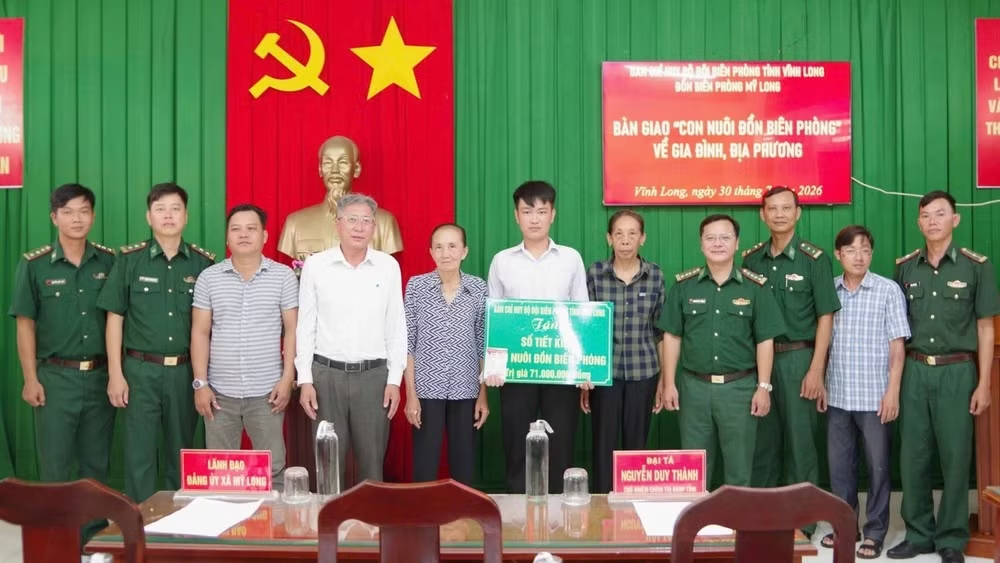
Returning a foster child back to his family is not the end of a journey. It is the moment when the border guards return to the family a child who has grown more mature, together with a promise to continue accompanying him.
Amid their daily duties along the border, there are always soldiers quietly assuming on another role not included in their official duties: becoming fathers, teachers, and a source of support for children who lack the security of a complete home.
From the small study corners in the barracks, a larger journey is unfolding — a journey to lay the foundations that will enable every child to stride forward on their own feet.