A convergence of unique values
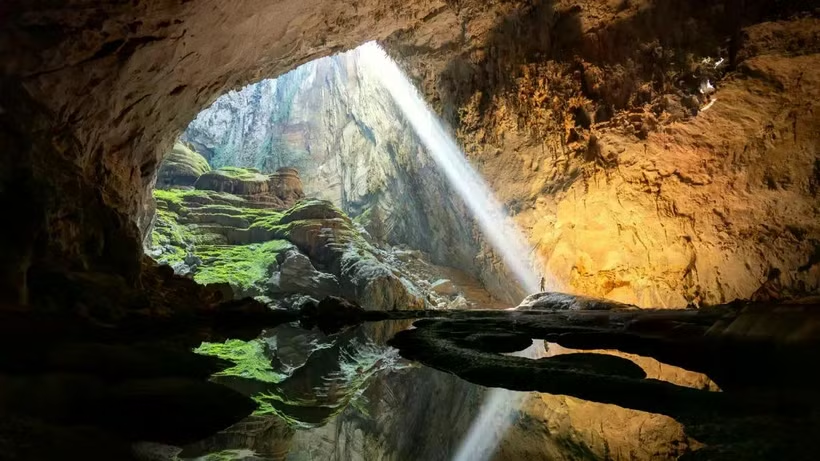
As a frontline island of the nation, located 15 nautical miles from the mainland, covering an area of 10.32 sq km with a population of nearly 25,000, the Ly Son special zone not only holds a particularly important strategic position in terms of national defence and security but also represents a rare repository of geological and cultural heritage in Viet Nam. Formed over tens of millions of years, Ly Son bears distinctive and rare geological imprints of five volcanic craters scattered across the island, along with majestic cliffs, caves, and striking rock arches. This is geological heritage of international significance, creating advantages for experiential and exploratory tourism. Alongside this, a rich marine ecosystem with diverse coral reefs, seagrass beds, pristine beaches, and clear blue waters offers great potential for sea-island ecotourism.
According to Dr Nguyen Dang Vu, former Director of the Quang Ngai Department of Culture, Sports and Tourism, in Ly Son, the combination of sea and volcanoes creates a cluster of distinctive “specialties” and a rare natural beauty. At the same time, the diversity and uniqueness of interwoven intangible cultural elements form a continuous historical and cultural flow on the island, stretching from prehistoric times to the modern era. On this heroic island, the imprint of ancestors associated with history and with Viet Nam’s sovereignty over the East Sea remains deeply engraved. Historical evidence, cultural values, relics, and festivals that have been preserved for hundreds of years in connection with the process of demarcation and assertion of sea-island sovereignty — such as Am Linh Tu Temple, the Hoang Sa soldiers’ graves, and the Khao le the linh Hoang Sa (Feast and Commemoration Festival for Hoang Sa Soldiers) — serve both as historical testimony and as “red addresses” for patriotic education, attracting domestic and international visitors.
Ly Son also bears a strong and distinctive sea-island cultural identity, serving as a crossroads of the Sa Huynh, Champa, and Dai Viet cultures. Relics such as Hang Pagoda, whale temples — most notably Tan Lang, which houses the two largest whale skeletons in Viet Nam — and intangible values such as the Tu Linh boat racing festival, along with traditional customs and practices, create a unique appeal that is hard to replicate elsewhere.
Ly Son is also famous for garlic cultivation. Traditional farming techniques combined with locally available natural materials and a distinctive climate have produced Ly Son garlic, renowned nationwide and beyond. The image of the “garlic kingdom” and the long-standing fishing industry, reflecting the spirit of conquering the sea and safeguarding national sovereignty, are not only economic symbols but also unique cultural highlights, enhancing Ly Son’s distinctive attraction in the eyes of visitors.
A sea-island special zone rich in identity
According to Y Ngoc, Standing Vice Chairman of the Quang Ngai Provincial People’s Committee, thanks to the attention of the central level and the efforts of the Party organisation, authorities, and people, together with the support of the business community, Ly Son’s tourism sector has made noteworthy progress in recent years.
Although the “Ly Son island tourism” brand has become increasingly well known, reality shows that its potential and advantages have yet to be fully and proportionately tapped. Tourism development in Ly Son remains insufficiently professional. Tourism products lack appeal and largely exploit only existing tourism resources. As a result, most visitors travel independently rather than on organised tours; the average length of stay is only about one day and one night, with average spending of less than one million VND per person per day and night.
Associate Professor, Dr Pham Trung Luong, Vice President of the Viet Nam Tourism Education Association (VITEA), noted that to become a national tourism area and move towards a sea-island tourism hub, Ly Son needs to swiftly implement three core tasks: carrying out comprehensive master planning; changing the mindset towards tourism development; and attaching importance to sustainable development.
Sharing the view that planning must take the lead, Deputy Minister of Culture, Sports and Tourism Hoang Dao Cuong emphasised that, with many advantages for deploying environmentally friendly tourism models, Ly Son should prioritise green and sustainable tourism types to preserve the natural beauty of the “garlic kingdom”, linking economic growth with the safeguarding of natural and cultural values.
According to researchers and managers, sea-island tourism is an inevitable direction for Ly Son special administrative zone. One of the key solutions to effectively harness Ly Son’s sea-island tourism potential is regional cooperation and linkages, along with attracting major investors. Ly Son needs to connect with localities in the South Central Coast and Central Highlands regions to form a “forest–sea–island” tourism route, linking the Mang Den–Sa Huynh–Ly Son–Binh Son tourism space.
Dr Nguyen Thanh Tuong from the University of Da Nang, University of Science and Education argued that development should be based on the island’s distinctive potential, with a strategic vision of transforming Ly Son into an “international-level marine ecological and cultural heritage island”, combining conservation, experience, technology, and branding. To realise this solution, it is necessary to build a unique tourism brand — “Hoang Sa Capital – Ly Son Volcanic Island”; strengthen infrastructure connectivity; develop high-end service infrastructure; and green the tourism sector.
“Ly Son Island is a source of pride for Quang Ngai Province. Therefore, the Party Committee and authorities of the Ly Son special zone must be proactive and creative, bring internal strengths into play, and effectively mobilise external resources to build Ly Son into a sea-island special zone rich in identity, developing sustainably while closely linked with safeguarding sea-island sovereignty. Ly Son must be bright, green, clean, beautiful, and safe, truly worthy of being identified as a sea-island tourism hub,” said Ho Van Nien, Member of the Party Central Committee and Secretary of the Quang Ngai Provincial Party Committee.