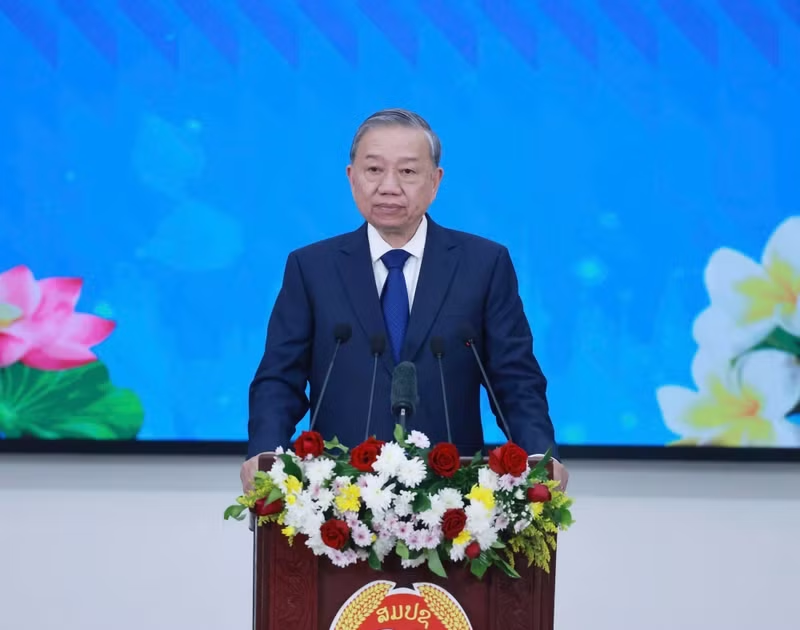
The Party chief, who is paying a state visit to Laos, stressed that Viet Nam and Laos are neighbouring countries that share ideals, aspirations and a common living and development space.
Geography, he noted, forms the natural foundation of the bond between the two countries - “standing together through thick and thin”, sharing daily life, challenges and struggles. For centuries, he said, the two peoples endured major historical challenges together, confronting the harshness of nature to survive. They were both invaded by colonial and imperial powers; both were divided, constrained, and oppressed; and both faced the existential choice of either uniting to win or being defeated one after another.
Particularly, the Indochinese Communist Party was founded in 1930 to lead revolutionary movements in Viet Nam, Laos and Cambodia, he noted.
He emphasised that in such circumstances, the special Viet Nam–Laos solidarity was the only correct choice and a historic necessity of strategic significance. “To survive and develop, we had to stand side by side,” he stated.
On the legendary Truong Son Range, the Vietnamese and Lao people, soldiers and public security forces fought shoulder to shoulder, supporting and protecting each other. The strategic route winding across the Truong Son Mountains through both countries was a lifeline, a road to victory, and a symbol of a steadfast, close-knit, and trusting combat alliance, said the Party chief.
He underscored that during the resistance wars against colonialists and imperialists, Viet Nam could hardly have prevailed without the strategic support and coordination of Laos. Likewise, the Lao revolution would not have succeeded without Viet Nam’s great, comprehensive, selfless and wholehearted assistance. This “natural combat alliance” formed what he described as “strategic symbiosis” in international relations, where the blood of the Vietnamese and Lao people mingled in the shared victory.
This, he said, was why President Ho Chi Minh, President Kaysone Phomvihane, Prince Souphanouvong and successive leaders of both Parties and States had painstakingly nurtured this special, pure and enduring relationship - a priceless shared asset of the two peoples, General Secretary Lam stated.
He affirmed that the “great friendship, special, pure and loyal solidarity, comprehensive cooperation and strategic connectivity” forged through immense sacrifice is the lifeblood of the Viet Nam–Laos relationship. Without this adhesive force, he said, the two sides would merely stand beside each other as neighbours. With it, they stand together as brothers, united through every stage of development.
Given the rapidly changing world, mere "cooperation" is no longer sufficient, he said, stressing the need to elevate cooperation to cohesion as cohesion is strategic in nature, featuring an overall design, clear role allocation, and mutual complementarity. He emphasised three directions of cohesion: bilateral cohesion; sub-regional cohesion, particularly among the three Indochinese countries; and regional and international cohesion.
To build on the great friendship, nurture the special solidarity and strengthen comprehensive cooperation and strategic cohesion in the new phase, he highlighted the need to maintain key strategic foundations, including steadfast commitment to national independence associated with socialism; joint efforts to build a borderline of peace, friendship and cooperation for common development; and complementarities and mutual support in resources and development space.
The leader also pointed to the need for stronger cooperation between the Lao National Academy of Politics and Public Administration and Vietnamese training institutions in terms of intellectual, theoretical and human resource connectivity.
He called on both sides to deepen exchanges on building and perfecting the socialist rule-of-law state, administrative reform, organising the political system's apparatus, and management in finance, land, natural resources, the environment, urban and rural governance and remote area development.
He encouraged the Lao National Academy of Politics and Public Administration and Lao academic institutions and their Vietnamese peers to develop joint research and training programmes for strategic-level officials, as well as master’s and doctoral courses. He also suggested the establishment of joint research groups on administrative reform, digital transformation in public governance and sustainable development management.
Regarding youth and cadre training, he recommended expanding student and lecturer exchanges, enriching education on the long-standing, faithful Viet Nam–Laos bond, and increasing youth forums and joint training courses on state governance, international relations, integration and sustainable development. He also encouraged research papers and theses on Viet Nam–Laos relations, subregional connectivity and Viet Nam–Laos–Cambodia cooperation.
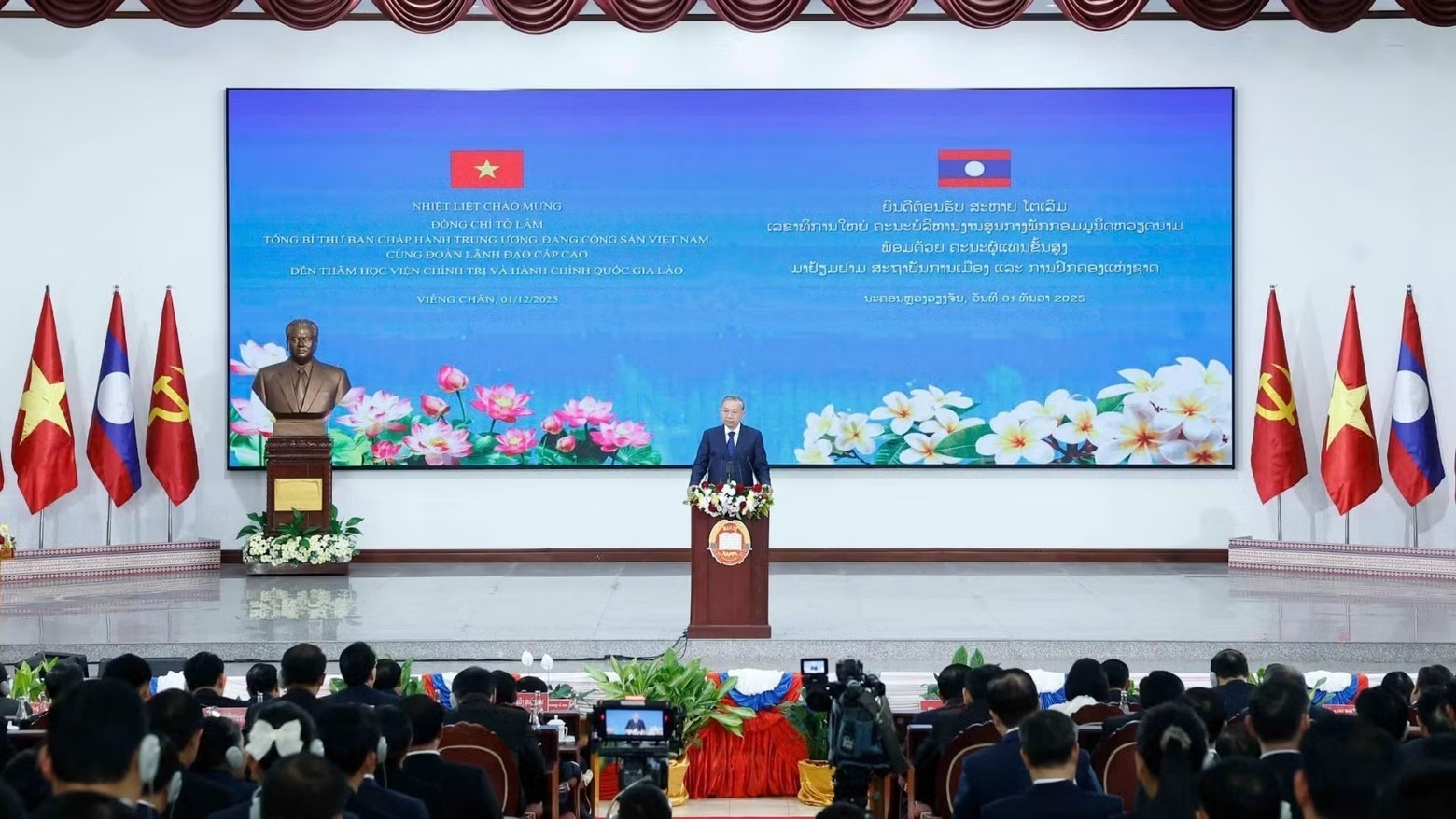
The General Secretary underlined that Viet Nam and Laos are not only neighbours but also members of the ASEAN Community. Their shared positions, he said, strengthen ASEAN unity and consensus, uphold mutual respect and maintain ASEAN centrality in regional cooperation architectures. Coordinated positions at regional and international mechanisms help both countries safeguard legitimate interests and amplify the collective voice of developing nations, contributing to regional and global peace, stability and development, he said.
He observed that the Viet Nam–Laos special solidarity is not merely a story of the two countries but a positive factor in the region’s security, peace and development architecture.
Offering guiding principles, described metaphorically as the “key” for the new phase of strategic solidarity, he emphasised that maintaining strategic trust and steadfast loyalty to the special solidarity, regarding solidarity as the adhesive force and strategic cohesion as the development driver, maximising complementarities in geo-economics, geopolitics and cultural geography, and viewing the border as a space for integration and development.
To write new chapters in Viet Nam–Laos relations in the digital era - built upon the Viet Nam-Laos solidarity forged with blood, sweat, and tears on the battlefields of the past, today’s generation needs to harness knowledge, love, humanity, creativity, and technology, he said, noting this should be expressed through practical, effective, and humane projects and initiatives, and, above all, through the passionate hearts of the younger generation.
Affirming that the great friendship, special solidarity, comprehensive cooperation, and strategic cohesion between Viet Nam and Laos are invaluable assets bequeathed by the ancestors and revolutionary leaders of both countries, General Secretary Lam emphasised that these priceless assets must be carefully preserved, nurtured, and promoted. This is a political responsibility, a matter of loyalty and honour, a way of life, and the conscience of the two nations.
With the determination, wisdom, perseverance and creativity of the two Parties and States, the aspirations of the two peoples, and the enthusiasm of officials and students at the academy, he expressed his confidence that Viet Nam and Laos will enter a new phase of strategic cohesion that is deeper, more effective and more sustainable.