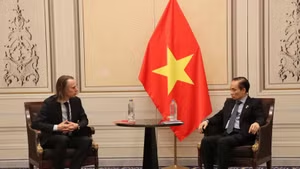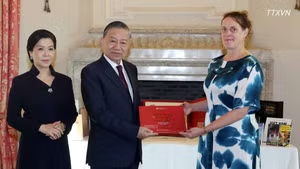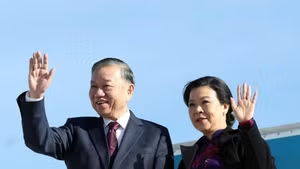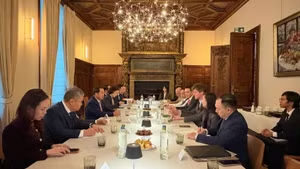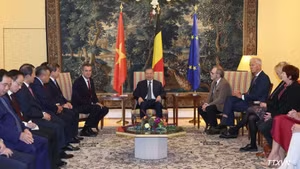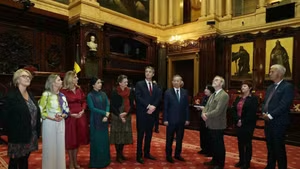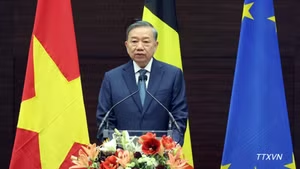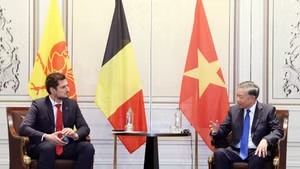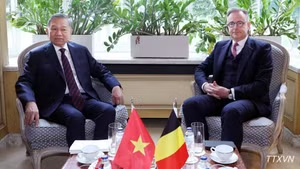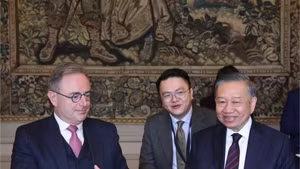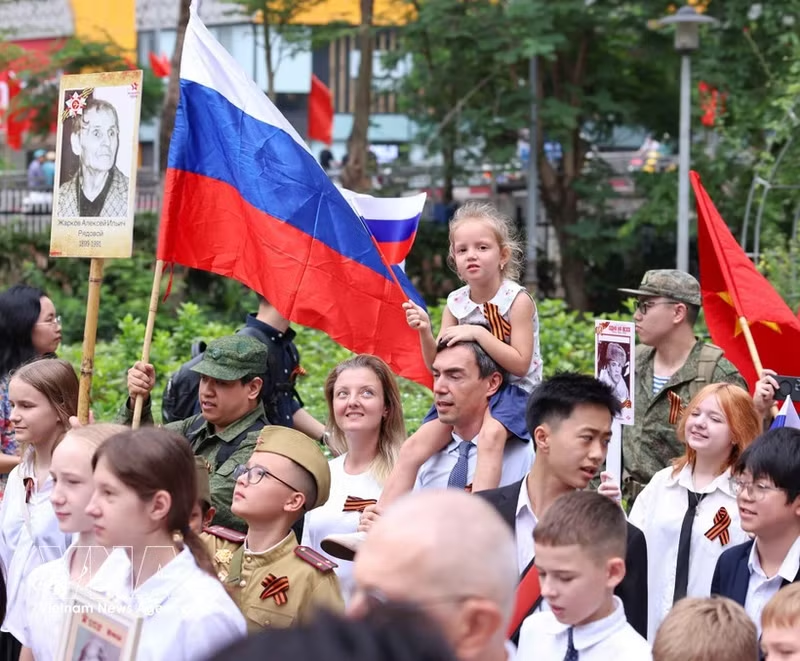
Amid rapid, complex and unpredictable global developments, the two countries are seeking to preserve their longstanding bonds of friendship while translating high political trust into concrete cooperation outcomes. At the same time, people-to-people diplomacy, particularly the natural connection between younger generations, is expected to play an increasingly important role in sustaining the friendship between the two peoples.
State-level diplomacy opens new avenues for substantive cooperation
The state visit by General Secretary and President Lam, the highest-level leader of the Vietnamese Party and State, carried particular strategic significance. Coming as Viet Nam is implementing major policies and decisions to enter a new era of development, the trip not only continues dynamic high-level dialogue but also helps address key long-term issues.
Following the 14th National Party Congress, foreign affairs and international integration have been reaffirmed as key and regular tasks aimed at maintaining a peaceful and stable environment, safeguarding the country afar and from an early stage, and mobilising external resources for national development. In Viet Nam’s proactive and extensive diplomacy, Russia remains a priority comprehensive strategic partner in Europe and globally.
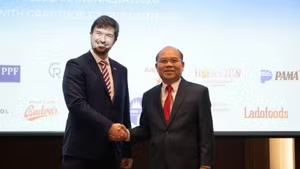
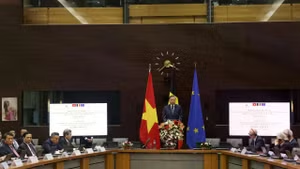
A notable feature of the visit was the participation of a large high-level delegation comprising leaders of ministries, sectors and localities, major businesses and people-to-people diplomacy organisations. This demonstrated the shared determination to translate political trust and longstanding friendship into practical programmes.
Cooperation in high technology, including the implementation of the Ninh Thuan nuclear power project, together with science and technology, human resources training and technology transfer, is expected to create new areas of cooperation commensurate with the potential of the two countries.
People-to-people diplomacy turns trust into practical results
The enduring vitality of Viet Nam-Russia relations stems partly from the close coordination among Party diplomacy, State diplomacy and people-to-people diplomacy. This approach, reaffirmed at the 13th National Party Congress and further developed at the 14th Congress, aims to mobilise all resources for national development.
Nguyen Dang Phat, Vice President and Secretary General of the Viet Nam-Russia Friendship Association, said people-to-people diplomacy in the new period should go beyond ceremonial friendship exchanges and generate tangible results in science and technology, education and training, cultural promotion and business connectivity. Through this channel, Viet Nam can also proactively propose peace initiatives and work with international partners to address common regional and global challenges.
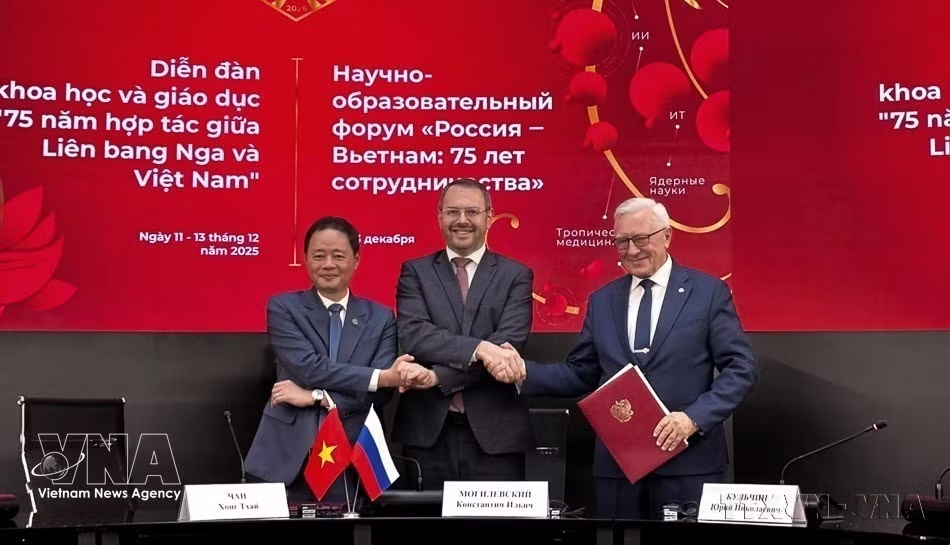
Culture, knowledge and human bonds have long served as a foundation of bilateral ties. Over eight decades, Vietnamese people have deeply appreciated the wholehearted support provided by the former Soviet Union and Russia. Soviet military experts trained and supported the Viet Nam People’s Army, while Russian professors, engineers and doctors contributed to major projects that left lasting imprints on Viet Nam.
The thousands of Vietnamese officials, engineers, scientists and artists trained in the former Soviet Union and Russia have become an invaluable asset and silent people-to-people diplomacy ambassadors connecting the two nations.
Young generations key to sustaining friendship
In the digital era, generational transition has become an urgent task for people-to-people diplomacy. Vietnamese Ambassador to Russia Dang Minh Khoi said the deep bonds between the two peoples could not rely solely on historical memories, stressing the need to create modern channels through which young people can personally experience, appreciate and actively carry forward the friendship.
Numerous initiatives have demonstrated the effectiveness of this approach, including the “I Draw Viet Nam – I Draw Russia” competition organised by the Viet Nam-Russia Friendship Association over the past eight years. Cultural and musical events, student exchanges and modern digital communication programmes have also helped bring the two peoples closer.
Strengthening Russian language teaching in Viet Nam and Vietnamese language teaching at leading Russian universities is expected to further remove language barriers and open opportunities for young people in scientific research, innovation, entrepreneurship and cultural exchanges.