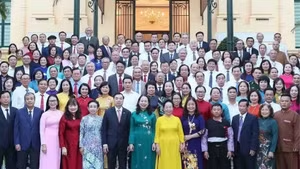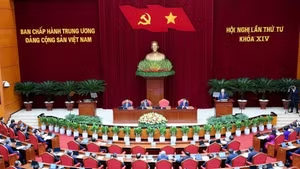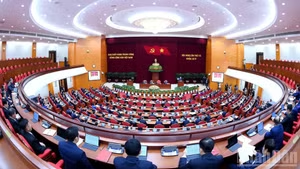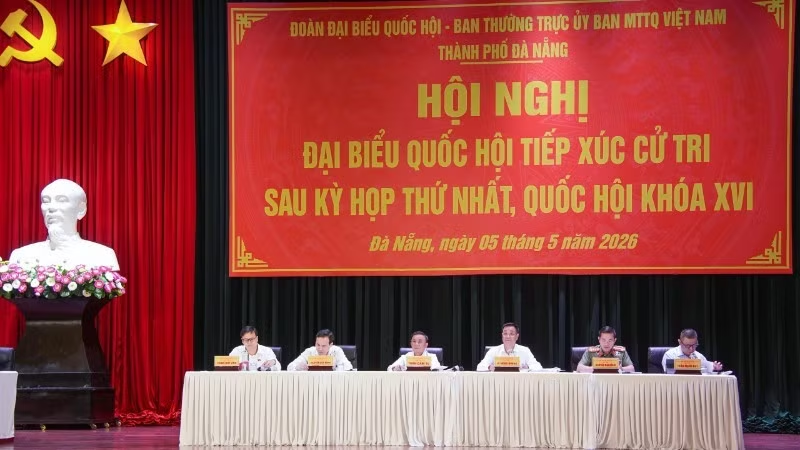
At the meeting, voters expressed their interest in issues adopted by the National Assembly at its first session and raised a number of recommendations related to healthcare; education; national defence and security; public investment and management of public assets; anti-corruption and the prevention of wastefulness and misconduct; climate change response measures; market prices; land and natural resources management; and administrative reform.
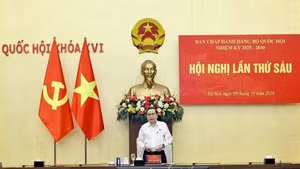
Speaking at the event, Permanent Member of the Secretariat Tran Cam Tu acknowledged that voters’ opinions, recommendations, and feedback were highly practical and wide-ranging, reflecting their deep concern for the country’s development and that of Da Nang City. These contributions, he noted, would help National Assembly Deputies further uphold their responsibilities and fulfil their roles effectively. He requested that issues falling under the city’s authority be promptly and thoroughly considered and resolved.
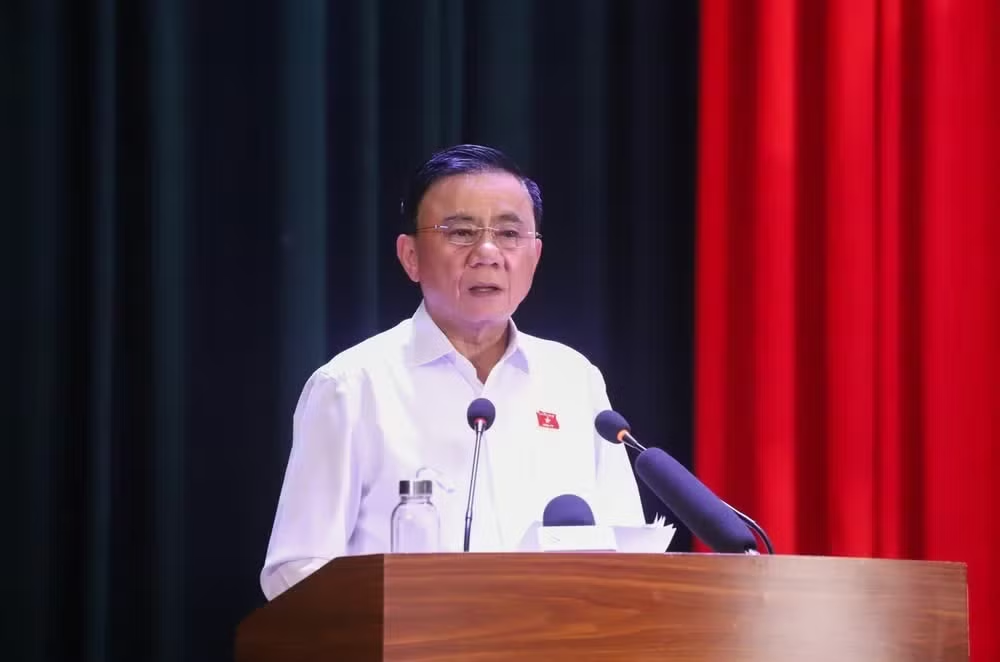
He further stated that the Party Central Committee has identified key priorities to swiftly institutionalise major Party guidelines and laws into concrete mechanisms and policies for early implementation, particularly in the fields of science and technology, innovation, digital transformation, and the completion of the two-tier local government model. For localities playing a driving role such as Da Nang, the central authorities will continue to refine specific mechanisms in line with the Politburo’s resolution on building and developing Da Nang to 2030, with a vision to 2045 — aiming to make the city a major regional hub for tourism services, logistics, innovation, and high technology in the Central and Central Highlands regions.
Regarding anti-corruption, wastefulness, and misconduct prevention, Politburo Member Tran Cam Tu affirmed that the central authorities will continue to strictly enforce Party regulations on power control in personnel work, while effectively implementing the Law on Anti-Corruption, the Law on Thrift Practice and Waste Prevention, the Land Law, the Law on Public Investment, and the Law on Management of Public Assets. Areas highlighted by voters — such as land, public investment, and public assets — will remain key focuses of inspection, audit, and supervision.
With regard to recommendations on restructuring and streamlining the organisational apparatus and the political system, he stressed that recent efforts have been implemented seriously and systematically in line with resolutions and conclusions of the central authorities. These efforts have brought about significant improvements, addressing overlaps in functions and tasks, and enhancing service quality for the public.
Going forward, the Party’s policy is to continue streamlining the organisational structure while ensuring stability, coherence, and avoiding major disruptions that could affect services for citizens and businesses. The restructuring process will be associated with clarifying functions, tasks, authority, and responsibilities between the central and local levels, as well as among sectors and tiers, while promoting decentralisation alongside strengthened inspection, supervision, and power control.
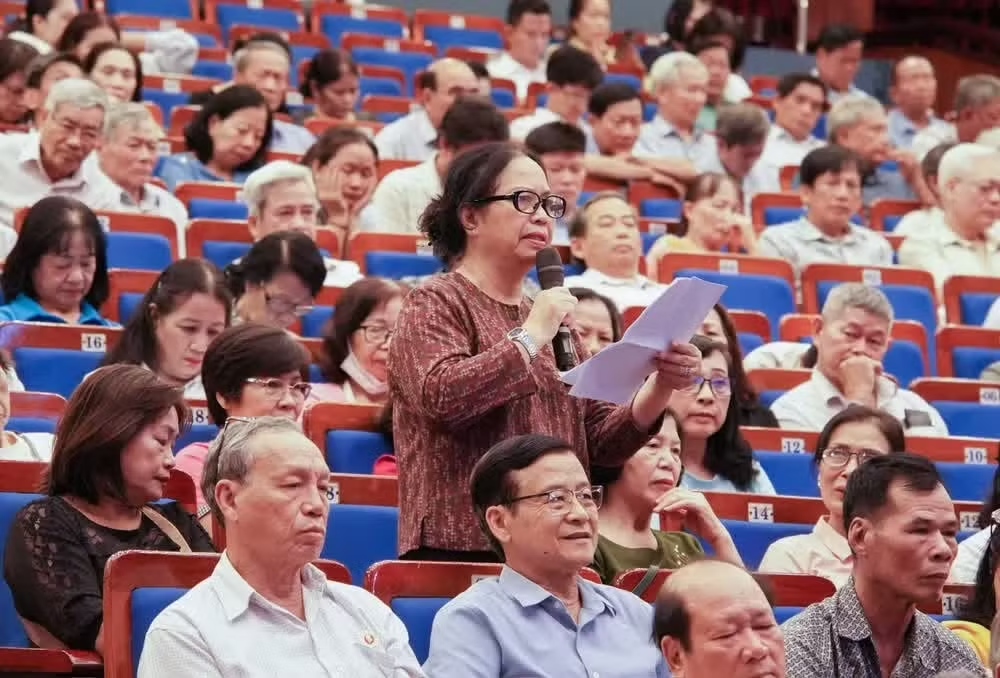
Emphasising that administrative reform will remain a key priority, he added that the State will focus on investing in digital infrastructure, effectively implementing the Government’s Project 06, and synchronising national databases on population, land, civil servants, and other relevant areas, while enhancing data connectivity to reduce paperwork, time, and costs for citizens and businesses.



![[Infographic] Key points from General Secretary and President To Lam’s opening remarks at the 14th PCC’S 4th plenum](https://en-cdn.nhandan.vn/images/j0QNt7m_5iy1OXpnUKiwG61aYhTv_B140GWhfriF26JwZbNNJ8LWetfvXUhz4Az6/1-8220.jpg.avif)