As services and commerce become increasingly modern, many traditional markets are struggling with declining numbers of customers and difficult trading. Modernising traditional markets, therefore, is not simply about renovating them, rearranging stalls and shelves, or improving their appearance. It is also about finding ways for their traditional values to live on through new business models.
A part of daily life
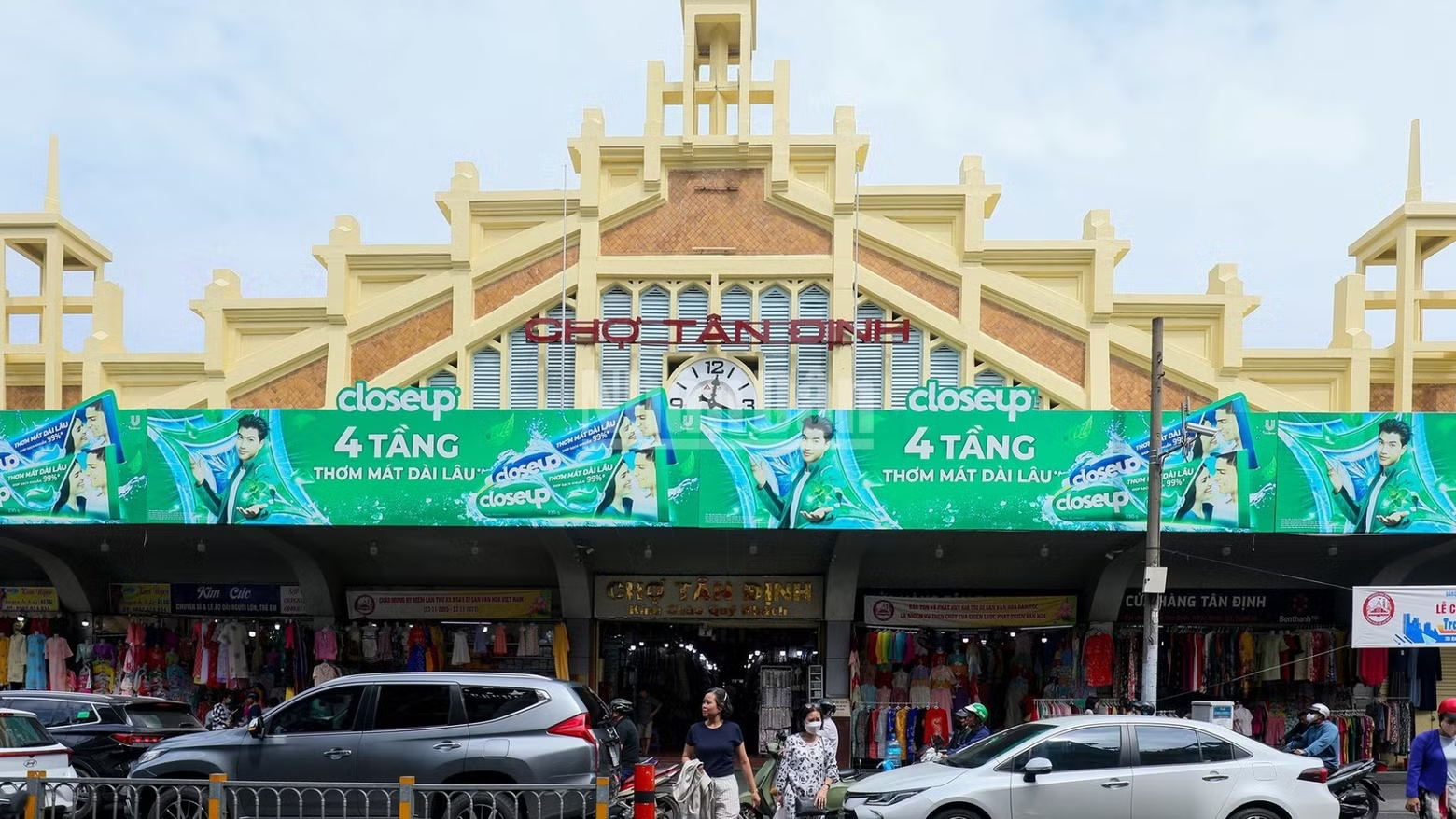
Located amid the bustling neighbourhood along Hai Ba Trung Street, Tan Dinh Market stands out with its distinctive yellow colour, soaring bell towers, and rare old-world appearance in the heart of a modern city. After a century, the market has become part of the urban memories of generations of city residents.
Built in 1926, Tan Dinh Market was once regarded as one of the modern architectural works of early 20th-century Saigon. Having been associated with the market for more than 40 years, Nguyen Thi Thoa considers her small stall not only a means of livelihood, but a part of her life filled with countless memories.
Not far away, Ben Thanh Market is also a distinctive commercial, cultural, and historical symbol of the city named after Uncle Ho. Having experienced many ups and downs, the long-standing market remains a familiar place for locals and a destination for many domestic and international visitors to the city.
These markets are not merely places for trading goods. Their value also lies in the community life that has accumulated over time: traders who have spent many years at their stalls, regular customers passed down from one generation to another, and conversations between sellers and buyers and among traders themselves. In the modern, fast-paced urban life, such memories are increasingly being affected and shaped by major changes.
According to the Department of Industry and Trade, the rapid development of supermarkets, shopping centres, convenience stores, and particularly e-commerce has significantly changed consumer behaviour. Urban residents, especially young people, increasingly favour shopping methods that are quick, convenient, and safe.
In this context, many traditional markets are revealing various shortcomings, including deteriorating infrastructure, ineffective management, an ageing trader population with few successors, and informal trading around market areas.
Many consumers believe that products at traditional markets are fresher than goods purchased through online channels. However, food safety at markets is not highly rated because of a lack of transparency regarding origins and sources. Their ability to meet consumer demands is also not comparable with the range of services offered by various online shopping channels.
Renewing themselves in different ways
Ho Chi Minh City currently has 405 markets, including three wholesale markets and 402 traditional markets serving local communities. Facing new pressures, the city is moving towards transforming operating models, increasing competitiveness through technology and digitalisation, and reorganising the market network in a more modern direction.
Assessing the online sales skills of traders at Ben Thanh Market, Nguyen Lam Thanh, Director of TikTok Viet Nam, said the traders already have good communication skills and a deep understanding of their products, but they lack technical skills.
Improving sales skills is therefore important for traders to reach new customer groups. In recent years, TikTok Shop has worked with relevant authorities to expand the model, provide specialised training at traditional markets, and support traders in selling products on e-commerce platforms.
“I have run my stall for nearly 20 years but mainly used traditional trading methods, which meant losing many advantages compared with modern forms of business and promotion on digital platforms. Therefore, many other traders and I have proactively learned how to sell through new digital platforms, although getting used to them remains challenging,” said Nguyen Thi Luong, a trader at Ben Thanh Market.
At Tan Dinh Market, Nguyen Thi Kim Loan, born in 1999, said that nearly the past year, she had spent her free time learning from online sales tutorial videos. “I do not expect orders to come immediately when I livestream, but being proactive in changing the way I sell in the current context is already progress,” Loan said.
At the management level, Tran Nhu Quynh, Head of the Trade Management Division under the Department of Industry and Trade, said that the department has been working with units and businesses to introduce online market models and provide livestreaming training for traders. So far, the model has been implemented at more than 30 traditional markets, generating tens of thousands of online orders. Alongside the use of technology, modernising traditional markets must begin with restoring consumer confidence, she said.
According to Quynh, food hygiene and safety is the issue of greatest concern to consumers. This is also being addressed through a pilot project on food-safe markets and product traceability. In addition, informal trading around markets needs to be comprehensively addressed. The goal will be difficult to achieve if a civilised environment is created inside the market while unhealthy trading points continue to operate outside.
At Bung Market, Huynh Minh Triet, Director of the Public Service Supply Centre of Thuan An Ward, said the centre was implementing a plan to reorganise stall areas according to different product categories, optimise space, address encroachment on roads and pavements, and deal with fire prevention and firefighting violations. At the same time, application of digital technology and technical support are being introduced to help traders transition to a digital market model.
According to experts, for markets with cultural and historical value, such as Ben Thanh, Tan Dinh and Binh Tay, renovating them into tourist destinations, hosting themed markets, and organising cultural and street music activities could help attract visitors, especially young people.
The leader of the Department of Industry and Trade affirmed that the closure, removal, or conversion of some markets does not mean completely eliminating traditional distribution channels. Preserving their old spirit while adopting new ways of doing business is the way for the city's long-established markets not only to survive but also to continue playing an important role in modern urban life.