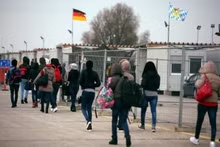
Following the COVID-19 pandemic, many countries have been facing a severe labour shortage and the Republic of Korea (RoK) and Canada are two typical examples.
Germany and Canada have just announced plans to ease regulations for migrant workers. The world's major economies have been competing to attract more foreign workers, to fill the “gap” in human resources, that has been negatively affecting the post-pandemic economic recovery.
The “heat” from the labour shortage has continued to spread to many continents, from Asia to Europe, and seriously hindered the economic recovery, following the COVID-19 pandemic.
General Secretary of the Communist Party of Viet Nam (CPV) Central Committee and President To Lam received a high-ranking delegation from the Dominican Republic’s United Left Movement (MIU) Party, led by its General Secretary Miguel Mejia in Ha Noi on October 26.