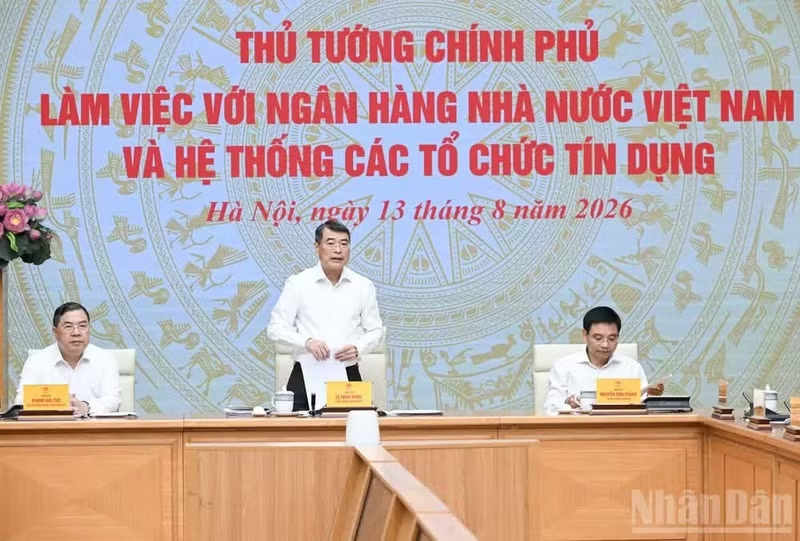
On August 13, 2026, at the Government Headquarters, Prime Minister Le Minh Hung presided over a working session with the State Bank of Viet Nam and the system of credit institutions.
In recent times, the global and regional situations have continued to fluctuate rapidly, complexly, and unpredictably, significantly impacting Viet Nam's economy as well as the management of monetary policy and inflation control—particularly regarding exchange rates, interest rates, and liquidity.
Overall, the Vietnamese banking sector has recently achieved strong development in terms of scale, quality, financial strength, governance capacity, and the modernisation of products and services.
On behalf of the Government, the Prime Minister acknowledged, commended, and highly appreciated the efforts and achievements of the State Bank of Viet Nam and the entire banking sector; these results are crucial and have made practical contributions to the country’s overall performance, particularly regarding socio-economic development during the first seven months of 2026.
For the 2026–2030 period, the banking sector is required not only to expand in scale but also to become safer, more efficient, and more modern. Scale must go hand-in-hand with quality; credit growth must be accompanied by risk control; and digital transformation must be coupled with data security. International integration must go hand in hand with governance capabilities that meet international standards. In particular, the management of monetary policy must ensure the objectives of controlling inflation and supporting growth are met.

The State Bank of Viet Nam and the banking system must act with a high sense of responsibility and greater determination to mobilize resources for growth based on macroeconomic stability. Crucially, they must share responsibility with the public and businesses through concrete measures—such as stabilising interest rate levels, lowering lending rates, channeling credit into the right sectors to foster growth, and strictly managing risks.
The Ministry of Finance shall take the lead—in coordination with the State Bank of Viet Nam and relevant agencies—to effectively implement solutions for developing capital, stock, and corporate bond markets. It must effectively and timely execute the tasks and solutions assigned in Decision No. 1413/QĐ-TTg (dated July 27, 2026) regarding the comprehensive reform of Viet Nam's financial market—aligned with the goal of achieving high, sustained growth through 2045—to unlock medium- and long-term capital sources and reduce reliance on banking system credit.
Agencies must strengthen close coordination and urgently amend the regulations governing cooperation and information exchange between the Ministry of Finance and the State Bank of Viet Nam regarding macroeconomic policy management. Close coordination with the State Bank of Vietnam is required to provide data on budget revenue and expenditure, government bond issuance plans, and State Treasury capital utilisation plans; this ensures the State Bank of Viet Nam has the necessary basis to regulate liquidity and manage market interest rates.
Ministries, agencies, localities, and associations shall, within their assigned functions and duties, coordinate closely with the State Bank of Viet Nam, particularly regarding the refinement of institutional frameworks; strengthen connectivity and data sharing, and strictly prevent and handle crimes, fraud, and violations in the finance and banking sectors, thereby helping to unlock resources and ensure the safe, transparent, stable, and sustainable operation of financial and monetary markets.