Revaluing Vietnamese rice: steady steps forward
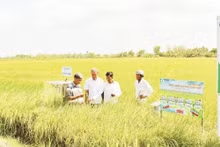
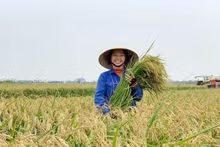
In early May 2026, farmers in Hung My Commune, Vinh Long Province, were harvesting the remaining plots of the winter-spring rice crop.
#low-emission rice
In early May 2026, farmers in Hung My Commune, Vinh Long Province, were harvesting the remaining plots of the winter-spring rice crop.
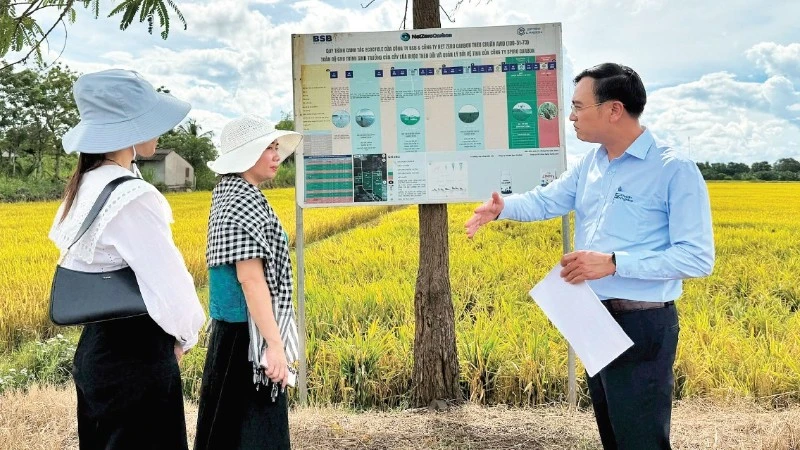
After more than two years implementing the project on sustainable development of 1 million hectares of high-quality, low-emission specialised rice cultivation associated with green growth in the Mekong Delta through 2030 (the Project), the gradually improved policy framework has paved the way for clear changes in the fields.
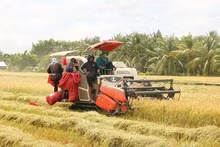
High-quality, low-emission rice cultivation models in Vinh Long Province have brought about notable changes in production techniques, such as reducing direct seeding rates, alternating wet and dry irrigation, balanced fertilisation, comprehensive mechanisation, and improved straw management.
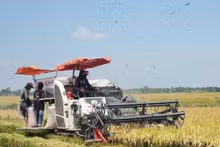
Nearly 30 years since the completion of the T5 canal, which channels floodwaters to the sea, residents of the Long Xuyen Quadrangle have been able to cultivate two to three rice crops per year, significantly boosting productivity and improving livelihoods. Building on these achievements, local farmers have now transitioned to cultivating high-quality, low-emission rice in a more sustainable direction.
On 5 June, the Viet Nam Rice Industry Association (VIETRISA) and Trung An High-Tech Agriculture JSC celebrated the first export shipment of Viet Nam’s green, low-emission rice to Japan. This milestone marks a significant step forward in the nation's agricultural green transition.
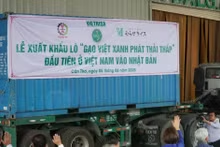
The first shipment of 500 tonnes of Viet Nam’s low-carbon footprint rice set sail for Japan on June 5, marking the international debut of the rice produced under the initiative to cultivate one million hectares of low-emission and high-quality rice in the Mekong Delta (the one-million-hectare rice project).