In the current period of national construction and development, the Party and State have intensified the fight against corruption, wastefulness and negative phenomena under the principle of "no forbidden zones, no exceptions", with the aim of building a clean and effective administrative apparatus and unlocking national resources.
An irreversible trend
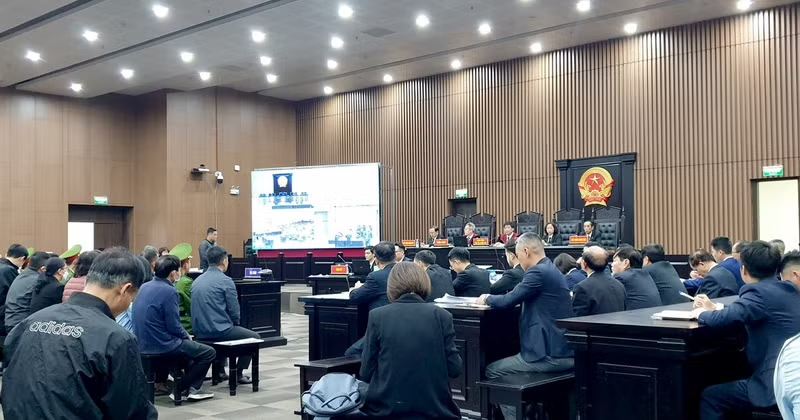
Looking back, the fight against corruption, wastefulness and negative practices has made significant breakthroughs, becoming an irreversible trend. Under the comprehensive direction of the Central Steering Committee for Prevention and Control of Corruption, Wastefulness and Negative Practices, numerous major and complex economic cases have been brought to trial and dealt with in accordance with the law.
The notions of a "safe landing" after leaving office or enjoying special privileges and benefits have gradually been dismantled. Many senior officials have faced severe consequences for their involvement in corruption, demonstrating the commitment that no one is above the law. Alongside strict punishment for violations, considerable progress has also been made in overcoming obstacles to asset recovery. Trillions of Vietnamese dong and substantial assets linked to corruption and other wrongdoing have been frozen and recovered for the State, directly targeting the financial motives behind such offences and strengthening deterrence. While corruption involves the deliberate misappropriation of resources, wastefulness can occur openly under the guise of legitimate procedures, with consequences that are no less serious.
Wastefulness manifests itself in abandoned projects worth trillions of Vietnamese dong, valuable urban land left unused, and the squandering of opportunities and human resources. An impractical policy not only drains the State budget but can also deprive thousands of businesses of development opportunities. The time has come for wastefulness to be addressed with the same determination as corruption.
This resolve has been institutionalised through stringent sanctions against organisations and individuals responsible for losses and wastefulness, as reflected in the Politburo's Directive No. 27-CT/TW, dated December 25, 2023, on strengthening Party leadership over thrift practice and waste prevention; the Prime Minister's Directive No. 08/CT-TTg, dated March 17, 2025, on stepping up efforts to combat wastefulness, unlock resources and promote economic growth; and, most recently, Resolution No. 04-NQ/TW, issued on April 1, 2026, at the second plenum of the 14th Party Central Committee, on further strengthening Party leadership in the fight against corruption, wastefulness and negative practices in the new period.
Eliminating self-serving attitudes and strengthening discipline
Corruption and wastefulness are inevitable consequences of the deterioration of political ideology, morality and lifestyle, as well as bureaucratic practices. More alarmingly, a new form of negative behaviour has emerged: the tendency to fear making mistakes, shift responsibility and avoid accountability.
Being so afraid of taking responsibility that officials refuse to make decisions within their authority is itself a subtle form of misconduct, causing the country to miss development opportunities. Combating negative practices therefore requires both eliminating self-serving attitudes and strengthening discipline, while protecting officials who dare to think and act for the common good.
To ensure lasting results, this endeavour requires a comprehensive strategy built on four main pillars.
First, improving institutions so that officials "cannot engage in corruption". Legal loopholes in sensitive sectors, including land management, procurement and finance, must be closed. Power must be confined within an "institutional cage", with transparent procedures and extensive digitalisation to eliminate arbitrary interference.
Second, strengthening discipline so that officials "do not dare engage in corruption". Constant pressure must be maintained through inspections and supervision. Penalties must be strict and timely, ensuring that violations are never quietly overlooked.
Third, building a culture of integrity so that officials "do not want to engage in corruption". This is the fundamental solution. A sense of personal integrity and public service ethics must be instilled from the moment officials enter public service, fostering a working environment that naturally eliminates those who have become morally compromised.
Fourth, reforming remuneration so that officials "do not need to engage in corruption". The State must continue reforming salary policies and ensuring decent incomes for public officials, enabling them to resist material temptations.
The greatest source of strength in this fight lies in public oversight, together with the participation of the Viet Nam Fatherland Front and the media, creating a "social filter" that leaves no room for wrongdoing.
In terms of power control, Viet Nam has made significant advances. The determination to confine power within an "institutional cage" has been translated into decisive action. A particularly notable achievement has been the comprehensive improvement of institutional frameworks governing sensitive sectors, with clearly defined limits to the authority of each position.
Through the principle that "responsibility must correspond to the extent of power", abuses of authority and the pursuit of vested group interests have gradually been curbed. Greater transparency has also helped combat the buying of positions and influence, as well as favouritism that places personal connections above merit. At the same time, it has encouraged officials to practise self-examination and self-correction and voluntarily declare their assets.
Fully consolidating public trust
President Ho Chi Minh once warned of the harmful effects of individualism, describing it as a "highly poisonous germ" that gives rise to all manner of misconduct. When dominated by individualism, officials can easily succumb to temptation, becoming involved in embezzlement, bribery and indifference, or developing a fear of making mistakes that prevents them from taking action.
To eradicate individualism, officials must continually cultivate their moral character and uphold the principle of placing the public interest above personal gain. Organisations must tighten discipline, assess officials on the basis of their actual performance and resolutely remove opportunistic and self-serving individuals.
The deterioration of political ideology, morality and lifestyle, leading to "self-evolution" and "self-transformation", poses a major threat to the Party's survival. Such deterioration manifests itself in fading ideals, a failure to match words with deeds, and the pursuit of luxury and personal pleasure.
This gradual internal transformation is particularly dangerous because it originates within the system itself, involving individuals entrusted with important responsibilities, eroding public trust and hindering development. The lessons drawn from the collapse of the Soviet Union suggest that a fundamental underlying cause was the degeneration of its leadership.
To prevent similar deterioration, political education must remain a top priority, combined with the study and application of President Ho Chi Minh's Thought. The principles of self-criticism and criticism must serve as essential tools for correcting misguided thinking.
Finally, Party inspection, supervision and disciplinary work must continue to serve as a "sharp sword" for addressing weaknesses and removing deeply rooted problems. Rather than showing undue leniency or passively waiting for complaints and denunciations, these activities must be reformed to become more proactive, regular and focused.
Routine supervision should function like "periodic health checks", emphasising prevention through constructive measures, early detection and timely intervention before problems escalate. Particular attention should be paid to sensitive sectors, including land management and public investment, with priority given to supervising the heads of Party committees and State agencies.
Notably, the principle of "no forbidden zones, no exceptions, regardless of who is involved" has shattered the notion that officials can enjoy a "safe landing" after leaving office. Although disciplinary action may be painful, it is sometimes necessary to "cut away a few diseased branches to save the entire tree".
Only when inspection and supervision operate as a systematic, continuous mechanism, and discipline is strictly enforced, can the Party effectively address its shortcomings and consolidate public trust — an invaluable asset of the political system — thereby generating the internal strength needed for the country's advancement in the new era.
The fight against corruption, wastefulness and negative practices is therefore a historic mission of vital importance to the Party and State. It is not a temporary movement but a sustained process of internal renewal and purification aimed at safeguarding the country's long-term development.
Establishing four strong pillars and resolutely confining power within an institutional framework are gradually helping to eliminate the root causes of these "internal enemies".
However complex the manifestations of individualism may become, the principle of "no forbidden zones, no exceptions" must remain a powerful instrument for addressing violations. The combination of strict discipline throughout the political system and impartial public oversight creates a formidable social safeguard against wrongdoing.
Resolutely removing morally compromised individuals and addressing the tendency to evade responsibility or fear making decisions will help unlock resources that have remained constrained. More than ever, every official and Party member must regard self-examination, self-correction and the preservation of public service ethics as matters of personal honour. A genuinely clean and upright public administration that acts in the interests of the people will provide the strongest foundation for the future.
The greatest achievement of this endeavour will be the full consolidation of public trust — an invaluable asset of the political system. Building on that solid foundation, Viet Nam can unleash its immense internal strength, steer the nation's course through the challenges ahead and advance towards a new era of prosperity and happiness.