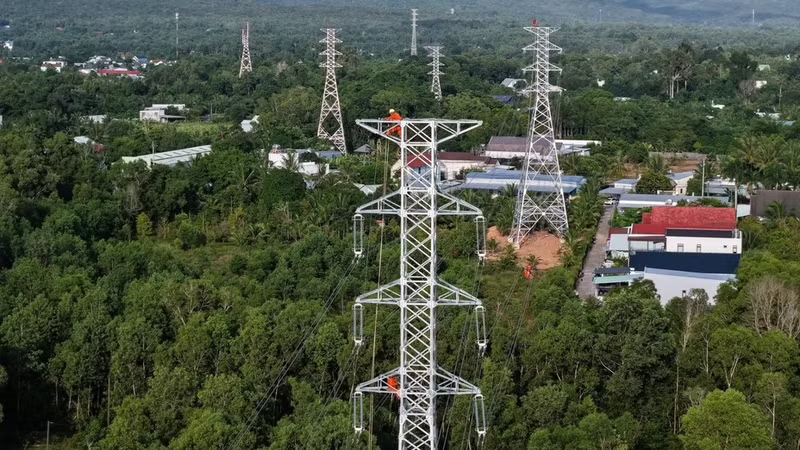
The three projects comprise the 110kV Phu Quoc–North Phu Quoc transmission line, the 110kV Phu Quoc–South Phu Quoc transmission line, and the 220kV Phu Quoc substation. The 110kV Phu Quoc–South Phu Quoc transmission line was energised on August 16, while the 220kV Phu Quoc substation was energised on August 19. The 110kV Phu Quoc–North Phu Quoc transmission line was subsequently finalised on August 28.
The synchronous completion of the three projects not only contributes significantly to elevating power supply capacity and increasing the safety and reliability of the local power system, meeting the growing load demand of Phu Quoc Special Zone, but also creates an energy infrastructure foundation to serve APEC 2027.
Eliminating site-clearance bottlenecks
Before the projects were finalised, Phu Quoc Special Zone was supplied with electricity from two independent 110kV sources, including the 110kV Phu Quoc substation via the 110kV Ha Tien–Phu Quoc submarine cable line and the 110kV South Phu Quoc substation via the 220kV Kien Binh–Phu Quoc sea-crossing transmission line. As a result, any incident affecting one power source would severely impact power supply to local loads.
In fact, on November 29, 2025, during the construction of a coastal road, the contractor’s pile-driving work violated the power grid safety corridor, causing an incident on the 110kV Ha Tien–Phu Quoc submarine cable line and interrupting power supply to about 30,000 households and many service establishments. EVNSPC had to mobilise personnel and equipment and organise continuous construction for five days and nights to rectify the incident and restore power supply to all customers.
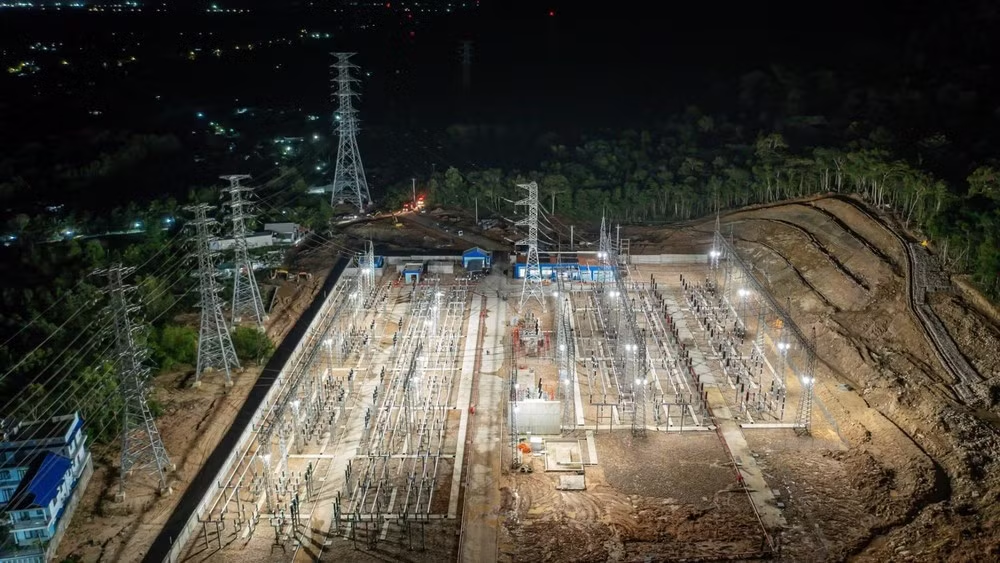
Facing the need to improve the safety and stability of the power system and meet load growth in Phu Quoc, especially the task of ensuring electricity supply for APEC 2027, EVNSPC expedited the execution of the three key projects.
According to EVNSPC, the primary hurdle during project implementation was compensation and site clearance. The transmission lines run across the island, passing through many areas belonging to organisations and households.
To eliminate these obstacles, EVNSPC proactively worked with the An Giang Provincial People’s Committee and Phu Quoc Special Zone, reporting on progress and proposing solutions to difficulties.
An Giang Province mobilised the entire political system and the power sector to systematically eliminate bottlenecks. A Steering Committee for power projects and works serving APEC 2027 was established, assigning specific tasks for each tower foundation location and line corridor. EVNSPC also assigned two Deputy General Directors to directly manage work at the construction site, regularly reviewing progress by week and by month and promptly resolving emerging challenges under the principle of “clear people, clear tasks, and proper authority”.
Alongside the involvement of local authorities, the projects received the understanding and consensus of residents of the Pearl Island, who were willing to relinquish land for the common development of Phu Quoc.
Pham Thi Thanh Dieu, a resident of Cay Thong Trong Quarter in Phu Quoc Special Zone, stated that after local authorities and the power sector explained the project, her family realised that it served the common interest and Phu Quoc’s future development, and was therefore willing to surrender part of its land area.
Hoang Huu Thoi, Director of the Southern Power Project Management Board, shared that the strong involvement of An Giang Province and Phu Quoc Special Zone, together with people’s consensus, enabled site-clearance bottlenecks to be resolved swiftly, creating conditions for the project to stay on schedule.
Leveraging technology to condense the schedule
The projects not only faced site-clearance challenges, but also many difficulties caused by the need to transport materials and equipment from the mainland to the island, labour shortages as many works serving APEC 2027 were being executed simultaneously, and frequent rain since April.
Given the tight schedule, EVNSPC directed the Southern Power Project Management Board, An Giang Power Company, and contractors to marshal maximum resources and organise urgent construction. Consulting, supervision, and construction forces worked day and night, making use of every favourable weather window to accelerate work items.
Dao Hoa Binh, Deputy General Director of EVNSPC, stated that, identifying these as projects of major significance for ensuring power supply to Phu Quoc and APEC 2027, EVNSPC prioritised directing its units to bolster personnel and equipment and coordinate closely during construction. Leaders of the Ministry of Industry and Trade, EVN, and EVNSPC also regularly inspected, directed, urged progress, and removed difficulties for the projects.
According to Hoang Huu Thoi, at the construction site, design consultants, supervision consultants, and construction units coordinated closely to ensure that work items were executed seamlessly without overlap. In particular, when difficulties arose, on-site teams held meetings to make immediate adjustments, ensuring smooth implementation.
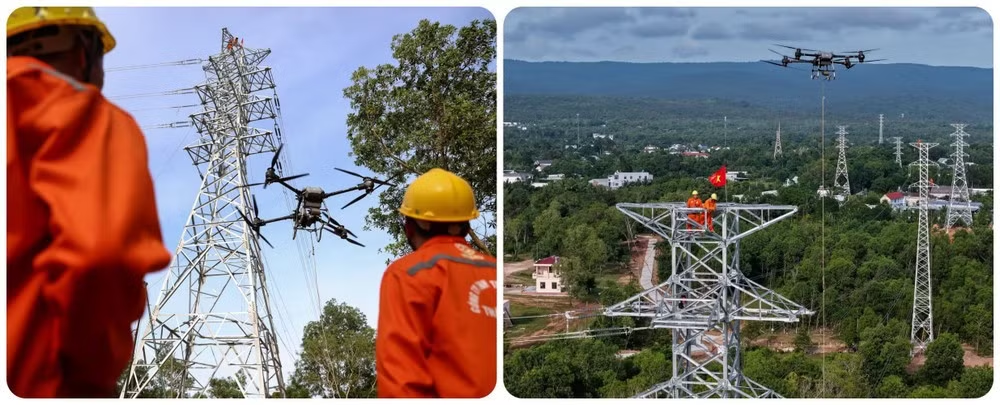
Notably, contractors utilised unmanned aerial vehicles, or drones, in the pilot-wire stringing stage. This solution helped overcome difficulties when construction passed through dense forest terrain or residents’ land, thereby significantly shortening construction time.
Le Thanh Y, Director of Thanh Phat Electrical Construction Co., Ltd., noted that in the past, stringing pilot wires required workers to move through many areas of residents’ land, taking a great deal of time. The use of drones helped the unit become more proactive in construction and shorten the schedule.
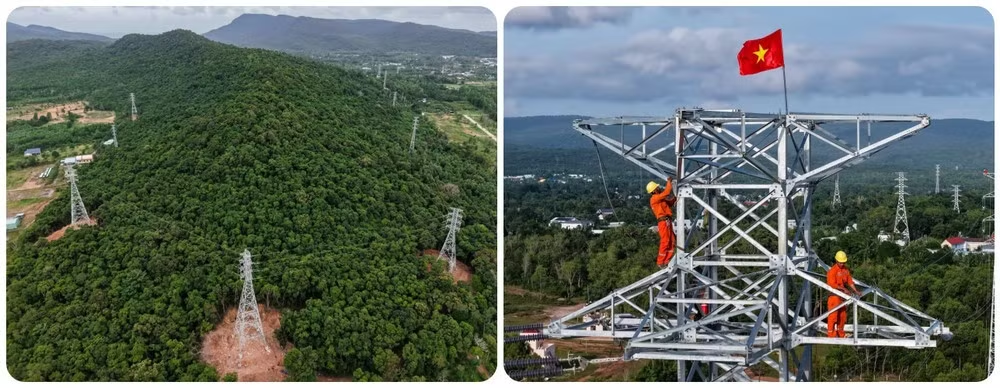
Under the overall plan, all work must be completed before September 2027. However, the units are striving to substantially finalise the projects about one year ahead of schedule, creating additional time for comprehensive inspection, monitoring, and adjustment of the system before APEC 2027 takes place.
When the three projects commence operations, the total power supply capacity across Phu Quoc Special Zone will be raised to 315MVA, with the possibility of expanding to 500MVA. This will create a ring connection, ensure the N-1 standard, and mark an important step in completing the transmission grid system in Phu Quoc. Thereby, it will create momentum for socio-economic breakthroughs in Phu Quoc Special Zone, while ensuring readiness to provide safe, stable, and reliable power supply for APEC 2027.