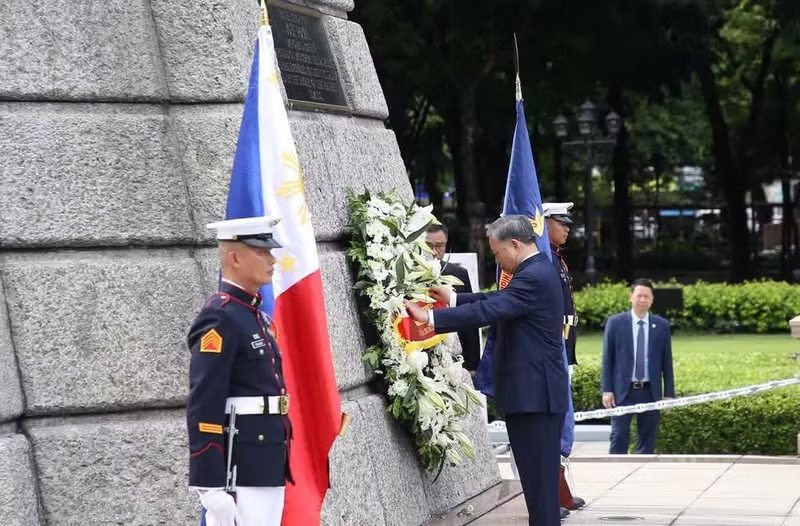
General Secretary of the Communist Party of Viet Nam Central Committee and State President To Lam, his spouse Ngo Phuong Ly, and a high-level Vietnamese delegation, laid flowers at the monument to Philippine national hero Jose Rizal in Manila on June 1 morning, as part of their state visit to the Southeast Asian nation.
The Rizal Monument is one of the Philippines’ most significant historical landmarks. Located in the capital city of Manila, it was erected in honour of Dr. Jose Rizal, a physician, writer, and national hero who played a pivotal role in the country's struggle for independence.
The monument was inaugurated on December 30, 1913, exactly 17 years after Rizal's death. Cast in bronze and mounted on a granite pedestal, it stands as a symbol of patriotism and national pride. Every year on December 30, observed as Rizal Day, thousands of Filipinos, including high-ranking leaders, gather at the site to lay flowers and pay tribute to the national hero.
The annual commemoration carries profound educational significance, serving as a reminder to younger generations of Rizal’s patriotism, sacrifice, and dedication to the cause of national independence.
Beyond its commemorative role, the monument also serves as a venue for cultural activities, public gatherings, and major national events in the Philippines.