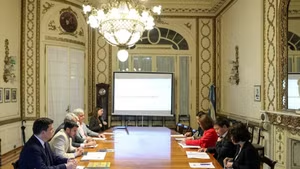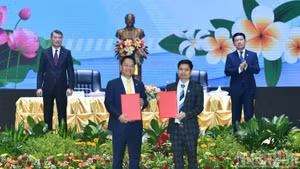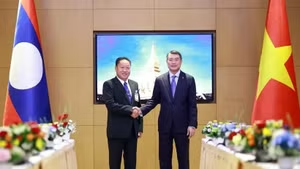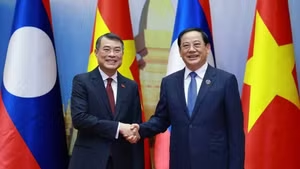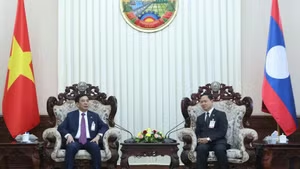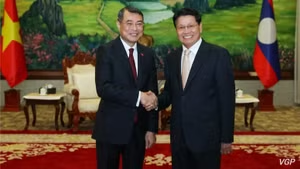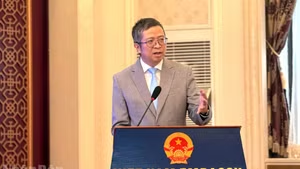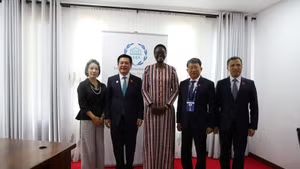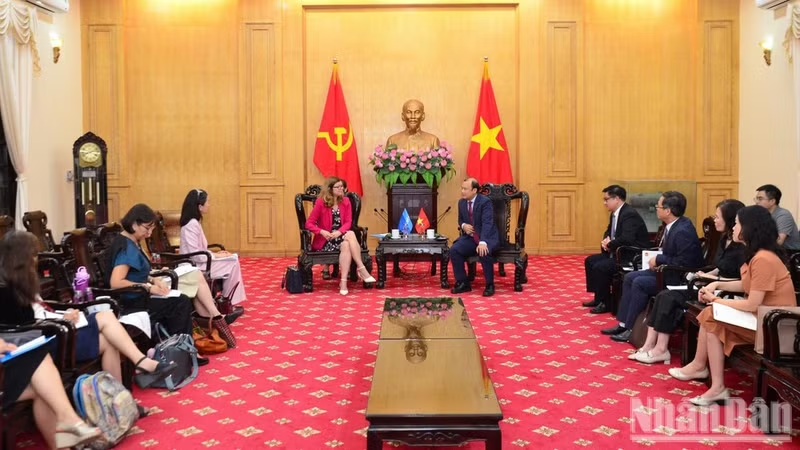
At the meeting, the two sides comprehensively reviewed the results of their cooperation over the past period and held in-depth discussions on orientations for cooperation in the 2026–2031 period, with a view to promoting children’s rights and sustainable development in Viet Nam.
The two sides expressed their delight at the results achieved, affirming that the relationship between the HCMA and UNICEF has become increasingly effective, substantive, and in-depth. The strategic cooperation programmes are directly aligned with the priorities of the Party and State in child protection, care, and education.
Through the cooperation, the HCMA has updated international standards and gained access to new knowledge on children’s rights, social development, and modern public governance, making a practical contribution to improving the quality of theoretical research and policy advice. Many practical initiatives have been effectively integrated, notably the incorporation of children’s rights into training and capacity-building programmes for leaders and managers at all levels, while promoting advanced management approaches such as results-based management (RBM).
Joint research projects between the two sides have produced and published many knowledge products with high practical value, making important contributions to the formulation of child-centred policies and the improvement of the public service system.
At the meeting, Le Hai Binh affirmed that the HCMA attaches great importance to its partnership with UNICEF and wishes to maximise the potential and scope for cooperation in the new period.
Speaking at the meeting, UN Resident Coordinator in Viet Nam Pauline Tamesis affirmed that investing in children is essentially investing in the present and future of the nation. She also stressed the importance of making integrated and comprehensive investments that closely link “hard” technical infrastructure with “soft” social service infrastructure such as education, nutrition, and online safety.
According to Pauline Tamesis, this is a crucial juncture for Viet Nam in moving towards a coordinated investment system for children, laying a solid foundation for the country’s modern and sustainable development.
Sharing about UNICEF’s role as a partner, UNICEF Representative in Viet Nam Silvia Danailov affirmed that UNICEF is always ready to provide the highest level of technical support and connect leading international experts to assist the HCMA in theoretical research, policy advice, and building an equitable public governance ecosystem.
At the meeting, the two sides discussed and agreed on orientations for cooperation in the 2026–2031 period, with a number of strategic areas aimed at elevating their partnership to a new level.
They agreed to step up research and policy advice on children’s rights, focusing on practical issues such as the impacts of changes in development models, urbanisation, migration, and climate change on children and families.
Children’s rights will be more deeply integrated into training and capacity-building programmes for leaders and managers at all levels through specialised learning materials on public policy-making, results-based management, data-driven policy analysis, and child protection in the digital environment.