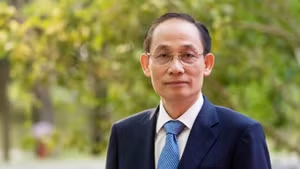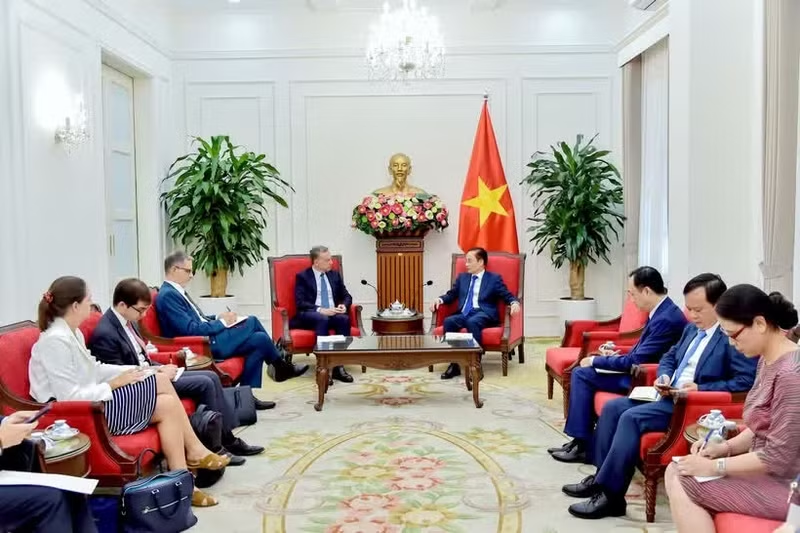
Viet Nam places great importance on strengthening and deepening its relations with France, its first comprehensive strategic partner in the EU, Foreign Minister Le Hoai Trung said.
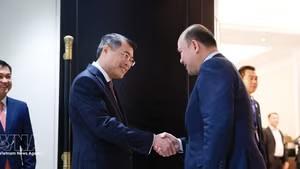
At a meeting with Martin Briens, Secretary-General of the French Ministry for Europe and Foreign Affairs, in Ha Noi on July 8, Trung highlighted the positive developments in bilateral ties since the two countries elevated their relationship. He noted that Viet Nam–France cooperation has generated tangible benefits for both peoples while contributing to peace, stability, dialogue, and cooperation in the world.
The minister welcomed the official implementation of the Action Plan for the Joint Declaration on the Viet Nam–France Comprehensive Strategic Partnership, describing it as a key mechanism to turn strategic commitments into practical cooperation initiatives and projects.
He called on both sides to maintain regular exchanges of delegations at all levels across all channels, while enhancing the role of the two foreign ministries in coordinating and ensuring the effective implementation of the partnership framework. Trung also conveyed Viet Nam’s invitation for French Minister for Europe and Foreign Affairs Jean-Noël Barrot to visit Viet Nam soon.
On specific areas of cooperation, Trung called for stronger collaboration in defence and security, and expressed his hope that France will soon ratify the United Nations Convention against Cybercrime, adopted in Ha Noi, while actively participating in the East Sea Forum hosted by Viet Nam. He also encouraged expanded cooperation in energy, including collaboration on the Ninh Thuan 2 nuclear power project, as well as strategic infrastructure development.
In economic ties, the minister urged both countries to further unlock trade and investment potential. He called on France to accelerate the ratification of the EU–Viet Nam Investment Protection Agreement (EVIPA), continue supporting efforts to urge the European Commission to remove the “yellow card” warning on Vietnamese seafood exports, and assist Viet Nam in addressing OECD-related tax concerns.
Trung also proposed expanding cooperation in emerging fields, including critical minerals, science, technology, and innovation. He called for the effective implementation of the bilateral agreement on science, technology, and innovation, continued progress on the VNREDSat-2 satellite project, and stronger cooperation in culture, healthcare, people-to-people exchanges, and local partnerships, with a view to successfully hosting the 13th Viet Nam–France Decentralised Cooperation Conference in 2026.
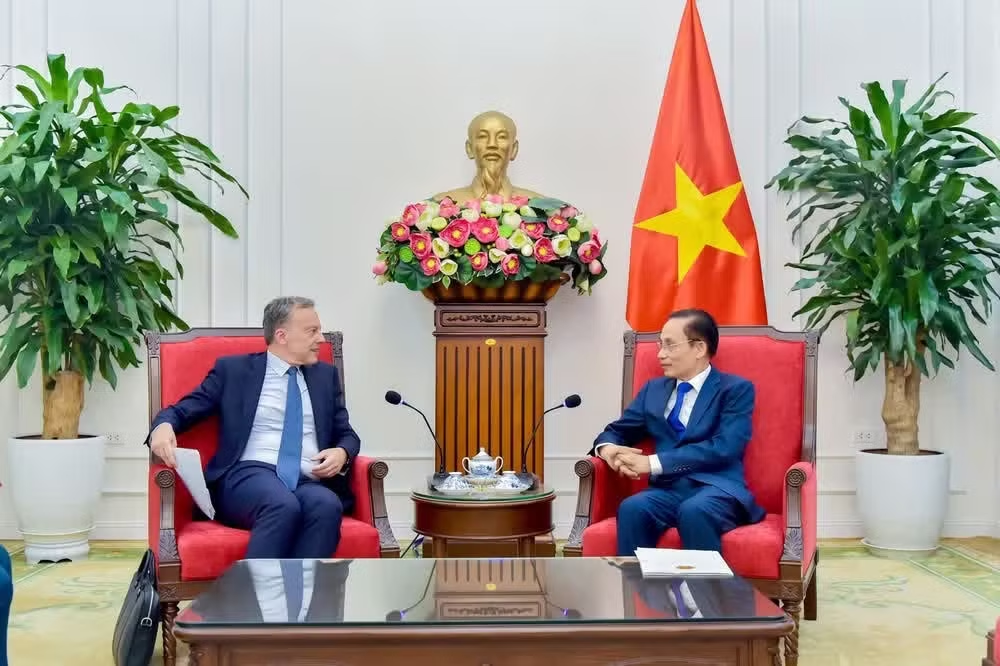
Briens affirmed that Viet Nam is a trusted partner and an important strategic partner for France in the Asia-Pacific region. He said the elevation of bilateral ties to a comprehensive strategic partnership has created new momentum and expanded opportunities for cooperation.
The French official reaffirmed France’s commitment to multilateralism and expressed its readiness to work with Viet Nam to implement the partnership action plan effectively, while strengthening coordination through bilateral and multilateral mechanisms and regional and international forums.
He emphasised that France aims to translate cooperation priorities into concrete projects. He said France is working closely with Vietnamese partners to advance cooperation in nuclear energy and expressed interest in French businesses participating in Viet Nam’s strategic infrastructure projects, including the Ha Noi–Ho Chi Minh City high-speed railway, the Ha Noi–Hai Phong railway, and efforts to address challenges facing Ha Noi Metro Line 3.
Briens also highlighted France’s interest in expanding cooperation with Viet Nam in rare earths, citing French expertise and technology in the sector. The two sides will continue exploring cooperation in space technology, the VNREDSat-2 satellite project, culture, healthcare, and local-level partnerships.
Regarding Viet Nam’s proposals, Briens said France’s EVIPA ratification process is making positive progress and reaffirmed France’s willingness to support Viet Nam on OECD-related matters and continue advocating within the EU for the early removal of the “yellow card” on Vietnamese seafood.
The two sides also exchanged views on regional and international issues of shared interest, agreeing to enhance coordination, uphold multilateralism, promote dialogue and cooperation, and respect international law, contributing to peace, stability, and sustainable development in the region and the world.