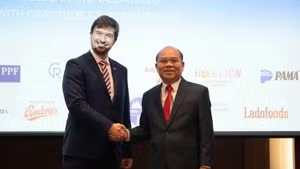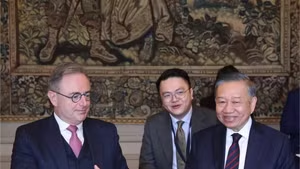
During the visit, the delegation held working sessions with leaders of Mexico’s Secretariat of Agriculture and Rural Development, the Mexican Business Council for Foreign Trade, Investment and Technology (COMCE), and the National Institute of Forestry, Agriculture and Livestock Research (INIFAP). They also conducted field visits to study modern agricultural production models in the country.
At talks with Mexican Secretary of Agriculture and Rural Development Julio Berdegué Sacristán, both sides reviewed the outcomes of past cooperation and discussed issues of mutual concern, including strengthening food security, expanding markets for key agricultural products, improving food safety standards, and promoting cooperation in climate-resilient smart agriculture.
Nam affirmed Viet Nam’s wish to further enhance agricultural cooperation with Mexico and expressed the country's readiness to create favourable conditions for Mexican enterprises in boosting agricultural exports to the Vietnamese market.
For his part, Sacristán noted that Viet Nam and Mexico share many similarities in agricultural development. Both countries have long-standing agricultural traditions with large farming populations, playing a crucial role not only in ensuring food security but also in driving economic growth, preserving cultural identity, and supporting sustainable rural development. He also highlighted common challenges faced by both nations in the 21st century, including climate change, resource constraints, and the need to transition towards sustainable, high value-added agricultural models.
The two sides proposed several measures to strengthen cooperation in the coming period, focusing on promoting delegation exchanges at all levels, establishing specialised working groups to address obstacles in agricultural trade, and further opening markets for each country’s key products.
At the working session with INIFAP, both sides reviewed the implementation of their memorandum of understanding signed in 2018 and outlined future cooperation directions, particularly in sharing advanced agricultural technologies, scientific research collaboration, and training high-quality agricultural personnel.
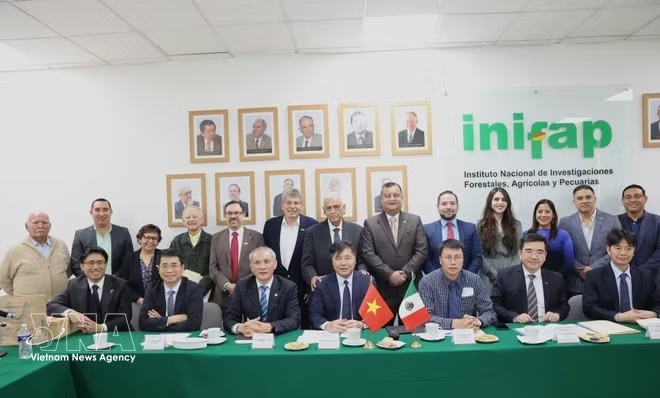
Meanwhile, at the discussion with COMCE, the two sides explored practical and effective approaches to advancing bilateral agricultural cooperation. The discussion centred on connecting business communities, supporting small- and medium-sized enterprises, and strengthening bilateral agricultural trade.
Both sides agreed to leverage the complementary strengths between Viet Nam’s production and export-oriented agriculture and Mexico’s advantages in technology, mechanisation and international trade promotion systems, thereby enhancing added value and competitiveness across agricultural value chains.
In the time ahead, they are expected to formalise cooperation through the signing of a memorandum of understanding, while promoting trade facilitation, technology transfer, and the implementation of specific joint projects in areas such as livestock vaccines, innovation and market development.