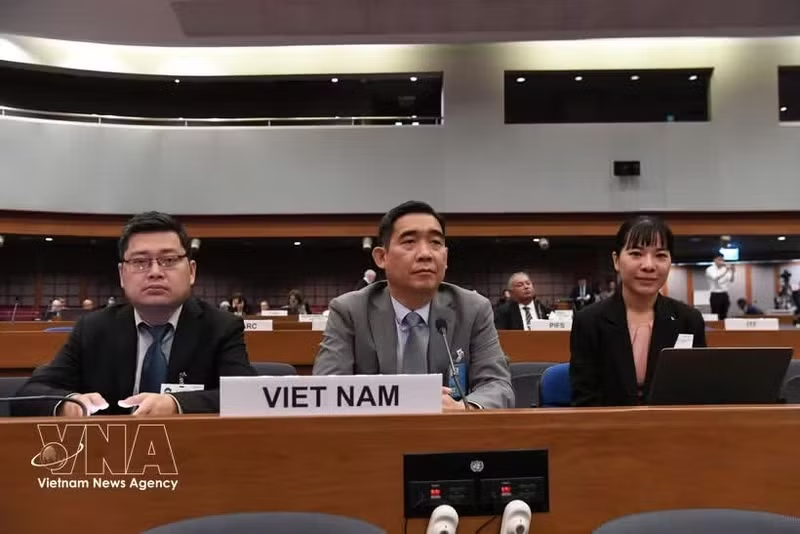
Vietnamese Ambassador to Thailand Pham Viet Hung proposed three people-centred strategic priorities aimed at building an inclusive society for all ages across the region during a discussion at the 82nd session of the United Nations Economic and Social Commission for Asia and the Pacific (UNESCAP) in Bangkok on April 21.
The discussion centred around the theme "Leaving no one behind: advancing a society for all ages in Asia and the Pacific."
Hung, who also serves as Permanent Representative of Viet Nam to ESCAP, said the Asia–Pacific is experiencing one of the fastest demographic transitions in history. Rapid population ageing is reshaping labour markets and placing mounting pressure on social security and healthcare systems. In response, Viet Nam is rolling out national strategies on population and development, building a “silver economy”, advancing human development in the digital era, cultivating a quality workforce, while strengthening the social welfare system and moving toward universal health coverage.
He underscored Viet Nam’s strong support for UNESCAP’s leadership role in three strategic areas. First, the commission should enhance policy advisory support and promote regional cooperation to help countries proactively adapt to population ageing, including sharing models of comprehensive multi-tier social security systems and harnessing the silver economy as a genuine driver of growth and inclusion. Second, socio-economic policies must be designed and adopted in a coordinated manner, with UNESCAP advocating integrated macroeconomic and social policy frameworks that link economic growth with equity, decent job creation and human development for all ages. Third, science, technology, innovation and digital transformation should be placed at the core of regional development strategies, while keeping people at the centre.
This approach would ensure inclusive digital transformation across age groups, narrow the digital divide, and direct technology investments toward public services, healthcare, and lifelong learning, he said.
Viet Nam remains firmly committed to multilateralism and the United Nations’ central role in global governance. It appreciates UNESCAP’s role in translating global commitments into concrete regional action and cooperation, sharing best practices, supporting evidence-based policymaking and tackling emerging challenges, Hung said.
He noted that achieving the 2030 Agenda for Sustainable Development and its 17 Sustainable Development Goals requires coordinated regional action. Viet Nam is confident in the solidarity of Asia-Pacific nations in building a more resilient, inclusive and prosperous society in which no one is left behind, he added.