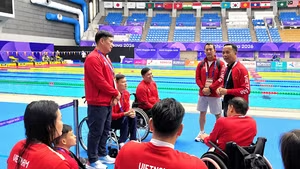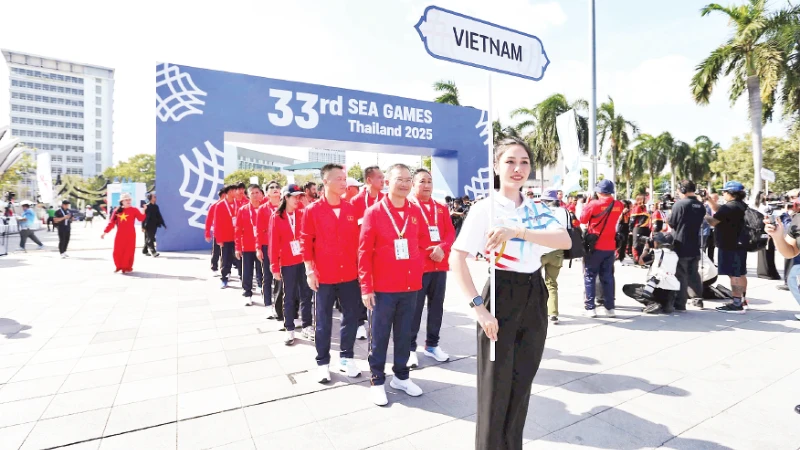
Viet Nam has sent a large number of athletes in this SEA Games, reflecting strong investment and high expectations for performance as well as the overall development of national sport. The delegation’s target is to win 110 gold medals, a challenging goal but not beyond reach.
Preparations for SEA Games 33 have taken place over many months at national training centres. Key teams such as athletics, swimming, wrestling, weightlifting, canoeing, and martial arts have received comprehensive investment, from training regimes and nutrition to recovery processes and high-tech performance analysis. Many teams are guided by foreign experts using training technologies from countries with advanced sporting systems.
This year, psychological factors have been given more emphasis. The delegation invited sports psychologists to support athletes in the final stage before competition to help stabilise their mindset, reduce pressure, and enhance confidence, especially for young athletes competing in the Games for the first time.
The target of 110 gold medals is considered appropriate given the current strength and competitive landscape. Core sports such as athletics, swimming, rowing, canoeing, wrestling, shooting, archery, and martial arts remain the main contributors. However, SEA Games 33 is expected to be fiercely competitive. Host Thailand aims to reclaim the top position, while Indonesia and the Philippines have registered their strongest line-ups, invested heavily, and set high expectations. This means that achieving Viet Nam’s target requires not only peak performance but also consistency and the ability to cope with pressure under intensive competition schedules.
SEA Games 33 also provides an opportunity to assess Viet Nam’s readiness for longer-term goals such as ASIAD 2026 and the 2028 Olympics.
Athletics and swimming, two Olympic foundation sports, continue to be pillars at this SEA Games. Progress in middle-distance and relay events boosts expectations for athletics to secure a significant number of medals. Meanwhile, the next generation of swimmers following Nguyen Huy Hoang is considered capable of competing for medals across various events. Rowing and canoeing, long-time strengths for Viet Nam, are assessed by coaches as having the potential to contribute more than 10 gold medals if athletes reproduce their training form. Martial arts groups — Taekwondo, Karate, Wushu, Pencak Silat, and Muay Thai — remain traditional “gold mines”. Competition in these sports is always intense, but Viet Nam maintains an advantage thanks to strong depth and extensive international experience.
A notable point of this year’s delegation is the presence of nearly 300 young athletes aged 18–23. This generation carries high expectations within the national strategy to rejuvenate the sports force. The SEA Games serve as an essential test for young talents before they advance to continental and global arenas. Allowing them to compete in a high-pressure yet manageable environment is expected to build resilience — a crucial factor for reaching Asian and Olympic levels.